

Vesuvius kept erupting after 79 CE, and up to 6 meters of ash made rebuilding impossible. Recent digs at the Insula Meridionalis show squatters living in upper floors above the debris, using buried rooms as cellars. Settlement continued until the 472 CE eruption. No organized effort ever cleared Pompeii until 18th-century excavations began.
Shanty towns persisted at Pompeii until 472 CE; rebuilding blocked by debris and Vesuvius
 ItalyGeneral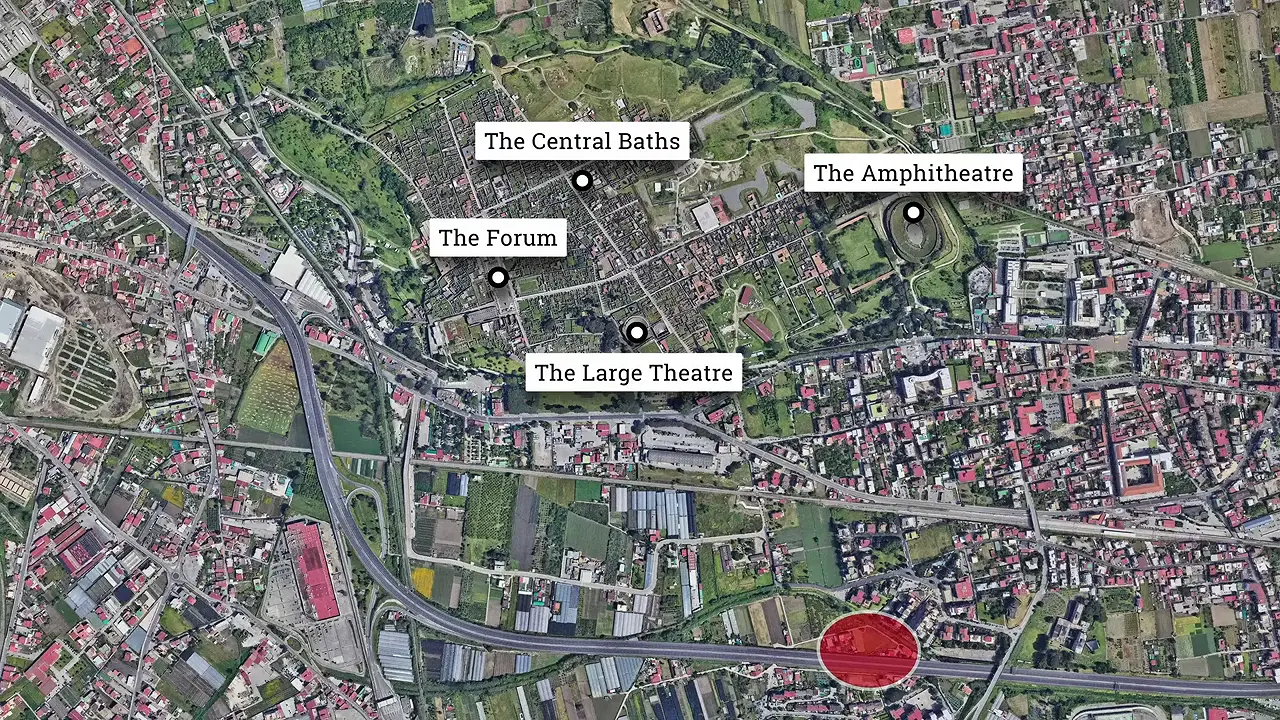
Key facts
- Recent work on the Insula Meridionalis in the south of the city revealed reoccupation of upper levels into as late as the fifth century CE
- A shanty town grew up after the eruption where settlers lived in upper floors of houses and warehouses projecting above the volcanic debris, using buried lower rooms as cellars
- Archaeologists discovered post-eruption occupation levels in a bath complex and several seaside villas, with settlement persisting until the eruption of 472 CE
- The eruption buried Pompeii beneath up to 6 meters of ash and pumice, a layer too deep to clear away and too unstable to build upon
- Porous ash and pumice prevented the surrounding landscape from retaining moisture, and it took decades for the volcanic debris to consolidate and become fertile
- Vesuvius remained active after 79 CE; Statius noted continued eruptions, Galen mentioned routine ash clouds, and Cassius Dio recorded an eruption in 203 AD loud enough to be heard in Capua
- There was never any organized attempt to rebuild Pompeii's infrastructure or public places, which remained buried until 18th-century excavations
Site mentioned
Sources
Pompeii, a wall collapses in the Insula Meridionalis during ...finestresullarte.info
The incident once again highlights the complexity of managing an archaeological site such as Pompeii, which, with its more than 60 excavated ...
Pompeii I.14 Projecttupompeii.org
The Pompeii I.14 Project is an international collaboration led by Tulane University and the Parco Archeologico di Pompei, and including Oxford University.
Pompeii - Unearthing Insula 10 - Current World Archaeologyworld-archaeology.com
Insula 10 is currently home to the largest archaeological dig at Pompeii for a generation. The combined house and bakery complex on the via di ...
History of the Excavations - Pompeii ...pompeiisites.org
The Oplontis excavations were listed as a UNESCO World Heritage Site. They include substantial parts of buildings that stood in a suburban area west of Pompeii.
Pompeii, Italy - Interactive Digsarchaeological.org
View of the temple and sanctuary of Venus in 1900 after Mau's excavations (with Mount Vesuvius in the background) · Photomodeling the temple podium by Dan ...
Was this story useful?
Keep exploring
Every site on this page sits on the globe, and the people who research them are on the Discord.
3D Globe · Sites by country · Story Archive · Research Library · Weekly Journal · Search
AI-generated text · images from the original sources · always verify with the sources.