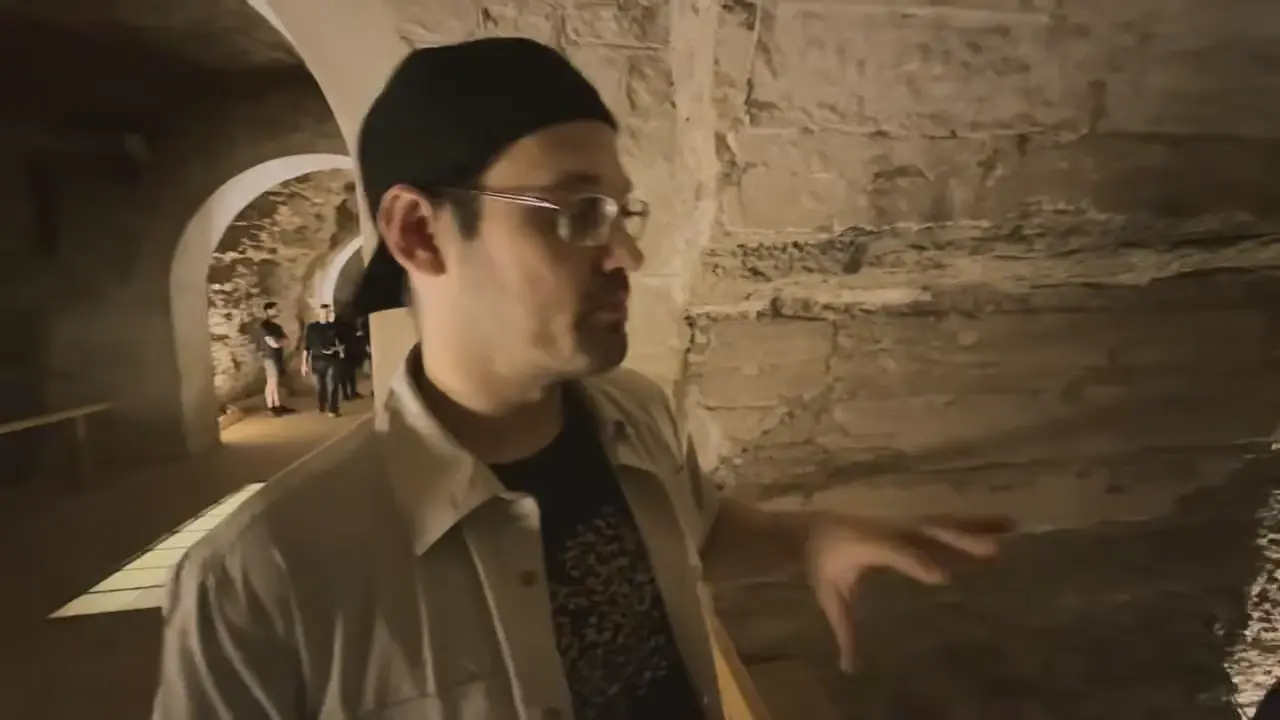
French archaeologist Auguste Mariette uncovered the Serapeum at Saqqara in 1850. Its underground complex contains 24 massive granite sarcophagi built for Apis bulls. Most were found sealed and empty. The boxes weighed about 40 tonnes, with lids weighing roughly 25 tonnes—not 100 tons each. Their interiors were highly polished, their corners square and their dimensions varied. The boxes are uninscribed, although their lids bear inscriptions.
The video argues that scoop-like marks were deliberate crack-prevention work comparable to aircraft repair. That is the presenter's interpretation, not an established archaeological explanation. Rollers and hauling equipment found at the site show that transport was not wholly unexplained, though the details of each move are reconstructed. The complex dates to the 19th Dynasty and remained in use into the 3rd century CE.
Sources
Serapeum of Saqqaraen.wikipedia.orgFrom the Late Period onward, most Apis were buried in large sarcophagi, which weigh around 40 tonnes (88,000 lb) and have 25 t (55,000 lb) lids. They were moved ...
Did You Say Serapeum?tuljak.comThey are the Pyramid for Neferirkare, Neferefre, and Sahure, all from the Old Kingdoms. While Saqqara received tens of thousands of visitors ...
Serapeum - Discover Egypt's Monumentsegymonuments.gov.egUpon death, the bulls were mummified and placed in sarcophagi in an elaborate celebration. Inscriptions record many kings who made offerings in the Serapeum.
The Serapeum Of Saqqaratheancientconnection.comWith its laser cut megalithic black granite boxes, the Serapeum of Saqqara is one of the greatest unsolved mysteries of ancient Egypt.
The Serapeum of Saqqara: Tomb of the Sacred Apis Bullsegypttoursportal.comThese revered animals were entombed with elaborate rituals in massive granite sarcophagi, some weighing up to 62 tons. Originating under ...
Serapeum of Saqqaraartifactfoundation.orgMost were found sealed and empty and despite the historical narrative that these containers served as sarcophagi for the legendary Apis Bull, no bull ...
Serapeum Of Saqqara Stock Photosgettyimages.comMassive granite sarcophagus once containing a mummified Apis bull is protected with a plastic cover in the Saqqara Serapeum, a tunnel of underground...
AI-generated text · images from the original sources · always verify with the sources.