Meet Purgatorius: our earliest known ancestor, discovered in the Hell Creek Formation of Montana. This tiny 15cm, 100g tree-dweller lived just 100,000 years after the asteroid that ended the dinosaurs. 🌳🐾
Key facts claimed:
- Plesiadapiforms are stem primates - early primates ancestral to modern primates
- Plesiadapiforms lack large brains and true orbital bars, some had claws
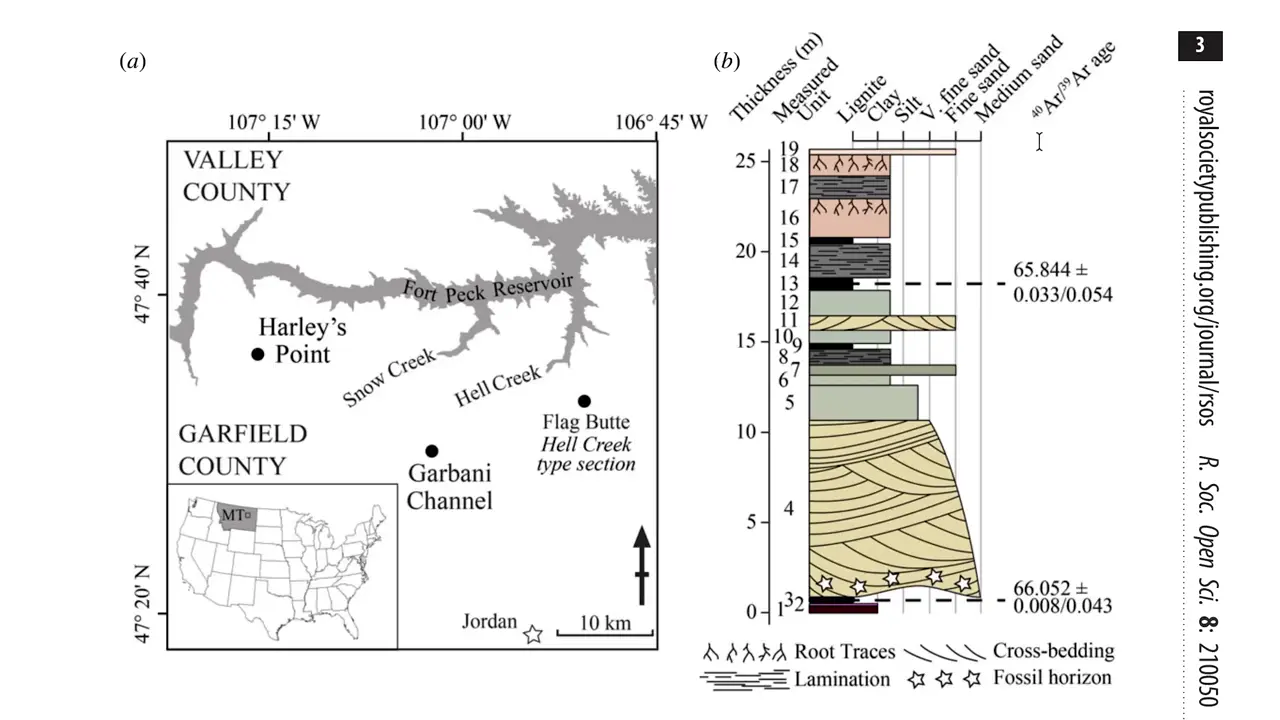
- Purgatorius was found in the Hell Creek Formation, Montana in deposits dating to ~100,000 years after the asteroid impact
- Purgatorius had primate-like back teeth and ankle bones for grasping
- It was a tree-dwelling (arboreal) animal about 15 cm long weighing no more than 100g
Sources
[PDF] "Purgatorius" in - ResearchGateresearchgate.netPurgatorius is a genus of primitive primates known from the early Paleocene of Montana. (United States) and Saskatchewan (Canada). It.
Fossils flesh out the tale of the first primates - Cosmic Logcosmiclog.comThe evidence comes from an analysis of tooth fossils that were unearthed in the Hell Creek area of northeastern Montana. Get the full story ...
UF Researcher Helps Confirm Ancient Primates Once Walked with ...news.clas.ufl.eduPublished in Royal Society Open Science, the study analyzed 65.9 million-year-old fossils of the early primate Purgatorius, the oldest genus in ...
Earliest-known fossil primate discovered in Montanaleakeyfoundation.orgA new Leakey Foundation-supported study published Feb. 24 in the journal Royal Society Open Science documents the earliest-known fossil evidence of primates.
Our earliest primate ancestors rapidly spread after dinosaur extinctionvcresearch.berkeley.eduPurgatorius, named after the Purgatory Hills in Montana, is known only from North American fossils. ... Purgatorius fossils in the Hell Creek area ...
AI-generated text · images from the original sources · always verify with the sources.