

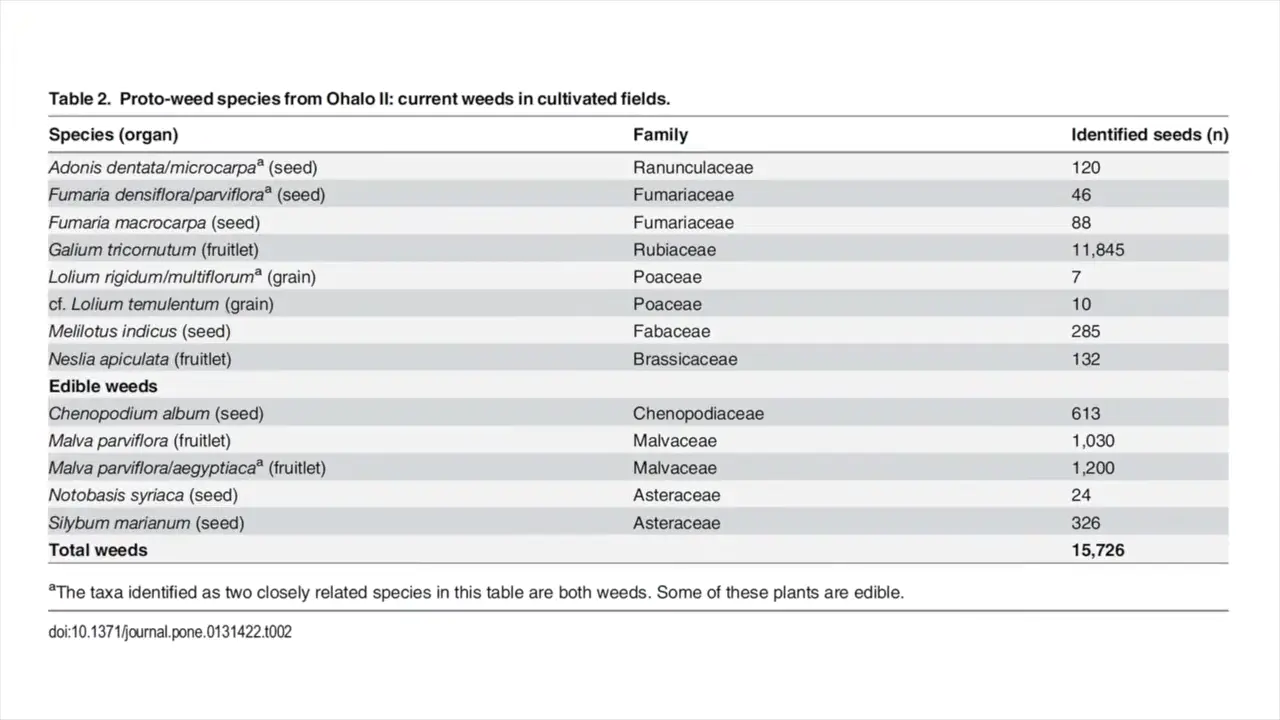
A 2015 paper identified 12 proto-weeds mixed with wild barley and oats at Ohalo II — over 11,000 years before the accepted onset of agriculture! Barley samples showed 36% domestic-type scars, suggesting "trial cultivation." Sickle blades with use-wear polish confirm harvesting of semi-green cereals. Mind-blowing! 🌱
Ohalo II shows earliest known plant cultivation, 11,000 years before agriculture
Key facts
- 2015 research paper identified 12 known weeds mixed with seeds of wild emmer barley and oats at Ohalo II
- Provides earliest evidence of a human-disturbed environment, over 11,000 years before the known onset of agriculture
- Evidence of proto-weeds suggests small-scale attempt to cultivate wild cereals
- Analysis of plant scars (seed attachment points) showed 36% domestic-type scars on barley samples and 25% on wheat samples
- Experts describe Ohalo II agriculture as "trial cultivation" in an early evolutionary stage
- Sickle blades found with use-wear polish indicating harvesting of near-ripe, semi-green wild cereals before natural dispersal
- Cultivation likely ended due to rising lake levels that eventually submerged the settlement and its farmland
- Site is well-preserved because the burnt hut contents were quickly submerged by rising lake water
Sources
The Origin of Cultivation and Proto-Weeds, Long Before Neolithic ...dash.harvard.edu
by A Snir · 2015 · Cited by 346 — Here we present unprecedented new findings of the presence of “proto-weeds” and small-scale trial cultivation in Ohalo II, a 23,000-year-old hunter-gatherers' ...
Ohalo IIen.wikipedia.org
A 2015 study reported that its "findings represent the earliest indications for the presence of proto-weeds in a site predating the Neolithic plant ...
Proto-weed species from Ohalo II: current weeds in cultivated fields.researchgate.net
This review article underscores the presence of early agricultural sites across distinct domestication centre across Asia including Ohalo II, Jiahu, and ...
Ohalo II site, Israel; Cultivation and Proto-Weeds in Galilee ...novoscriptorium.com
In this post we present extracts from official publications on the exciting findings from the Ohalo II site in Israel.
(PDF) The Origin of Cultivation and Proto-Weeds, Long Before Neolithic ...researchgate.net
Here we present unprecedented new findings of the presence of “proto-weeds” and small-scale trial cultivation in Ohalo II, a 23,000-year-old ...
Was this story useful?
Keep exploring
Every site on this page sits on the globe, and the people who research them are on the Discord.
3D Globe · Sites by country · Story Archive · Research Library · Weekly Journal · Search
AI-generated text · images from the original sources · always verify with the sources.