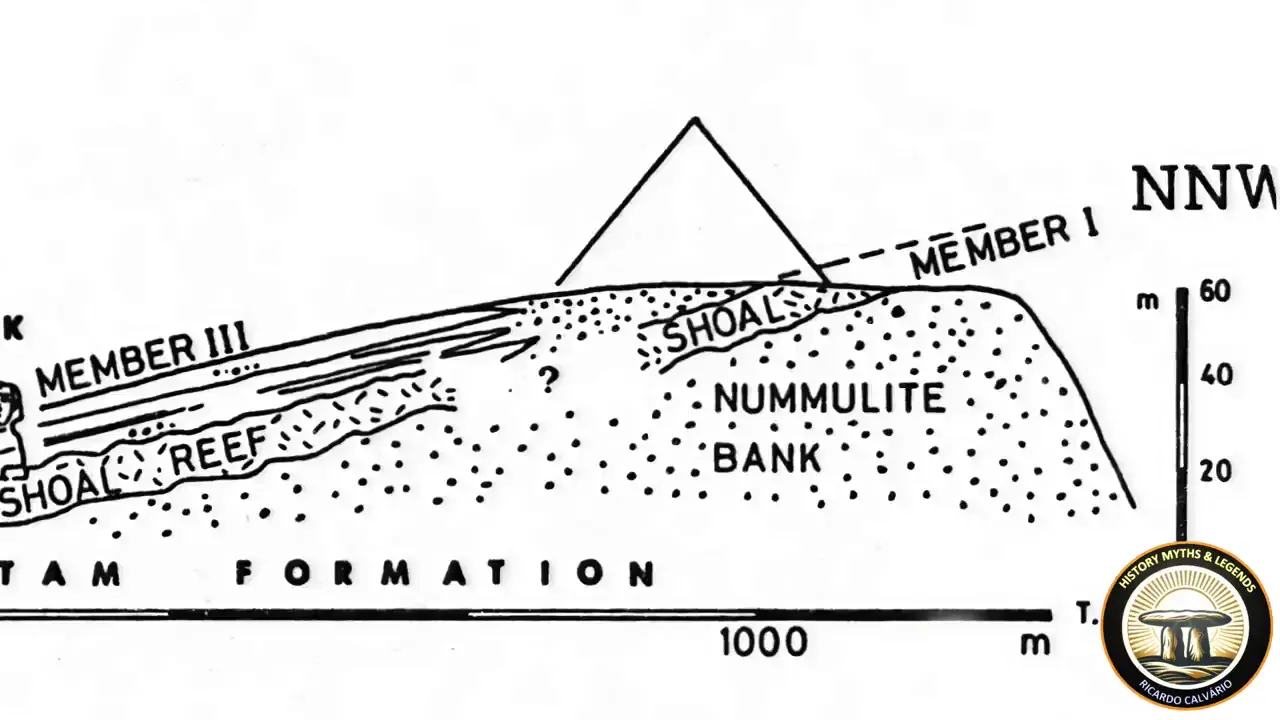
Nummulites - tiny coin-shaped fossils from Eocene seas (55.8-33.9 million years ago) - are embedded in Giza limestone. First century BC writer Strabo noted these 'petrified remains' 📜
Key facts claimed:
- Nummulites are coin-shaped fossils of unicellular benthic marine organisms
- They thrived in warm shallow tropical waters of Eocene sea (55.8 to 33.9 million years ago
- Eocene limestone in Sahara is called nummulite limestone
- Nummulites were particularly predominant during Eocene epoch
- Ancient writer Strabo noted petrified lentil remains near pyramids (first century BC)
Sources
Imaggeo on Mondays: Nummulites, the living lentils - EGU Blogsblogs.egu.euIn this passage Strabo finds the Nummulitidae fossils embedded in the rocks used to build Egyptian pyramids, however he mistakes the shells ...
Live long and prosper | New Scientistnewscientist.comThe largest modern nummulites are about two millimetres wide, but those that lived 50 million years ago grew up to 16 centimetres across.
Nummulites Egypt – Fossils from Fayum Oasis - SaharaGems.comsaharagems.comGenuine nummulite fossils from Egypt's Fayum Oasis. Collect natural history specimens tied to ancient pyramids & temples at SaharaGems.
Is this fossil? - The Fossil Forumthefossilforum.comA nummulite is a large lenticular fossil, characterized by its numerous coils, subdivided by septa into chambers.
nummulites – GeologyWriter.com - David B. Williamsgeologywriter.comNummulites are some of the largest single-celled organisms ever. They were able to reach their great size by growing complex shells.
AI-generated text · images from the original sources · always verify with the sources.