

Aerial photos from 1929 show Giza without the large sand mound visible today, which appears in 1930 photos and persists since. During 1920s-30s excavations, workers used metal railway tracks to move debris, strategically dumping sand into large heaps. This explains why virtually all Giza structures were buried under accumulated sand—including the Great Sphinx, which was completely covered up to its neck before excavations began in 1817.
Historical photos reveal sand mound formed in 1930 from excavation debris
 EgyptGeneral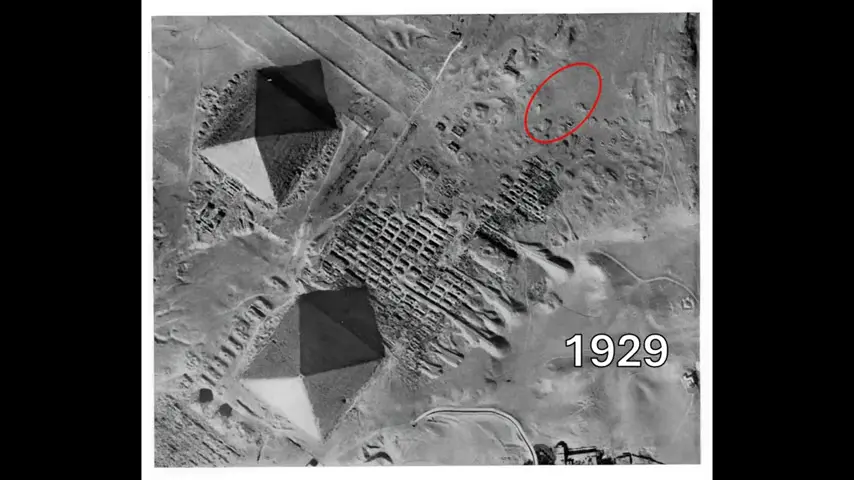
Key facts
- 1929 aerial photograph shows The Great Pyramid of Giza without the current sand mound
- The mound appears in a 1930 photograph and has remained since
- Excavators in the 1920s-30s used metal railway tracks to transport debris
- Sand was strategically dumped into large heaps during excavations
- Virtually all Giza structures were excavated from accumulated sand over centuries
- The Great Sphinx was completely buried up to its neck in sand until excavations began in 1817
Site mentioned
Sources
Great Sphinx of Giza - Wikipediaen.wikipedia.org
The Great Sphinx of Giza is a limestone statue of a reclining sphinx, a mythical creature with the head of a human and the body of a lion.
The Great Sphinx of Giza Through Vintage Photographs from 1850 ...rarehistoricalphotos.com
Gathered in this article are various vintage photographs of the Sphinx throughout the past 170 years.
Ancient History in depth: The 'Death in Sakkara' Gallery - BBCbbc.co.uk
An American team discovered the intact, gold-filled tomb of Queen Hetepheres in the shadow of the Great Pyramid of her son Khufu.
Hall of Records - Wikipediaen.wikipedia.org
The Hall of Records is a purported ancient library that is claimed to exist underground near the Great Sphinx of Giza in Egypt.
[PDF] The Pyramid and Pyramid Temple of King Mycerinus at Giza After ...gizamedia.rc.fas.harvard.edu
These discoveries at Kerma opened to excavation of the pyramids at Nuri on the expedition the possibilities of research the south and at El-Kur'uw on the north.
Was this story useful?
Keep exploring
Every site on this page sits on the globe, and the people who research them are on the Discord.
3D Globe · Sites by country · Story Archive · Research Library · Weekly Journal · Search
AI-generated text · images from the original sources · always verify with the sources.