

Mycenae's Lion Gate features a giant megalithic lintel. Later Greeks, observing these massive stones 500-1000 years after its Bronze Age construction (1350-1200 BC), attributed the work to giants or cyclops. Traditional accounts name this as Agamemnon's palace during the Trojan War period. Mycenae represents Bronze Age Greek architecture distinct from classical Athens. 35:43-37:55
Mycenae's megalithic construction and Bronze Age Greek fortifications
 GreeceGeneral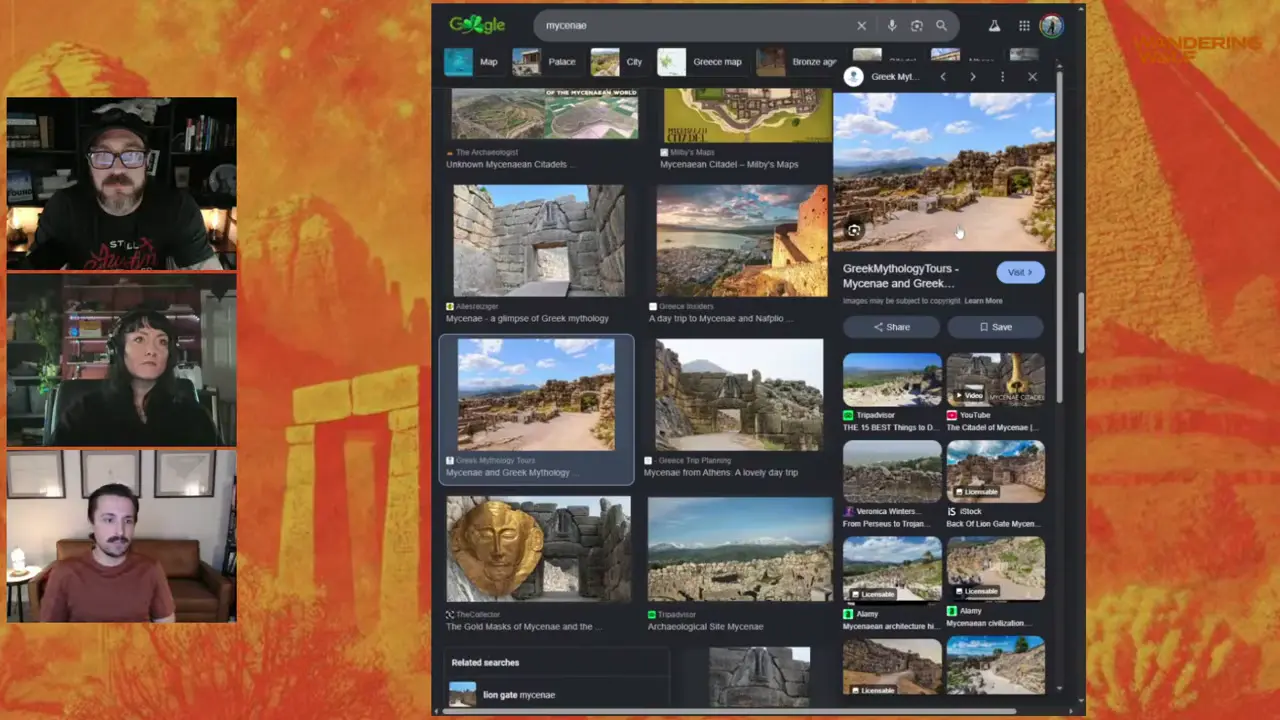
Key facts
- Mycenae was a Bronze Age Greek city with massive megalithic stone walls
- The Lion Gate at Mycenae features a giant megalithic lintel similar to Machu Picchu's construction
- Mycenae was the palace of Agamemnon during the Trojan War period
- Later Greeks, observing Mycenae's massive stones 500-1000 years after its construction, attributed the work to giants or cyclops
- Mycenae represents Bronze Age Greek architecture distinct from classical Athens
Site mentioned
Sources
Lion Gate - Wikipediaen.wikipedia.org
The Lion Gate (Greek: Πύλη των Λεόντων) is the popular modern name for the main entrance of the Bronze Age citadel of Mycenae in Southern Greece.
Mycenae - Civilization, Greece & Lion Gate - History.comhistory.com
When Perseus left Argos for Tiryns, he instructed Cyclopes (one-eyed giants) to build the walls of Mycenae with stones no human could lift.
Lion Gate, Mycenae (video) | Mycenaean - Khan Academykhanacademy.org
The Lion Gate in Mycenae is a relief sculpture that is thought to be the first monumental sculpture found on mainland Greece. It is made of two animals ...
lions gate | Mycenae Greeecee-mycenae.org
The Lion's Gate was the main entrance of the Bronze Age citadel of Mycenae. · The original structure was excavated and rehabilitated by Greek archaeologist ...
Lion Gate - Brown Universitywebhelper.brown.edu
The gate was excavated and restored by the Greek archaeologist Kyriakos Pittakis, the first to excavate Mycenae in 1841. The actual sculpture is ...
Was this story useful?
Keep exploring
Every site on this page sits on the globe, and the people who research them are on the Discord.
3D Globe · Sites by country · Story Archive · Research Library · Weekly Journal · Search
AI-generated text · images from the original sources · always verify with the sources.