

At Mycenae's Lion Gate, three wall styles are visible: rough Cyclopean, neat polygonal, and mega blocks. A hidden polygonal wall sits behind the main Cyclopean facade, all built from local conglomerate rock. The site dates to around 1240 BC, though it may be older. Legend credits Perseus as founder.
Mycenae's Lion Gate features layered Cyclopean and polygonal masonry
 GreeceArchitecture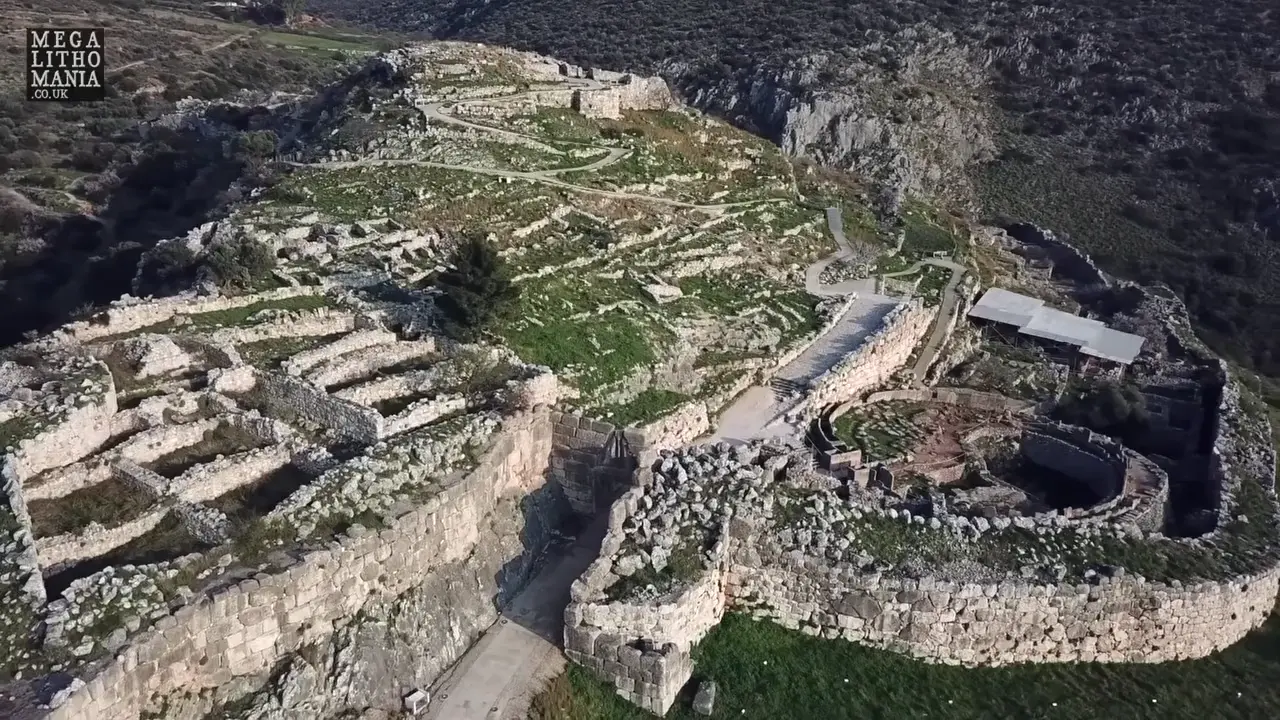
Key facts
- Mycenae dates to 1240 BC but may be older
- Three distinct wall types visible at the entrance: rough-hewn Cyclopean, neat polygonal, and mega blocks
- A hidden polygonal wall exists behind the main Cyclopean wall at the Lion Gate
- Construction uses conglomerate rock quarried from the area
- Double doorway construction technique evident
- Legendary founder Perseus, related to Danaus, linked to Pelasgians, Minoans, and Libyan tribes
Site mentioned
Sources
The Lion Gate at Mycenae: Architecture, Symbol and Power I The Art ...theartnewbie.com
Main Lion Gate entrance at Mycenae framed by Cyclopean walls with a relief above the lintel. The Lion Gate forms a dramatic, controlled entry ...
Lion Gate, Mycenae (video) | Mycenaean - Khan Academykhanacademy.org
The Lion Gate in Mycenae is a relief sculpture that is thought to be the first monumental sculpture found on mainland Greece. It is made of two animals ...
Victorian era tourists viewing the Lion Gate, Mycenae - Marblemarble.nd.edu
... around the Lion Gate and the North Gate contrast strikingly with the rough Cyclopean masonry of the earlier fortification wall.
A Family Trip To The Mycenae Lion Gate At The Archeaological Site ...wanderingwagars.com
The Lion Gate is the main entrance to the fortified walls of the city of Mycenae. ... An arched window in the Cyclopean Walls at Mycenae, Greece.
Lion Gate at Mycenae: a Pleiades place resourcepleiades.stoa.org
The Lion Gate is the main gate in the Cyclopean walls of the citadel of Mycenae. It takes its name from the sculptural decoration placed in the relieving ...
Was this story useful?
Keep exploring
Every site on this page sits on the globe, and the people who research them are on the Discord.
3D Globe · Sites by country · Story Archive · Research Library · Weekly Journal · Search
AI-generated text · images from the original sources · always verify with the sources.