

Menkaure's Pyramid at Giza was the smallest of the three but planned to be striking—lower pink granite from Aswan, upper white limestone. Modern scanning (electrical resistance tomography) reveals hidden voids beneath the granite blocks. Its burial chamber is oriented east-west, unlike other Giza pyramids. The sarcophagus was lost at sea in 1838! 📡🗿
Menkaure Pyramid: Giza's smallest pyramid with hidden voids
 EgyptGeneral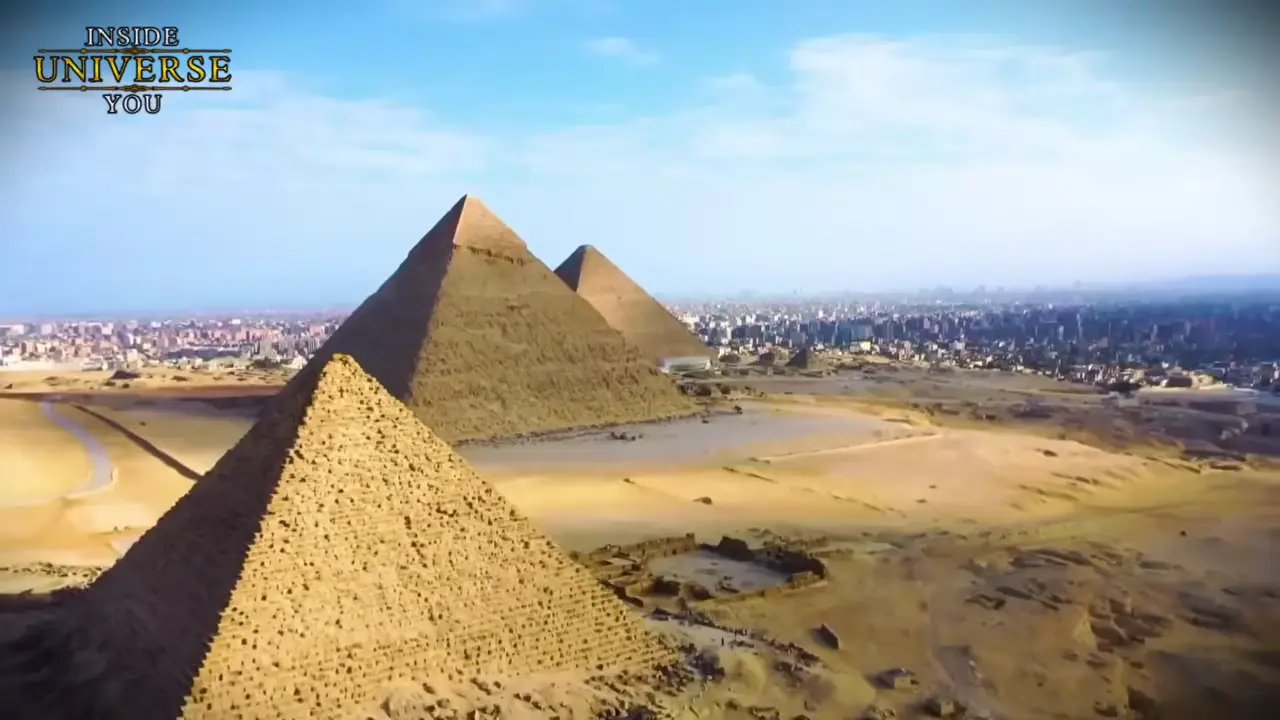
Key facts
- Menkaure Pyramid smallest of three Giza pyramids, originally about 65 meters tall
- Core built from locally quarried limestone, only quarter footprint of Khufu and Khafre pyramids
- Lower 15 meters sheathed in massive pink granite blocks from Aswan, upper courses intended for white Tura limestone
- Would have had striking two-toned appearance
- Joints between granite blocks narrow and regular despite material's hardness
- Modern scanning (electrical resistivity tomography, ground penetrating radar, ultrasonic testing) reveals hidden voids beneath granite blocks
- Entrance on north face about four meters above ground, descending at 26° angle
- Passageway lined in part with pink granite
- Contains unusual chamber with recessed panel carvings along walls - architectural rarity
- Burial chamber oriented north-south, unlike east-west orientation of Khufu and Khafre chambers
- Burial chamber cut deep into bedrock approximately 16 meters below base
- 1837 explorers discovered sarcophagus, lost at sea in 1838 en route to England
- Three subsidiary pyramids (Queens' pyramids) south of main pyramid
- Massive vertical gash on north face from 12th-century attempt by Al-Malek al-Aziz Othman to demolish pyramid
- Workers labored for eight months but could not induce total collapse
Site mentioned
Sources
universeinsideyou.systeme.io
Linked in video description
Was this story useful?
Keep exploring
Every site on this page sits on the globe, and the people who research them are on the Discord.
3D Globe · Sites by country · Story Archive · Research Library · Weekly Journal · Search
AI-generated text · images from the original sources · always verify with the sources.