

The Ħal Saflieni Hypogeum in Malta, dating to 4000–2500 BC, was roughly contemporaneous with Egypt's pyramids and Stonehenge. The three-level subterranean structure carved into globigerina limestone reaches about 11 meters below the surface. The Oracle Room is famous for remarkable acoustic properties where a male voice at 110 hertz causes the entire 3-level complex to vibrate. 🔊
Malta Hypogeum Features World's First Acoustic Chambers
 MaltaGeneral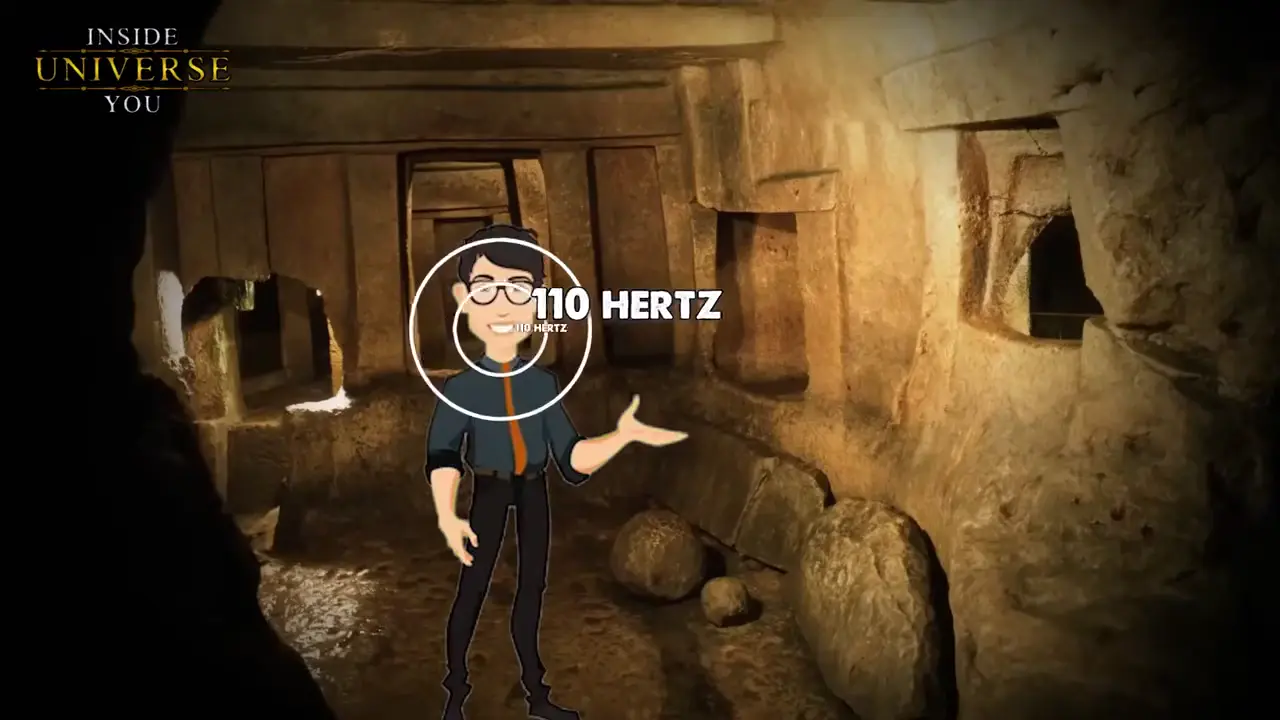
Key facts
- Carved entirely by hand into limestone more than 5,000 years ago, predating Egypt's pyramids and Stonehenge
- Descends through three levels reaching about 11 meters below the surface
- Upper level contained remains of over 7,000 individuals
- Middle level holds the Oracle Room famous for acoustic perfection where voice resonates throughout structure
- Male voice at 110 hertz causes entire complex to vibrate as if designed to amplify human sound
- Builders shaped curved surfaces to focus vibration using principle similar to modern architectural software
- Red ochre spirals painted on walls and ceilings bear no clear parallels in Maltese prehistory
- Skeletal remains included some elongated skulls leading to speculative theories
- Builders cut straight corridors, polished surfaces, and perfectly curved domes without metal tools using only stone hammers and antler picks
- Entire complex was planned with ventilation and drainage systems
- Some chambers align with astronomical points allowing sunlight during solstices or equinoxes
Site mentioned
Sources
Hal Saflieni Hypogeum, an Ancient Buried Enigmachasingworldheritage.com
Considered by many as the oldest underground temple in the world, it was built around 4,000 B.C. to 2,500 B.C. It consists of three levels and probably served ...
Ħal Saflieni Hypogeum - UNESCO World Heritage Centrewhc.unesco.org
Ħal Saflieni Hypogeum. The Hypogeum is an enormous subterranean structure excavated c. 2500 B.C., using cyclopean rigging to lift huge blocks of coralline ...
Ħal Saflieni Hypogeum - Wikipediaen.wikipedia.org
The Hypogeum of Ħal Saflieni is a Neolithic subterranean structure dating to the Saflieni phase (3300 – 3000 BC) in Maltese prehistory, located in Paola, ...
Ħal Saflieni Hypogeum - Heritage Maltaheritagemalta.mt
It was in use between 4000 BC and 1500BC. Covering a remarkable 500 square metres, it was amongst the first Maltese entries on the UNESCO World Heritage List ...
Unveiling an underground prehistoric cemeteryartsandculture.google.com
The Ħal Saflieni Hypogeum, or underground cavity, is an underground prehistoric cemetery used from around 4000BC to 2500BC.
Was this story useful?
Keep exploring
Every site on this page sits on the globe, and the people who research them are on the Discord.
3D Globe · Sites by country · Story Archive · Research Library · Weekly Journal · Search
AI-generated text · images from the original sources · always verify with the sources.