

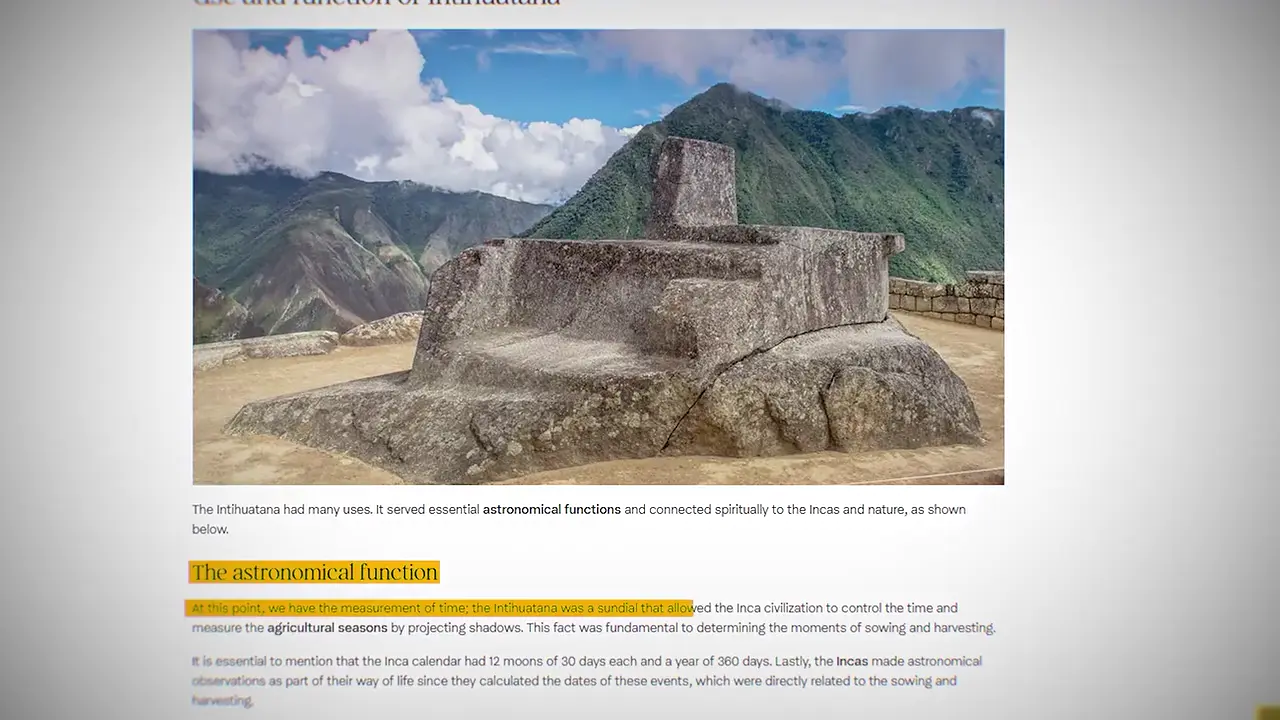
Built around 1450 by Emperor Pachacuti as a royal estate, Machu Picchu stands 2,430 metres above sea level in Peru’s Andes. Its temples and Intihuatana are associated with solar observation, although the stone’s precise solstice alignment remains debated. The site was abandoned around 1570. Spanish forces knew of and visited it in 1537. Local farmer Melchor Arteaga guided Hiram Bingham to the ruins in 1911, bringing Machu Picchu to broad international attention.
Machu Picchu: a solar-aligned Inca estate known to the Spanish
 PeruGeneral
Site mentioned
Key facts
- Machu Picchu was built around 1450 under Emperor Pachacuti as a royal estate.
- Its temples and Intihuatana are associated with astronomical observation, although the stone’s precise alignment and function remain debated.
- The site was abandoned around 1570, roughly a century after construction.
- Spanish forces knew of and visited Machu Picchu in 1537; vegetation and remoteness did not keep it hidden from them.
- Local farmer Melchor Arteaga guided Hiram Bingham to Machu Picchu in 1911, bringing it to broad international attention.
- Its steep mountain setting made access difficult, but Machu Picchu was primarily a royal estate and ceremonial centre rather than a defensive fortress.
Sources
paleoseismicity.org
Linked in video description
education.nationalgeographic.org
Linked in video description
Machu Picchu is older than historians thoughtnews.tulane.edu
it was believed that the one-time estate of Inca emperor Pachacuti in southern Peru was built around AD 1438. some two decades earlier.
Machu Picchu - Peru, Elevation & Factshistory.com
Many modern-day archaeologists now believe that Machu Picchu served as a royal estate for Inca emperors and nobles. Others have theorized ...
Machu Picchuen.wikipedia.org
Estimated to be built around 1450, it is believed to have served as an estate for the Inca emperor Pachacuti, though no contemporary written records exist to ...
History/Evolution | The History of Machu Picchu - U.OSUu.osu.edu
It is believed that after its construction, Machu Picchu was used as a royal estate for emperors and nobles. There is also the belief that Machu Picchu was ...
Machu Picchu, a Royal Estate of the Inca Ruler Pachacutibooks.openedition.org
Machu Picchu was no typical Inca settlement, but, rather, a private royal estate of the emperor Pachacuti, probably built around the mid‐fifteenth century AD.
Machu Picchu -- World Heritage Sitenationalgeographic.com
Machu Picchu is tangible evidence of the urban Inca Empire at the peak of its power and achievement—a citadel of cut stone fit together without ...
Was this story useful?
Keep exploring
Every site on this page sits on the globe, and the people who research them are on the Discord.
3D Globe · Sites by country · Story Archive · Research Library · Weekly Journal · Search
AI-generated text · images from the original sources · always verify with the sources.