

Europe's largest human geoglyph, the Long Man of Wilmington in Sussex, undergoes a remarkable transformation at summer solstice. He's illuminated by full sun from sunrise to sunset - the longest day of the year. Two tiny shadows appear on either side of the figure at sunrise and sunset, cast by natural gullies. At winter solstice, the figure remains in complete shadow all day. His two staffs may represent the balance between sun and moon, light and dark. The South Downs location offers commanding views of the surrounding landscape, though his age remains unknown.
Long Man of Wilmington summer solstice: figure fully illuminated from sunrise to sunset
 EnglandTheory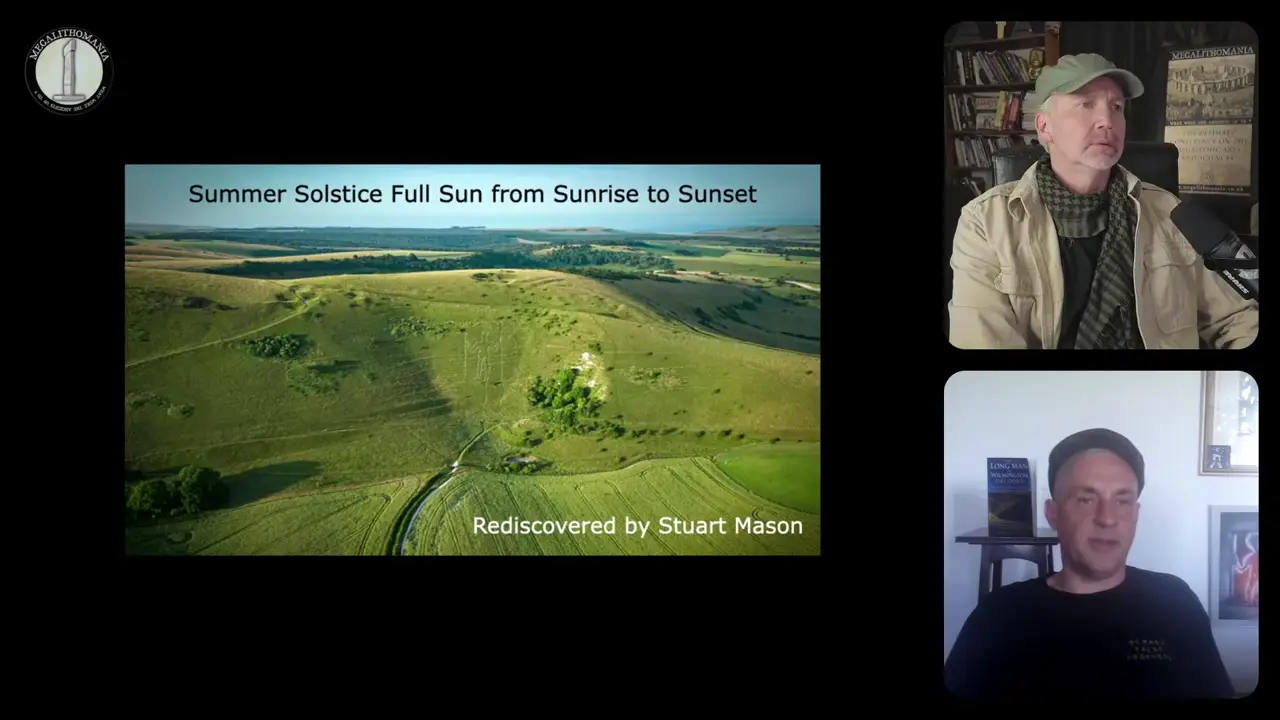
Key facts
- Long Man of Wilmington is Europe's largest human geoglyph and second largest in the world after the Giant of Atacama in Chile
- The geoglyph was likely originally chalk-cut, then grew with grass (called 'Green Man'), and is now concrete blocks painted white
- On summer solstice, the Long Man is illuminated by full sun from sunrise to sunset, the longest day
- Two tiny shadows appear on either side of the figure at sunrise and sunset, cast by natural gullies
- On winter solstice, the figure remains in complete shadow all day and night
- The nearby Windover Hill Long Barrow is oriented at 50-51 degrees, exactly matching the summer solstice sunrise direction
- The figure's two staffs may represent balance, echoing sun and moon duality
- The site is located on the South Downs in Sussex with commanding views over the surrounding landscape
Site mentioned
Sources
Long Man of Wilmington - Sewalotsewalot.com
He is one of the largest representations of the human figure in the world and the tallest in Europe. Not bad, eh? There are great times to see our giant and ...
Long Man of Wilmington - Wikipediaen.wikipedia.org
The Long Man of Wilmington or Wilmington Giant is a hill figure on the steep slopes of Windover Hill near Wilmington, East Sussex, England.
The Long Man of Wilmington - Atlas Obscuraatlasobscura.com
The Long Man of Wilmington. This giant geoglyph of mysterious origins is now the site of neo-pagan rituals. Wilmington, England. Added By.
Long Man of Wilmington, East Sussex | Megalithic Portalmegalithic.co.uk
Good walk around the top of the hill car park and toilets available at priory. Figure marked out with concrete blocks, fantastic views.
The Long Man of Wilmington - The Pastthe-past.com
The origins of the imposing East Sussex hill figure known as the Long Man of Wilmington have long posed a mystery for archaeologists.
Was this story useful?
Keep exploring
Every site on this page sits on the globe, and the people who research them are on the Discord.
3D Globe · Sites by country · Story Archive · Research Library · Weekly Journal · Search
AI-generated text · images from the original sources · always verify with the sources.