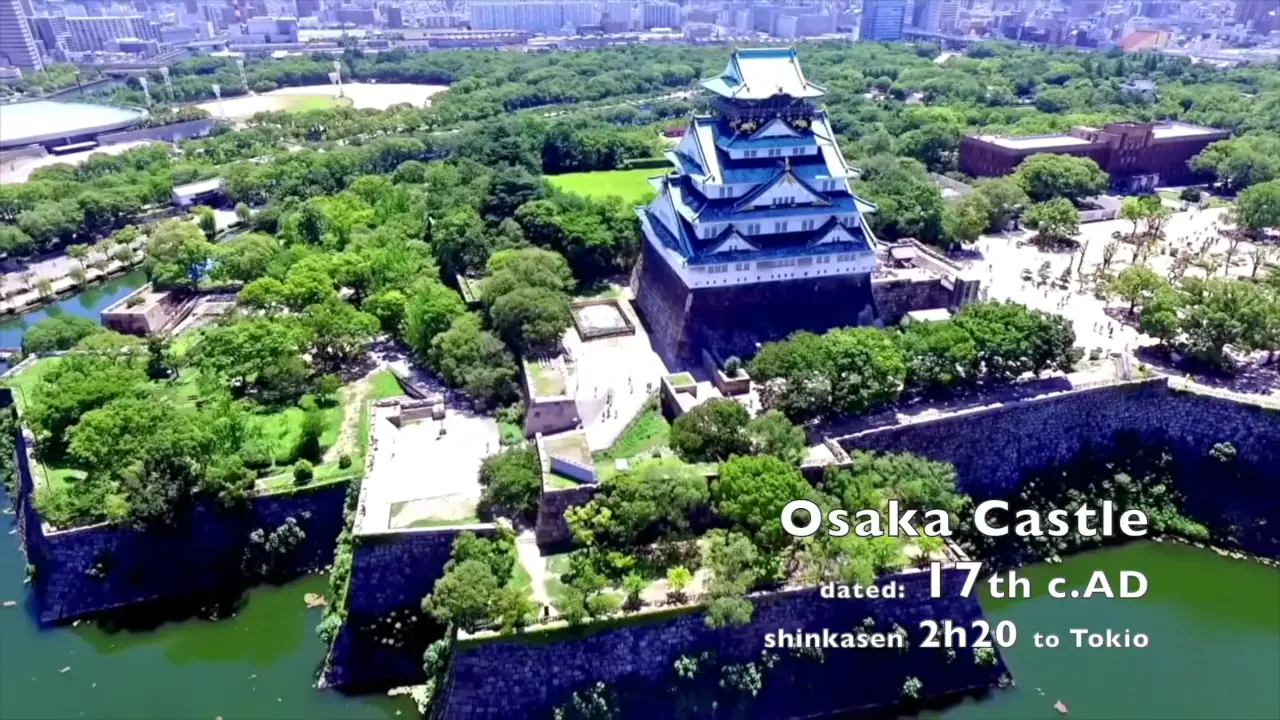
Japanese castle stonework did not begin with the Portuguese arrival in 1543. Japan had stone-building traditions centuries earlier; the distinctive large castle-wall phase developed mainly during the late Sengoku and Azuchi–Momoyama periods, from the 1570s into the early 17th century. The video links this development to Portuguese contact, but the evidence does not establish that causal claim.
Himeji’s surviving complex was largely rebuilt from 1601, with its keep completed in 1609; Osaka Castle was founded in 1583 and repeatedly reconstructed. Japanese builders used several named wall techniques, and castle masonry continued to evolve through the Edo period. Centralization after 1615 reduced new castle building but did not end it. Estimates commonly put Sengoku-era castles in the hundreds, with roughly 100 surviving sites or ruins and only a small number substantially intact. Many castles were dismantled during the Meiji reforms; World War II damaged others.
Sources
Himeji Castle Historyhimejicastle.jpStone Walls. Japanese castle buildings are made of wood, but they sit atop foundations of earth and stone. Stone retaining walls of the kind used at Himeji were ...
Himeji Castle, a World Heritage Site - NIPPONIAweb-japan.orgStone foundation walls and ramparts provided extra defense, some standing between enclosures and passageways, making enemy penetration exceedingly difficult.
The Architecture of Medieval Japan's Himeji Castle - Brewminatebrewminate.comThe walls have a total length of 4.8 km (3 miles) and some sections reach a height of 26 metres (85 ft). Such was the prodigious quantity of ...
Himeji Castle - Wikipediaen.wikipedia.orgHimeji Castle is the largest and most visited castle in Japan, and it was registered in 1993 as one of the first UNESCO World Heritage Sites in the country.
Himeji Castle - Main Compounds - Jcastle.infojcastle.infoMain Compounds of Himeji Castle. This is mostly the area that typical tourists would visit and are primarily beyond the ticket counter.
The castles of Japan - Earthrise:Liveearthriselive.orgThis 'cyclopean masonry' is so cleverly made that the bases have survived hundreds of earthquakes. Inside, the castles have winding stairways, ...
Japanese castleen.wikipedia.orgJapanese castles are fortresses constructed primarily of wood and stone. They evolved from the wooden stockades of earlier centuries and came into their ...
Marugame Castle, One of the Most Famous Stone Walls ...japan.travelMarugame Castle (completed in 1602) has a long 420-year history(completed in 1602) and is one of 12 castles with wooden castle towers that still exist in Japan.
AI-generated text · images from the original sources · always verify with the sources.