

The main chamber of Pyramid G2-A measured 7.86 x 2.63 x 2.1 m and was found full of sand and rubble. No sarcophagus was ever found, but jar fragments bore a mud seal with Khafre's Horus name. Mark Lehner speculated this may have been a cult pyramid for a ka statue rather than a queen's burial. 🗿
Interior layout of Pyramid G2-A's main chamber and passageways
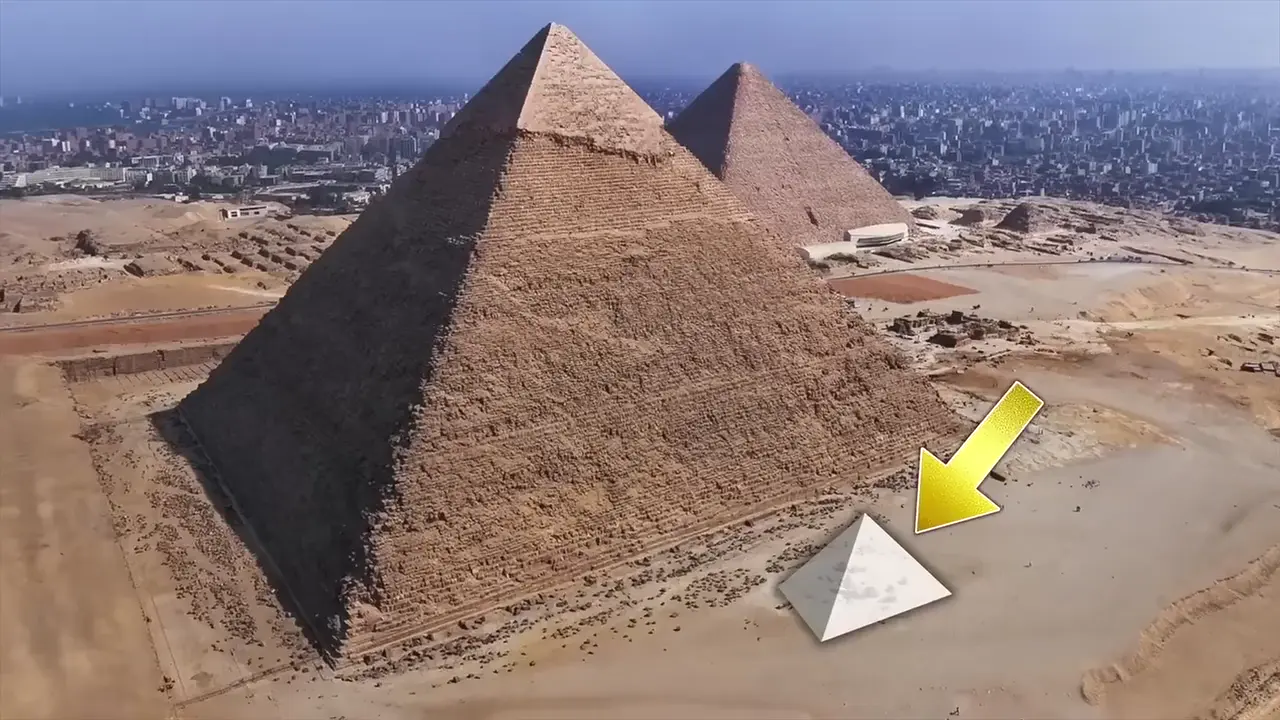
Site mentioned
📍 Pyramid G2-A
Key facts
- The descending passageway was approximately 11.5 m (22 cubits) long
- Main chamber measured 7.86 m long by 2.63 m wide by 2.1 m high (15 x 5 x 4 cubits)
- Chamber was found full of sand and rubble up to 1 m in height, with walls covered in thin plaster
- No sarcophagus or sarcophagus fragments were found inside
- A limestone plugging block remained in the entrance passage, limiting removal of large objects
- Fragments of wood, cattle bones, two beads, and jar fragments were found in the chamber rubble
- One jar fragment had a mud sealing displaying Khafre's Horus name
- Mark Lehner (1997, The Complete Pyramids) speculated the pyramid may have been for a ka statue rather than a queen
Sources
Great Pyramid of Giza | Egypt, Height, Location, Pictures, & Factsbritannica.com
The base and three sides each measure 755 feet (230 meters) in length. The pyramid's sides rise at an angle of 51.87° and are accurately oriented to the four ...
Architecture of the Great Pyramid of Giza Concept and Constructionpress.ierek.com
When it comes to the grand gallery design with its spacious space that measured almost eight meters and half in height and forty seven meters in length, the ...
Pyramids of Giza - Discovering Egyptdiscoveringegypt.com
With an original height of 228 feet (70 m), it is less than half the height of the pyramid built by his grandfather, Khufu. The lower layers consist of red ...
The Great Pyramid - Discover Egypt's Monumentsegymonuments.gov.eg
The Great Pyramid, the tomb of King Khufu (c.2589–2566 BC), with its original height of 146.5 meters, was the tallest structure in the world for 3800 years.
Giza Lying Down Sizes - Inner Fire Pyramidsinnerfirepyramids.com
10 × 1.414 is 14.14. Hence, the distance between opposite corners in a Giza 71 is 14.14 feet. (If you want a broader reference point, see pyramid dimensions ...
Was this story useful?
Keep exploring
Every site on this page sits on the globe, and the people who research them are on the Discord.
3D Globe · Sites by country · Story Archive · Research Library · Weekly Journal · Search
AI-generated text · images from the original sources · always verify with the sources.