

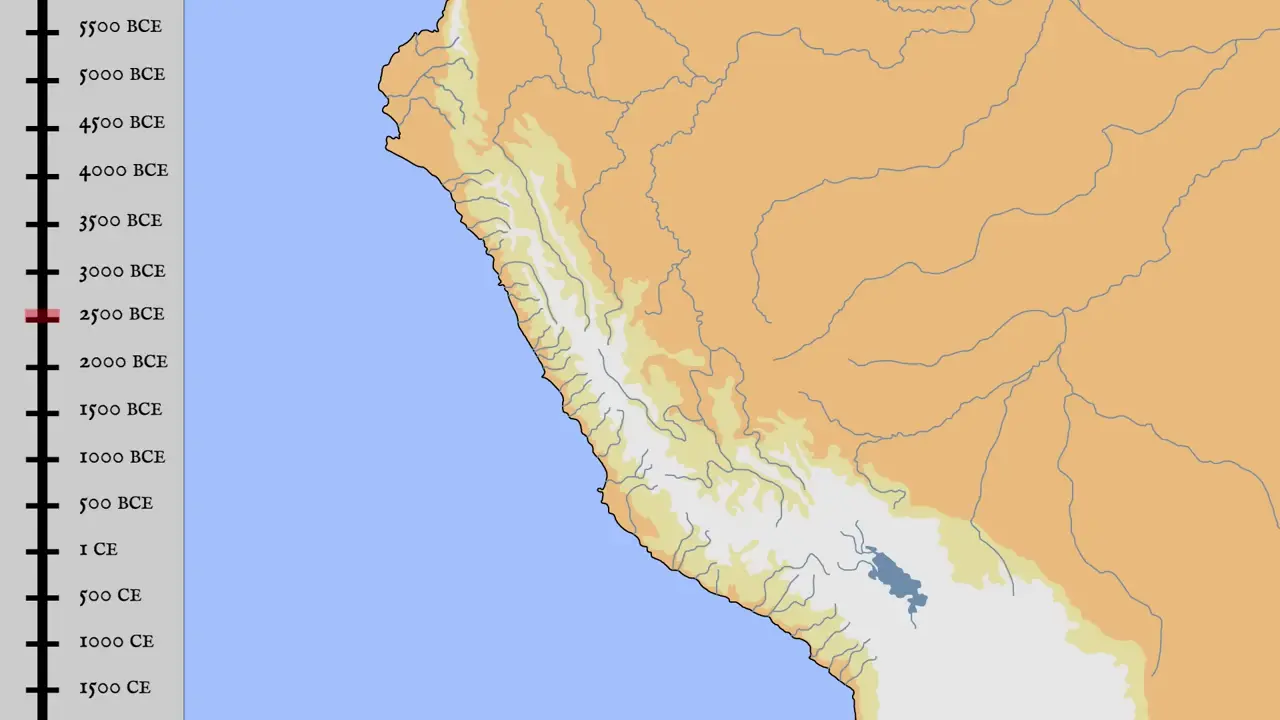
Inca masonry built upon millennia of Andean stoneworking tradition. Earliest monumental Andean stoneworking dates to 2600 BCE at Caral in the Supe Valley Chavín de Huántar constructed from 1200 BCE to 500 BCE featuring 4.5m tall Lanzón stela carved from solid granite Wari Empire (600 CE) introduced finely cut stone and ashlar masonry at their capital
Inca masonry didn't appear from nowhere! It built on 2,000+ years of Andean stoneworking, from early cultures through Wari and Tiwanaku. Each culture refined techniques the Inca later mastered.
Key facts:
- Caral (2600 BCE) in the Supe Valley shows early monumental architecture, though primarily in adobe; true stone masonry developed in later Andean cultures
- Chavín de Huántar flourished 900 BCE–200 BCE featuring the 4.5m tall Lanzón stela carved from solid granite
- Wari Empire (~600 CE) introduced finely cut stone and ashlar masonry at their capital
- Tiwanaku refined polygonal ashlars with 90-degree corners and carved decorations
- Inca drew inspiration from both Wari and Tiwanaku traditions separated by centuries
Key Facts
- Earliest monumental Andean stoneworking dates to 2600 BCE at Caral in the Supe Valley
- Chavín de Huántar constructed from 1200 BCE to 500 BCE featuring 4.5m tall Lanzón stela carved from solid granite
- Wari Empire (600 CE) introduced finely cut stone and ashlar masonry at their capital
- Tiwanaku refined polygonal ashlars with 90-degree corners and carved decorations
- Inca drew inspiration from both Wari and Tiwanaku traditions separated by centuries
- Mit'a labor system allowed Inca to muster large workforce for construction projects
Source: The Secrets of Inca Masonry by Ancient Americas