

At just 28 years old, Henri Frankfort led the definitive excavation of the Osirion from 1925-1929 for the Egypt Exploration Society, producing the most comprehensive archaeological record over four seasons. He documented all chambers and every architectural element. Cartouches of Seti I on multiple elements confirmed the connection. Frankfort concluded the Osirion was a cenotaph—a symbolic empty tomb representing the primordial mound rising from the waters of chaos—where Nile waters could flood and recede in imitation of Osiris's cycle of death and rebirth.
Henry Frankfurt's definitive 1925-1930 excavation confirms cenotaph function and Seti I connection
 EgyptGeneral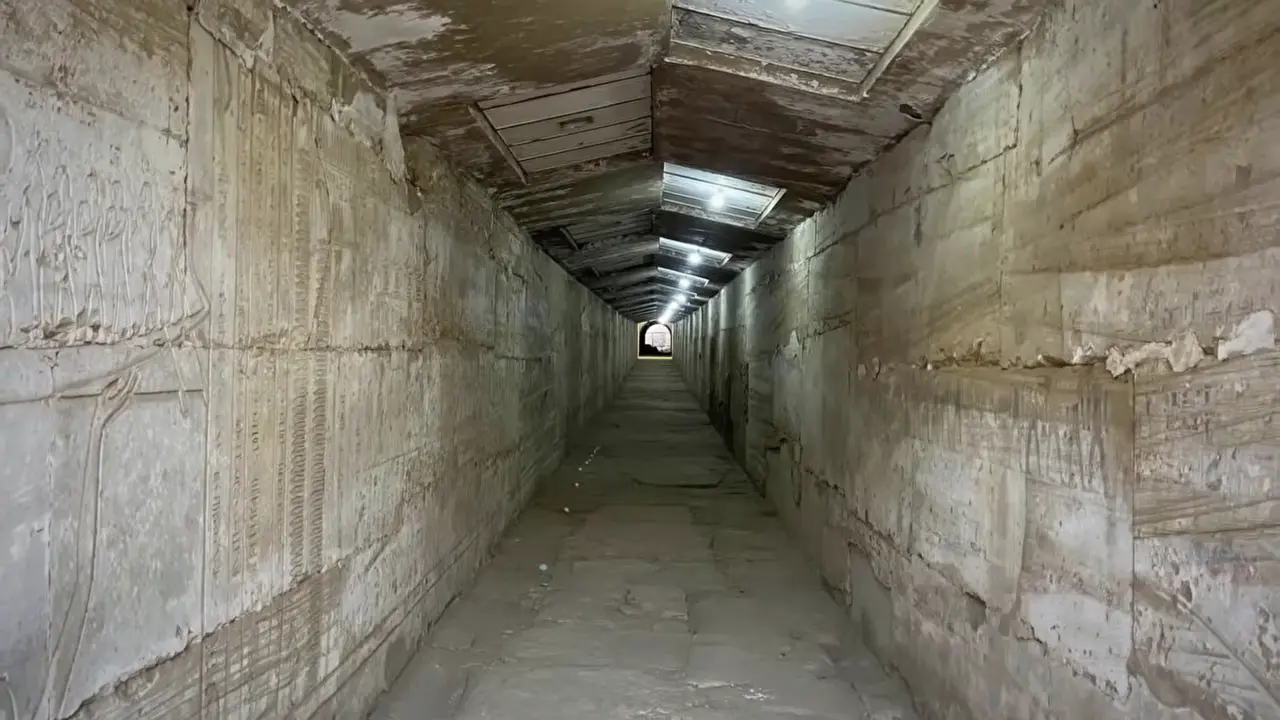
Key facts
- Henry Frankfurt conducted the definitive excavation of the Osirion between 1925 and 1930 for the Egypt Exploration Society
- At age 28, Frankfurt produced the most comprehensive archaeological record of the monument over five seasons
- He fully cleared all 17 chambers, mapped every architectural element, and documented every inscription
- Cartouches of Seti I appeared on multiple architectural elements including within the central hall
- The passages connecting the temple to the Osirion formed a deliberate planned axis
- Frankfurt concluded the Osirion was a cenotaph, a symbolic empty tomb built for performing the mysteries
- The structure was a physical representation of the primordial mound rising from the waters of chaos
- The Nile waters could flood the central chamber and recede in imitation of Osiris's cycle of death and rebirth
Site mentioned
Sources
Possibly Henri Frankfort (1897–1954), field director of the ...doaks.org
Possibly Henri Frankfort (1897–1954), field director of the excavations in Abydos from 1925 to 1929. Egypt Exploration Society excavations at Abydos, Egypt, ...
Henri Frankfort - Artefacts of Excavation - University of Oxfordegyptartefacts.griffith.ox.ac.uk
Dutch Egyptologist, archaeologist, and orientalist; he was born in Amsterdam 24 Feb. 1897, son of Benjamin Philippe F., a merchant in Near Eastern trade, ...
Henri Frankfort | Mesopotamian Studies, Archaeology, Cuneiformbritannica.com
American archaeologist who completed a well-documented reconstruction of ancient Mesopotamian culture, established the relation between Egypt and Mesopotamia.
Frankfort, Henri - Dictionary of Art Historiansarthistorians.info
Frankfort's excavations at Mesopotamia for the University of Chicago, 1929-1937 were some of the most important excavations of the era, adding significantly ...
Harry Frankfort – Excavations and Findings at the Osireionosireion.info
This volume by Harry Frankfort offers an in-depth textual analysis of the Cenotaph of Seti I at Abydos, often associated with the Osireion.
Was this story useful?
Keep exploring
Every site on this page sits on the globe, and the people who research them are on the Discord.
3D Globe · Sites by country · Story Archive · Research Library · Weekly Journal · Search
AI-generated text · images from the original sources · always verify with the sources.