

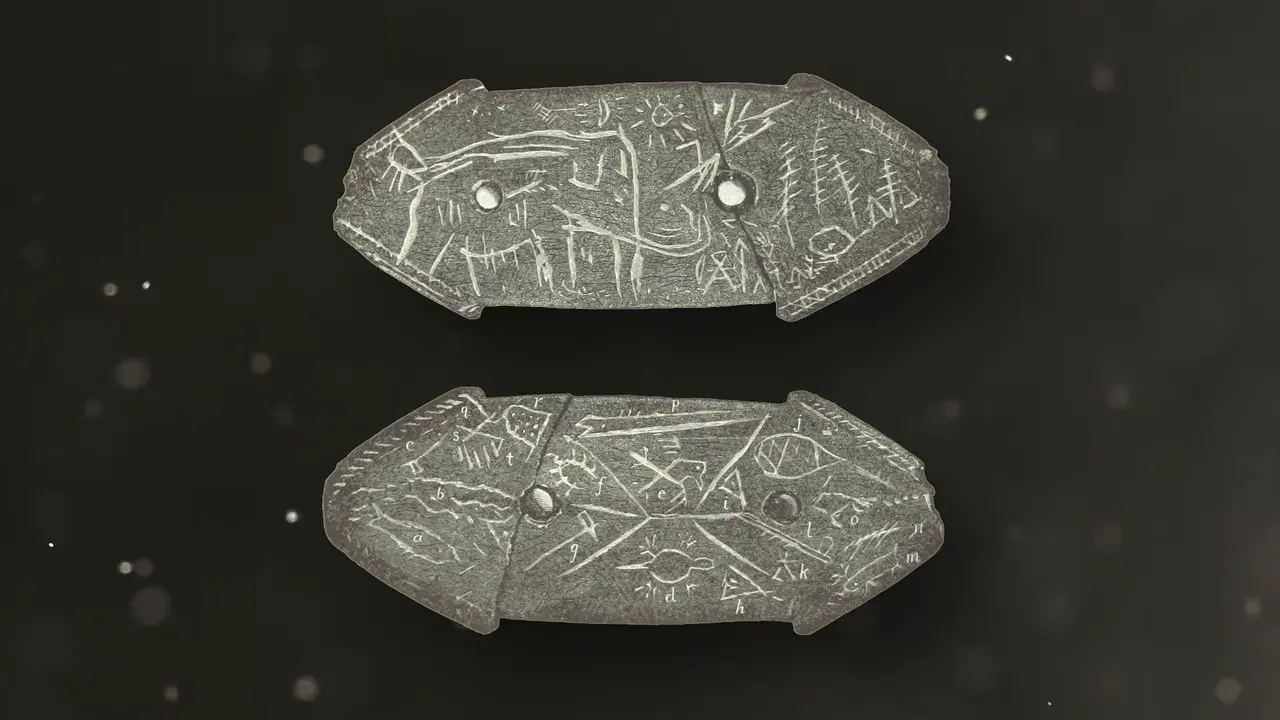
A 1917 slate from Massachusetts depicted mammoth hunters, but mammoths vanished 13,000 years ago. CC Willoughby of Harvard's Peabody Museum noted European-style perspective and unweathered surfaces — serious forgery red flags. The tablet copied the already-suspect Lenape Stone, and both have since vanished.
Hammond tablet and Lenape stone mammoth carvings likely forgeries
Key facts
- In 1917, railroad engineer Frank Hammond found a dark slate slab roughly 6.5 by 9.5 inches near the Three Mile River in Taton, Massachusetts, carved with stick-figure hunters, wigwams, celestial symbols, and a mammoth
- Mammoths vanished from North America approximately 13,000 years ago, long after the bow was introduced, making the carving either an anachronism or evidence of long oral transmission
- The Lenape Stone, found 45 years earlier in Bucks County, Pennsylvania, depicted a similar mammoth-hunting scene; archaeologists determined the carvings did not cross a natural crack splitting the stone, suggesting they were added after the break — declaring it a forgery
- CC Willoughby of Harvard's Peabody Museum found the Hammond stone's surface did not look weathered and that the mammoth was rendered in perspective — a technique that did not arrive in the Americas until European contact
- Lab historian Herbert Kraft stated the Hammond tablet had been plagiarized from the equally fake Lenape Stone
- The Lenape Stone survives in Doylestown, Pennsylvania; the Hammond tablet vanished after the 1920s, surviving only in Harvard photographs and tracings
- A 1921 engraved mastodon bone from Jacob's Cavern in Missouri has also been declared irretrievably lost
Keep exploring
Every site on this page sits on the globe, and the people who research them are on the Discord.
3D Globe · Sites by country · Story Archive · Research Library · Weekly Journal · Search
AI-generated text · images from the original sources · always verify with the sources.