

A Cambridge Archaeological Journal issue called Kinship Trouble debates whether ancient DNA should define family relationships. A 2025 Moche study at Huanchaquito-Las Llamas used five methods to identify relatives across four generations. A 2017 Pueblo Bonito study claimed a matrilineal dynasty without consulting communities. Critics Alyssa Mtnez and Keolu Fox argue DNA shouldn't override oral history and archaeology.
Debate over using ancient DNA to reconstruct family and community
 Peruunverified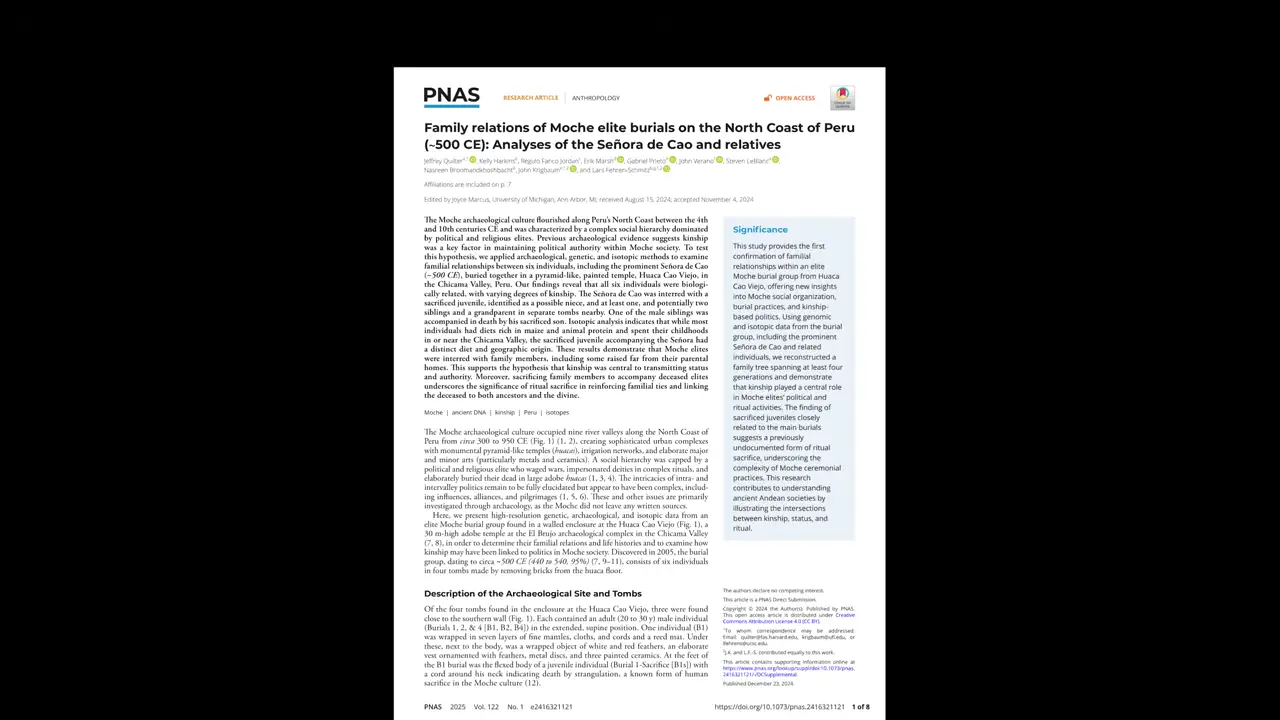
Key facts
- A special issue of Cambridge Archaeological Journal called Kinship Trouble debates whether ancient DNA should define ancient family relationships.
- A 2025 Moche study at Huanchaquito-Las Llamas (Huaca Cao Viejo) on Peru's north coast, around 500 CE, examined the elite Señora de Cao buried in a painted pyramid-temple.
- Five analytical methods estimated biological relatedness; results identified six relatives across at least four generations.
- Isotope analysis showed most group members ate maize-rich diets and grew up in or near the Chicama Valley, while a sacrificed juvenile likely grew up in the highlands.
- A 2017 Chaco Canyon study used aDNA at Pueblo Bonito to describe a matrilineal dynasty without consulting Pueblo communities, drawing criticism from Alyssa Mtnez, Sosti Sosa, and Keolu Fox.
- The critics argue DNA should not be granted automatic priority over archaeology, oral history, and community knowledge.
Site mentioned
Keep exploring
Every site on this page sits on the globe, and the people who research them are on the Discord.
3D Globe · Sites by country · Story Archive · Research Library · Weekly Journal · Search
AI-generated text · images from the original sources · always verify with the sources.