

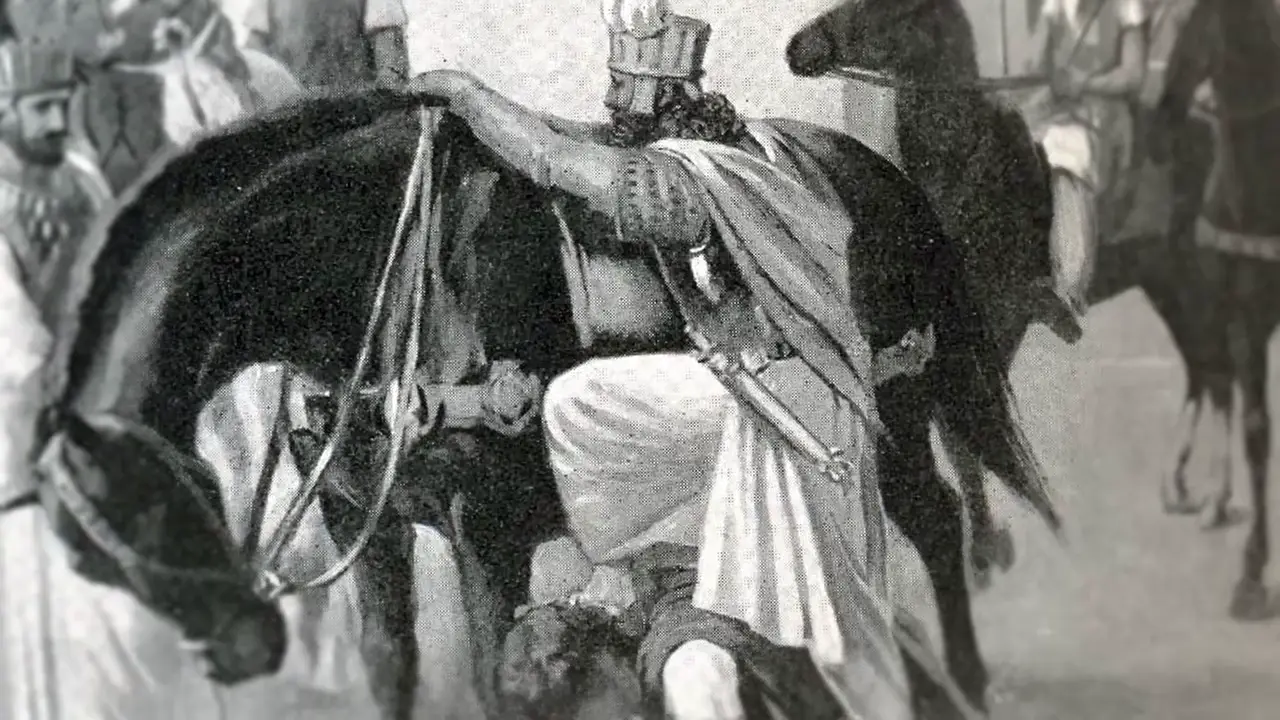
In 260 AD, Roman Emperor Valerian was captured by Persian King Shapur I, the only Roman emperor ever taken prisoner. Christian writer Lactantius claimed Shapur used him as a human footstool before his body was skinned, dyed red, and hung in a temple. Meanwhile, the rock relief at Naqsh-e Rostam still shows Shapur grasping Valerian by the wrist, and Band-e Kaisar dam may stand as a grim monument to Roman prisoners forced into labor. A haunting chapter of ancient power gone wrong.
Emperor Valerian's captivity and death under Shapur I of Persia
Site mentioned
📍 Band-e Kaisar🌍 Show on the globe
Key facts
- Roman Emperor Valerian was captured by Persian King Shapur I in 260 AD.
- Christian author Lactantius claimed Valerian was used as a human footstool, then his body was preserved, dyed red, and displayed in a Persian temple.
- Persian historian Al-Tabari claimed Valerian was sent to Gundeshapur to build a dam using Roman prisoners as labor.
- The dam is known as Band-e Kaisar.
- A rock relief at Naqsh-e Rostam in Iran shows Shapur on horseback with Valerian standing beside him in imperial regalia, held by the wrist.
- Valerian's son Gallienus never attempted a rescue or ransom.
- Emperor Julian later marched through the same territory without ever mentioning Valerian.
Sources
Valerian - an epic story mostly lost to historycointalk.com
Emperor from 22 October 253 AD to spring 260 AD. He was taken captive by the Persian Emperor, Shapur I after the Battle of Edessa, becoming the ...
Eastern Mediterranean 260: Capture of Valerianomniatlas.com
Valerian marched east to deal with this threat but was defeated and captured by Shapur at Edessa. This humiliation—the first time a Roman emperor had been taken ...
Valerian (emperor)en.wikipedia.org
Valerian is known as the first Roman emperor to have been taken captive in battle, captured by the Persian emperor Shapur I after the Battle of Edessa.
VALERIAN & SHAPUR, 260 A.D. The defeat and capture of ...granger.com
In a historic 4th-century Sassanian cameo, King Shapur I triumphs over Roman Emperor Valerian in 260 A.D. The image captures the moment of defeat and capture, ...
Shapur, King of Persia, Humiliates the Roman Emperor ...getty.edu
After a series of wars against the Romans, Shapur defeated Valerian at Edessa in AD 260 and kept him captive for the rest of his life.
Was this story useful?
Keep exploring
Every site on this page sits on the globe, and the people who research them are on the Discord.
3D Globe · Sites by country · Story Archive · Research Library · Weekly Journal · Search
AI-generated text · images from the original sources · always verify with the sources.