

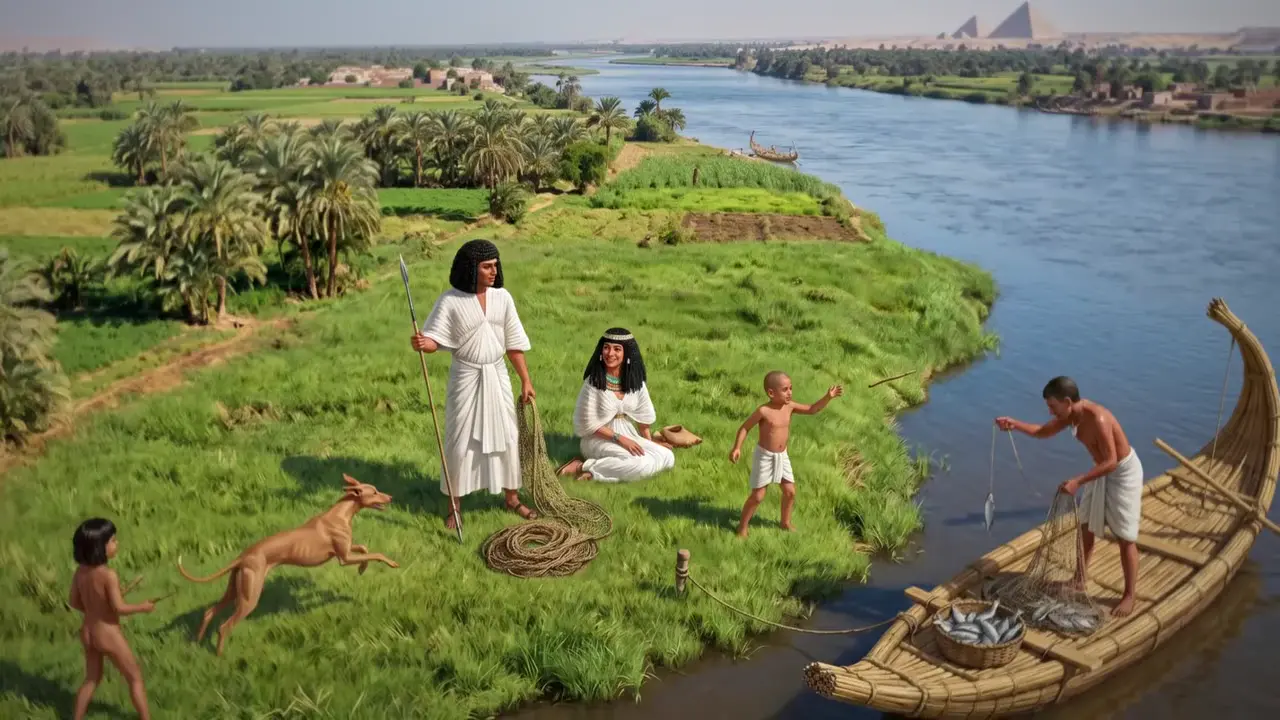
Egyptians weren't obsessed with death—they were focused on living well and continuing life afterward. Mummification was practiced to preserve existence, not celebrate ending. Tomb paintings show fishing, hunting, and family life on the Nile as the afterlife was conceived as a continuation of the best parts of earthly existence.
Egyptians focused on life and afterlife, not death itself
Key facts
- Egyptian tomb paintings depict everyday life activities: fishing, hunting, family time, and boating on the Nile
- The afterlife was conceived as a continuation of the best parts of one's earthly life
- Mummification was practiced to preserve life, not celebrate death
- Egyptians brought offerings to the dead to sustain them in the afterlife
- The transition of death was viewed as moving from one plane of existence to another, not as an ending
Sources
Ancient Egyptian mummification was never intended to preserve bodies ...livescience.com
It's long been believed that ancient Egyptians used mummification as a way to preserve a body after death. However, an upcoming museum exhibition indicates ...
Egyptian Mummies | Smithsonian Institutionsi.edu
It was important in their religion to preserve the dead body in as life-like a manner as possible. So successful were they that today we can view the mummified ...
Why Was Mummification Used in Ancient Egypt? | HistoryExtrahistoryextra.com
The Egyptians believed that it was possible to live again after death, but this could only happen if the body was preserved in a lifelike form.
The multifaceted nature of Egyptian mummification - PMC - NIHpmc.ncbi.nlm.nih.gov
In accordance with ancient Egyptian beliefs, the preservation of the body after death was an important prerequisite for the continued existence ...
Was this story useful?
Keep exploring
Every site on this page sits on the globe, and the people who research them are on the Discord.
3D Globe · Sites by country · Story Archive · Research Library · Weekly Journal · Search
AI-generated text · images from the original sources · always verify with the sources.