

Roman concrete peaked during the 1st-2nd centuries AD, fueled by prosperity and Mediterranean trade. The 3rd century inflation crisis, division into the tetrarchy, and shift of patronage toward churches all contributed to its decline. Scholar Bryan Ward-Perkins argues the post-Roman period saw a literal regression in living standards. Concrete persisted mostly as filler between brick and stone walls.
Economic and social factors behind the decline of Roman concrete
Key facts
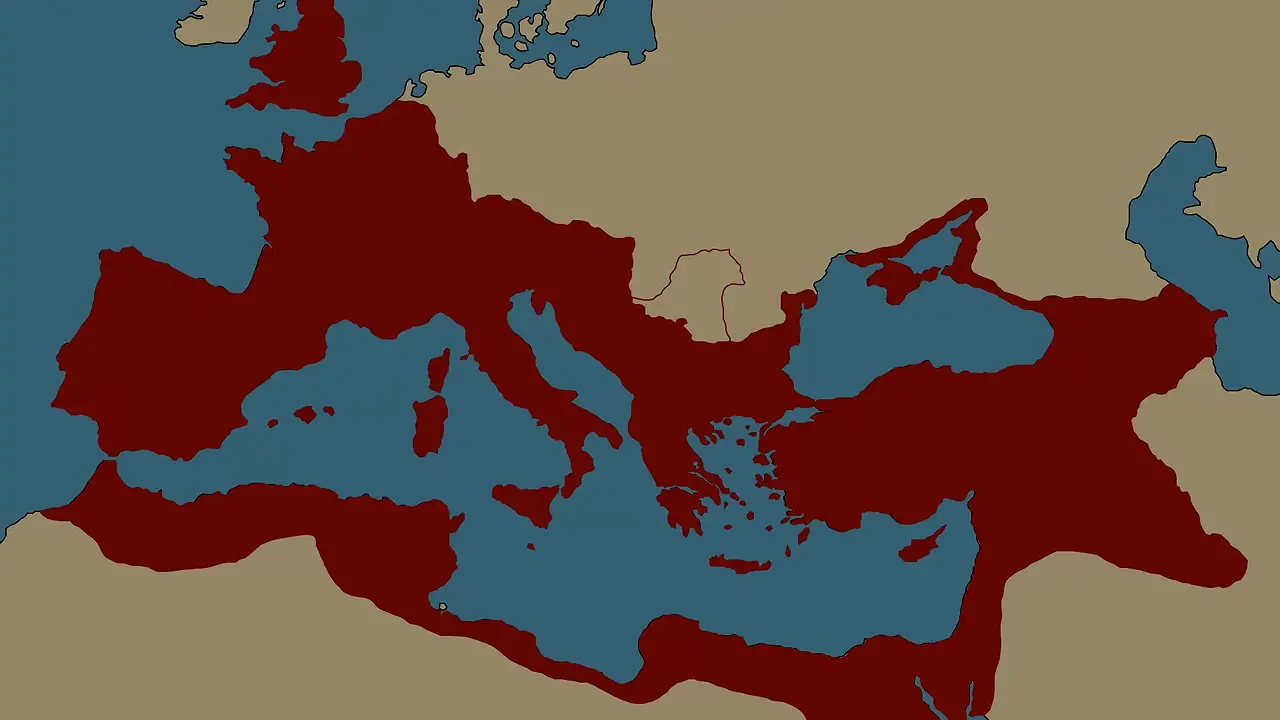
- The heyday of Roman concrete occurred in the 1st–2nd centuries AD, supported by economic prosperity, resource extraction, a shared Mediterranean market, imperial patronage, and civic euergetism.
- Inflation during the 3rd century crisis disrupted this economic foundation.
- The division of the empire into the tetrarchy and relocation of the capital moved emperors away from Italian sources of pozzolana.
- Civic euergetism shifted toward sponsoring churches and monasteries, which did not require concrete construction.
- Archaeological evidence shows terracotta and stone roof tiles fell out of use after the fall of Rome, replaced by thatched and organic materials.
- Scholar Bryan Ward-Perkins has argued that the post-Roman period represented a literal end of civilization with a massive regression in living standards.
- The Eastern Roman Empire lost wealthy provinces to Justinian's wars, plague, conflicts with the Lombards and Avars, the Roman–Sasanian War, and the Islamic conquests.
- Concrete continued in a reduced role after Rome, mainly as filler between brick or stone walls.
- Medieval builders recognized that Roman construction was superior but generally attributed this to pozzolana rather than to concrete itself.
Sources
Roman Cement and Pozzolans - Traditional Building Magazinetraditionalbuilding.com
The secret of Roman Cement was the mixing of lime with pozzolana, called harena fossicia or “pit sand” by Vitruvius. Pozzolana was distinguished ...
Pozzolans in Mortar in the Roman Empire: An Overview ...books.openedition.org
This paper focuses on three different ingredients used to create hydraulic mortar: volcanic ash, crushed terracotta, and plant ash.
Reconstructing the beginnings of Roman concretecambridge.org
by JP Oleson · 2023 · Cited by 1 — In the concluding chapter there is an extensive treatment of the pozzolana trade and the mechanisms for the spread of concrete technology,
Roman Concreteancientengrtech.wisc.edu
The Ancient Roman's concrete consisted of a mix of volcanic ash or also known as Pozzolana, lime, and water to make a mortar [13].
Understanding Roman Concretebrewminate.com
The most significant change in Ancient Roman lime mortar was the accidental addition of pozzolana, the sand-like volcanic ash known as pitsand ...
Was this story useful?
Keep exploring
Every site on this page sits on the globe, and the people who research them are on the Discord.
3D Globe · Sites by country · Story Archive · Research Library · Weekly Journal · Search
AI-generated text · images from the original sources · always verify with the sources.