

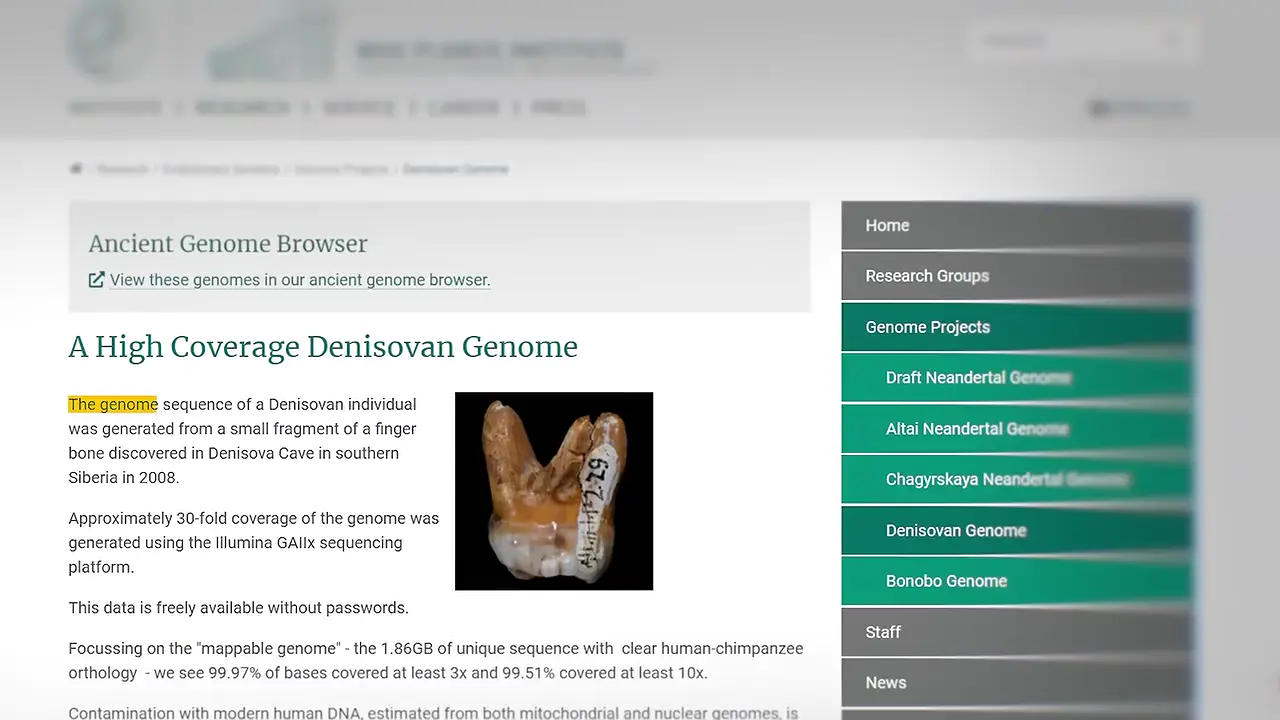
Denisovans were identified in 2010 from DNA in a Siberian child's finger bone — their EPAS1 gene still helps Tibetans thrive at high altitude. On Flores Island, Homo floresiensis stood just 1 meter tall yet hunted dwarf elephants until 50,000 years ago. South Africa's 1,500+ Homo naledi bones spark debate over deliberate burial practices.
DNA and fossil evidence identify Denisovans, Homo floresiensis, and Homo naledi as distinct archaic humans
Key facts
- Denisovans identified in 2010 through DNA extracted from a child's finger bone found in a Siberian cave
- Denisovan range extended from Siberia across Asia to the edges of Southeast Asia
- A bone from Denisova Cave belonged to Denny, a first-generation hybrid with a Neanderthal mother and Denisovan father
- A Denisovan gene variant (EPAS1) helps modern Tibetans tolerate thin air at high altitude
- Homo floresiensis, nicknamed the Hobbit, discovered on Flores island in Indonesia
- Adult Homo floresiensis stood approximately 1 meter tall with a brain the size of a chimpanzee's, roughly one-third the volume of modern humans
- Homo floresiensis made stone tools, hunted dwarf elephants, coexisted with Komodo dragons, and survived until approximately 50,000 years ago
- Homo naledi fossils found in South Africa, with over 1,500 bones recovered from deep passages within a cave system
- Homo naledi had a brain roughly one-third the size of modern humans
- Scientists debate whether Homo naledi bones were deliberately deposited or carried into the cave
Sources
theguardian.com
Linked in video description
discoverspace.org
Linked in video description
bbcearth.com
Linked in video description
Was this story useful?
Keep exploring
Every site on this page sits on the globe, and the people who research them are on the Discord.
3D Globe · Sites by country · Story Archive · Research Library · Weekly Journal · Search
AI-generated text · images from the original sources · always verify with the sources.