

A July 2026 study examined six people from Dahshur's royal court (around 1850–1700 BCE), including King Nubkheperre Intef and four named princesses. Princess Nubkheperre's robust right forearm and bowed hand bone suggest archery — arrows were buried with her. Princess Ita showed gripping changes and a dagger. Critics like Sonia Zakrzewski argue bones only record non-specific activity.
Bioarchaeology study claims Egyptian princesses trained with weapons
 Egyptunverified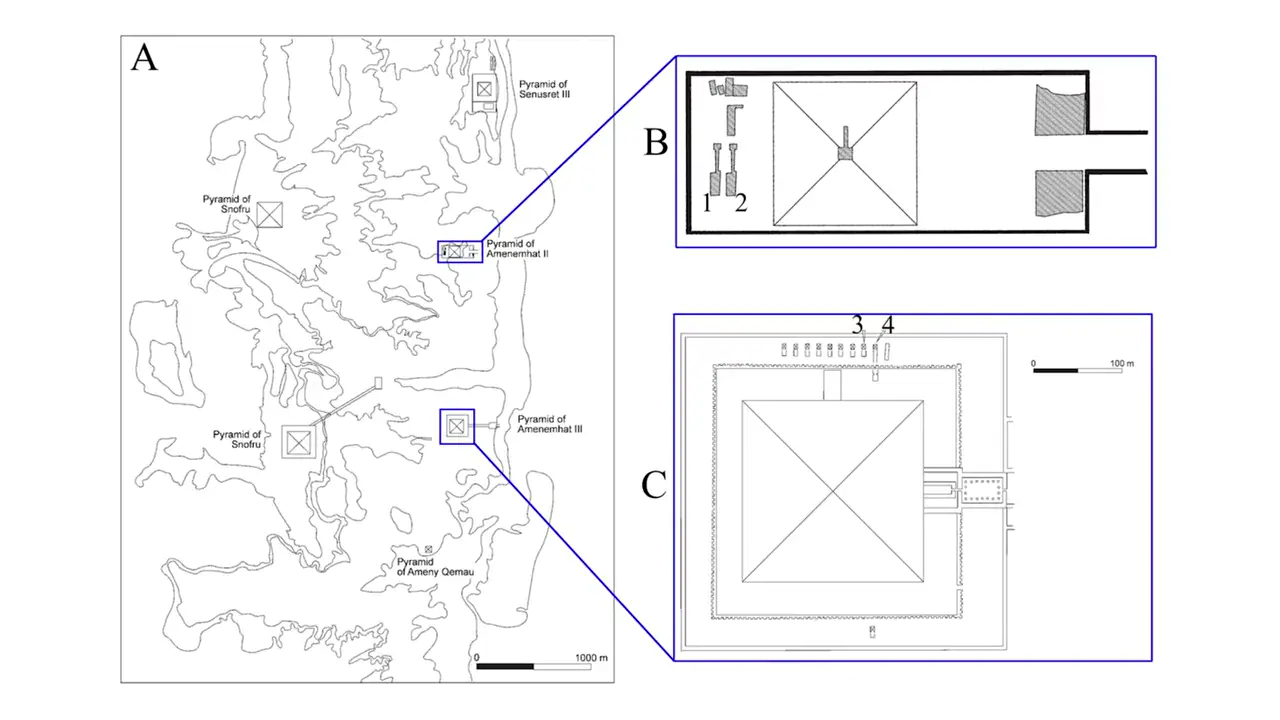
Key facts
- A July 2026 study examined six people from the royal court at The Black Pyramid- Pyramid of Amenemhat III (Dahshur) dating to about 1850–1700 BCE, including King Nubkheperre Intef, four named princesses, and an unidentified woman.
- The remains were excavated in 1894–1895, separated into boxes, and reidentified in 2020; only 22–58% of each skeleton survives and all the women's skulls are missing.
- Researchers examined muscle and ligament attachment sites for signs of habitual use.
- Princess Nubkheperre had robust right forearms with a bowed right-hand bone, consistent with right-handed archery, and arrows in her burial.
- Princess Ita showed changes linked to gripping and was buried with a dagger.
- Critics Sonia Zakrzewski, Sebastian (biological anthropologist), and Egyptologist Wolfram Grajetzki argue the bones record non-specific activity and tomb weapons may have served ritual, not practical, purposes.
Keep exploring
Every site on this page sits on the globe, and the people who research them are on the Discord.
3D Globe · Sites by country · Story Archive · Research Library · Weekly Journal · Search
AI-generated text · images from the original sources · always verify with the sources.