

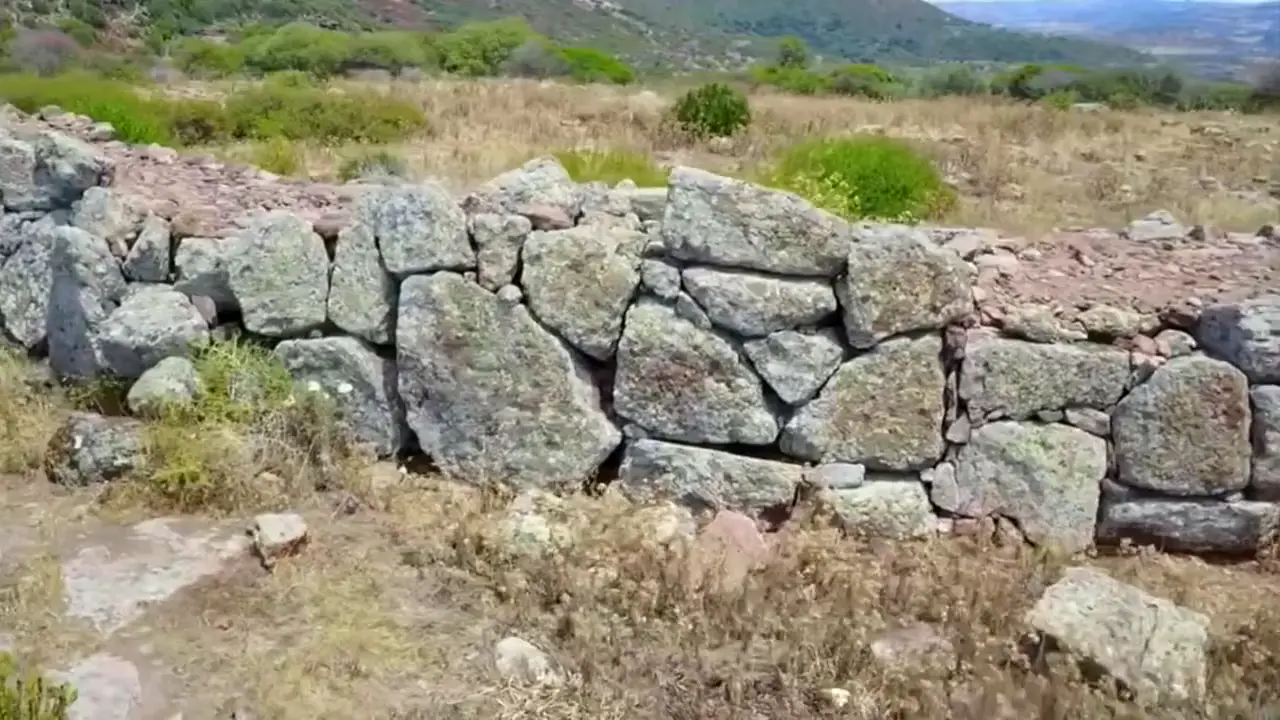
Cyclopean walls emerged during the 4.2ka drought era. From Sardinia's Nuraghi towers to the Balearic Islands, this style spread from Portugal to Armenia by ~1600 BC 🏛️
Cyclopean Walls Emerged as Adaptive Response to 4.2ka Drought Across Mediterranean
Key facts
- Cyclopean walls were built without mortar to conserve firewood during the drought period
- Sardinia developed the oldest stone walls in Italy and experimented with cyclopean construction
- The Balearic Islands were settled for the first time by people who built spectacular cyclopean works
- Sardinia entered a monumental phase featuring Nuraghi towers and sacred wells dedicated to water cult
- Cyclopean wall construction spread from Portugal to Armenia by a few centuries after initial development
- The period 2200-1600 BC is termed the Middle Bronze Age or Cyclopean Age
- Bronze tool expansion occurred with tin traded across Europe including British Isles and Nordic countries
- Independent trading posts and networks accumulated unprecedented wealth during this period
- Cyclopean cultures practiced excarnation burial, avoided pottery production, and followed animistic religions
Was this story useful?
Keep exploring
Every site on this page sits on the globe, and the people who research them are on the Discord.
3D Globe · Sites by country · Story Archive · Research Library · Weekly Journal · Search
AI-generated text · images from the original sources · always verify with the sources.