

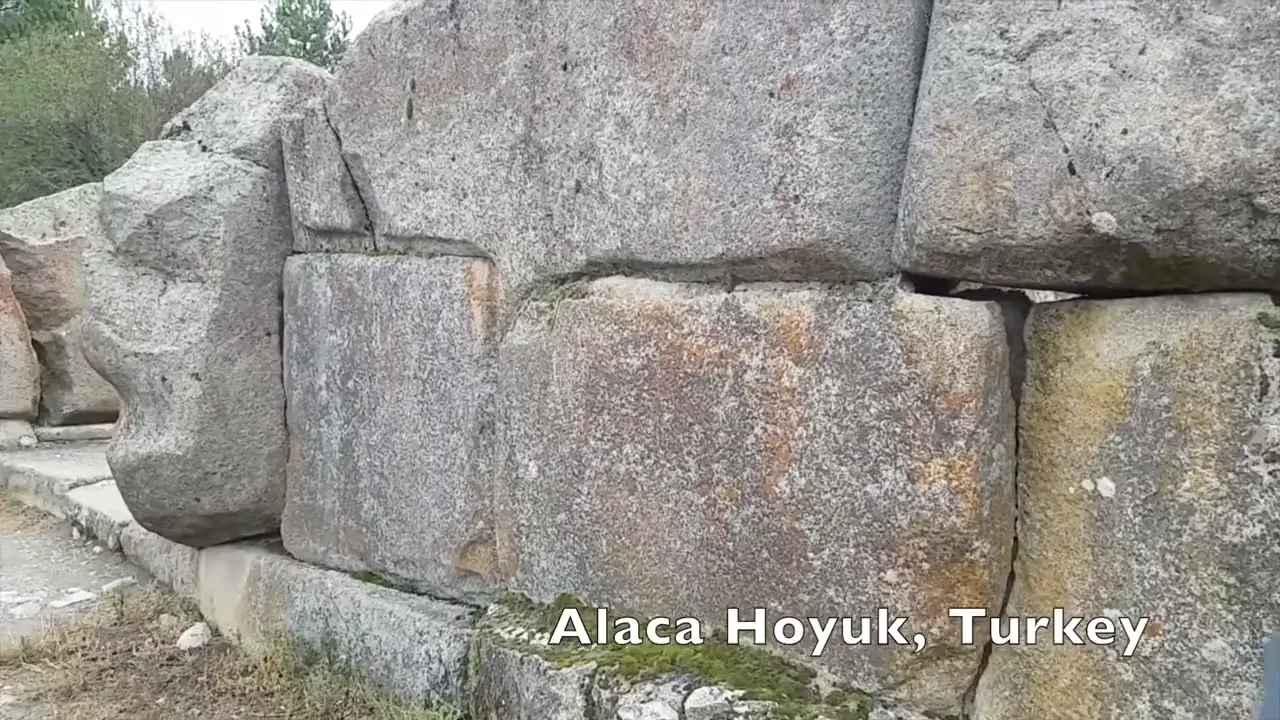
Cyclopean polygonal walls found across southern Europe and beyond. Polygonal walls are mysterious ancient constructions built with odd-shaped stones fitted together without mortar Found in locations including Sardinia, Greece, Italy, Peru, Japan, Spain, and the Balearic Islands Feature distinctive pedestals or towers including 'Phryctoria' in Greece, 'Taulas' and 'Talayots' in Balearic Islands
Polygonal stone walls built without mortar found across southern Europe 🤯 'Cyclopean' describes a style, not actual giants. Featured distinctive pedestals later reused by Greeks & Romans! 🏛️
Key facts:
- Polygonal walls are mysterious ancient constructions built with odd-shaped stones fitted together without mortar
- Found in locations including Sardinia, Greece, Italy, Spain, and the Balearic Islands
- Feature distinctive pedestals or towers including 'Phryctoria' in Greece, 'Taulas' and 'Talayots' in Balearic Islands
- These structures were later reused for Greco-Roman temples and churches
- The term 'cyclopean' refers to construction style, not actual giants
Key Facts
- Polygonal walls are mysterious ancient constructions built with odd-shaped stones fitted together without mortar
- Found in locations including Sardinia, Greece, Italy, Peru, Japan, Spain, and the Balearic Islands
- Feature distinctive pedestals or towers including 'Phryctoria' in Greece, 'Taulas' and 'Talayots' in Balearic Islands
- These structures were later reused for Greco-Roman temples and churches
- The term 'cyclopean' refers to construction style, not actual giants
- The builders shared common language, politics, and use of monumental pedestals
Source: The Disgusting Reason the Cyclopean Builders Vanished by One-eyed giant building walls