

Younes G. et al. (2024) traced copper contamination in Khufu harbor sediments. Sediment core analysis from the Nile floodplain at Giza reveals human activity pulses. First significant rise in copper contamination correlates with late pre-dynastic period. Second spike aligns with First Dynasty activity, associated with tomb construction. Third spike corresponds to late Third Dynasty, followed by major contamination during Fourth Dynasty—specifically the regnal years of Kings Khufu, Khafre, and Menkaure, consistent with Great Pyramid construction phases. The study, titled 'The construction of the Giza pyramids chronicled by human copper contamination,' was published in 2024.
Copper Contamination Study Proves Late Pre-Dynastic Activity at Giza
 EgyptTechnology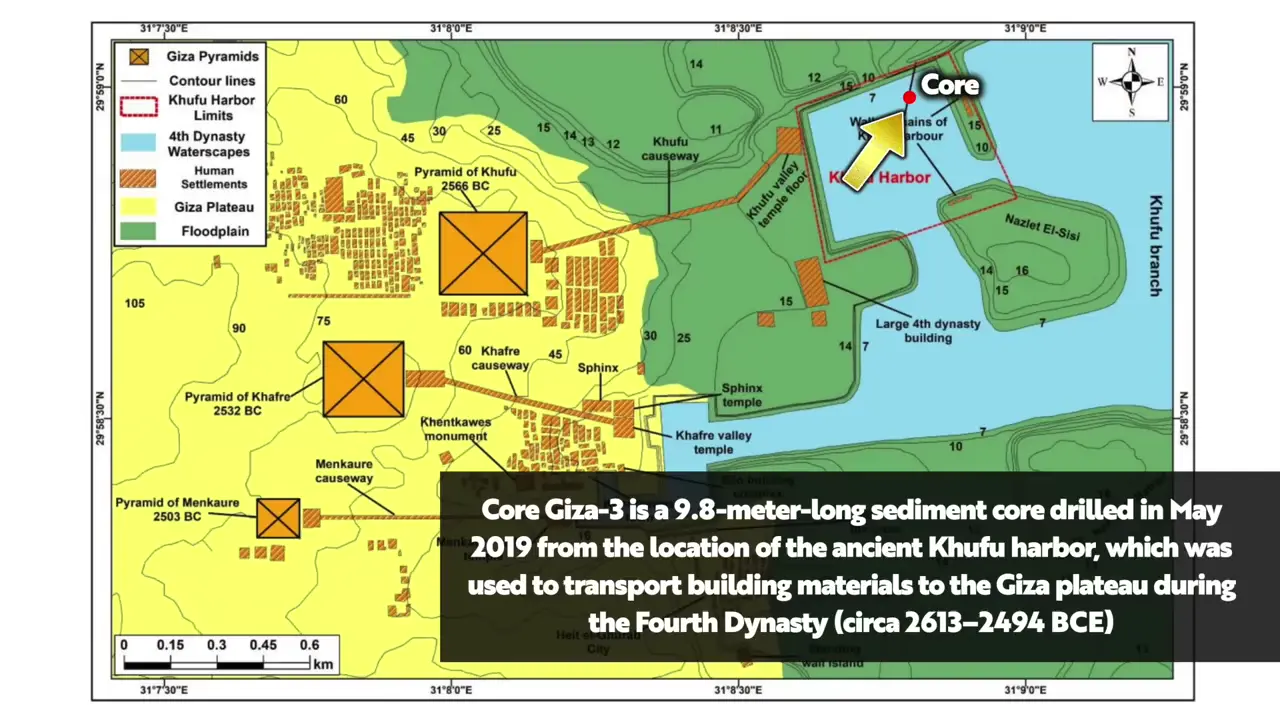
Site mentioned
Key facts
- 2024 paper by Martin Odler et al. titled 'The Construction of the Giza Pyramids Chronled by Human Copper Contamination'
- Geochemical analysis of sediment cores from Khufu harbor on Nile floodplain
- First significant rise in copper contamination: late pre-dynastic 3,265-3,185 BC
- Second spike: First Dynasty 3,355-2,945 BC, associated with tomb construction
- Third spike: Second to Third Dynasty 2,795-2,715 BC
- Metalworking declined after 2,715 BC until reign of King Khasekhemwy
- Major spikes in Fourth Dynasty 2,615-2,485 BC corresponding to pyramid construction
- Onset of Great Pyramid construction scientifically dated to 2,615 BC with 80-year error margin
- Sharp decline after 2,155 BC at onset of First Intermediate Period
- Study confirms late pre-dynastic activity absent from current archaeological records
Sources
archaeopress.com
Linked in video description
Was this story useful?
Keep exploring
Every site on this page sits on the globe, and the people who research them are on the Discord.
3D Globe · Sites by country · Story Archive · Research Library · Weekly Journal · Search
AI-generated text · images from the original sources · always verify with the sources.