

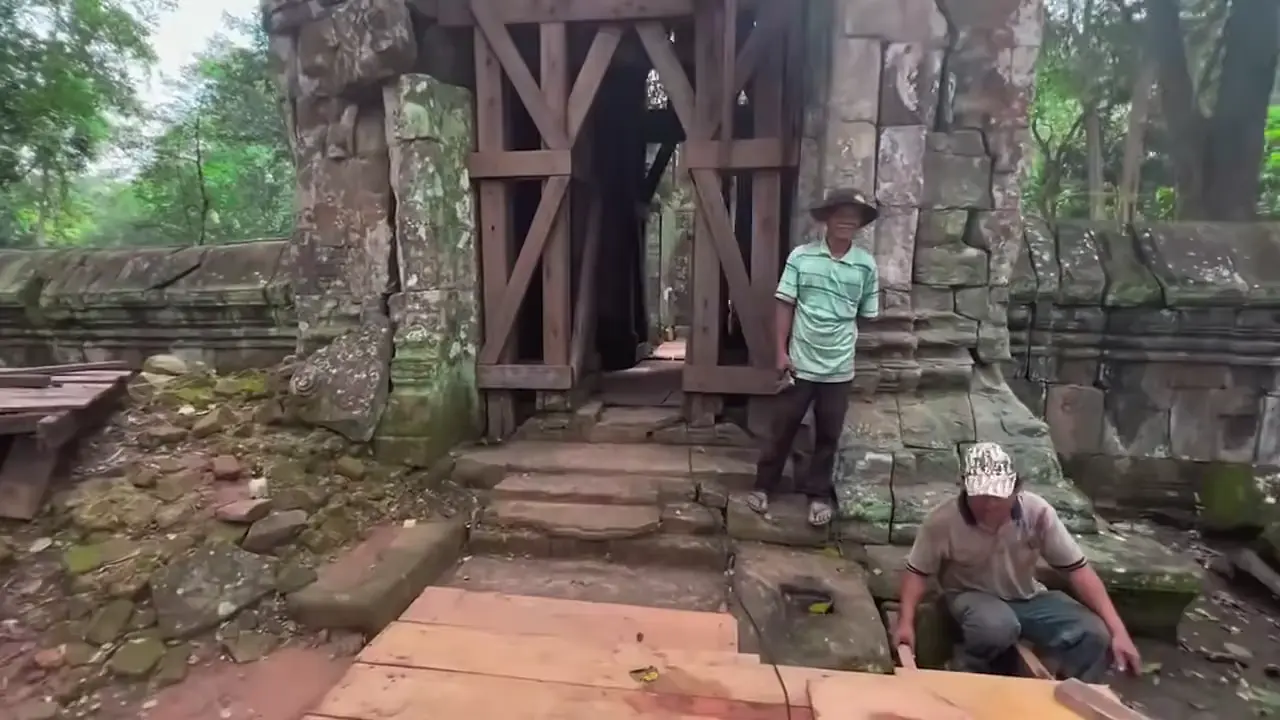
Many famous ancient sites have undergone some reconstruction using modern materials. Teotihuacan has seen restoration work where concrete and modern materials have been used since the 1960s. Angkor Wat's stones have been cut and reconstructed using modern tools for conservation. Chichen Itza has modern infrastructure including restaurants, parking lots, and souvenir shops to serve visitors. The Great Sphinx has had restoration work, including repairs and additions over the centuries. However, claims about widespread use of steel and rebar at sites like Stonehenge and Baalbek are largely inaccurate—Stonehenge has only had minimal stabilization of fallen stones, and such heavy materials are not typically used in authentic archaeological restoration.
Concrete and steel used to reconstruct ancient sites worldwide
Key facts
- Archaeological sites are reconstructed using concrete, steel, plaster, and rebar instead of authentic restoration
- Chichen Itza has restaurants, parking lots, ticket booths, and souvenir shops built directly on site
- Teotihuacan's pyramids have been covered in concrete
- The Sphinx has been encased in modern stone
- Angkor Wat stones have been cut with modern tools and reconstructed
- Baalbek, Stonehenge, and Chaco Canyon have also been reconstructed with modern materials
- Concrete bags are shoved into wall spaces to fill gaps and stabilize structures
- Day laborers, not archaeologists, perform most reconstruction work
- Markers and dash marks indicate where reconstructions have been made
- Replicas are often substituted for original artifacts on site while originals go to museums
Sources
MEXICO: Teotihuacán: A Multiethnic Metropolisclacs.berkeley.edu
Manzanilla's most recent and ongoing archaeological project at Teotihuacán focuses on Xalla, a palatial complex adjacent to the Pyramid of the Sun.
Cement at Teotihuacan | Arise from the Dustarisefromthedust.com
Here are some photos I took earlier this year at Teotihuacan near Mexico City, where the ancient Mesoamericans clearly used a form of cement to construct some ...
Video: Teotihuacan and the Making of a World Citypeabody.harvard.edu
[00:10:43.90] And his excavations, whether he correctly reconstructed the Pyramid of the Sun or not, it did put Teotihuacan and this great edifice within the ...
Teotihuacan ancient culture affected by megathrust earthquakes ...sciencedirect.com
Five destructive earthquakes affecting Teotihuacan city (Mexico). Earthquakes affected main temples and one may have ended city.
Teotihuacan . . . why I misinterpreted this enormous, ancient cityapalacheresearch.com
The city is thought to have been established around 100 BC, with major monuments continuously under construction until about 250 AD. The Pyramid ...
Was this story useful?
Keep exploring
Every site on this page sits on the globe, and the people who research them are on the Discord.
3D Globe · Sites by country · Story Archive · Research Library · Weekly Journal · Search
AI-generated text · images from the original sources · always verify with the sources.