

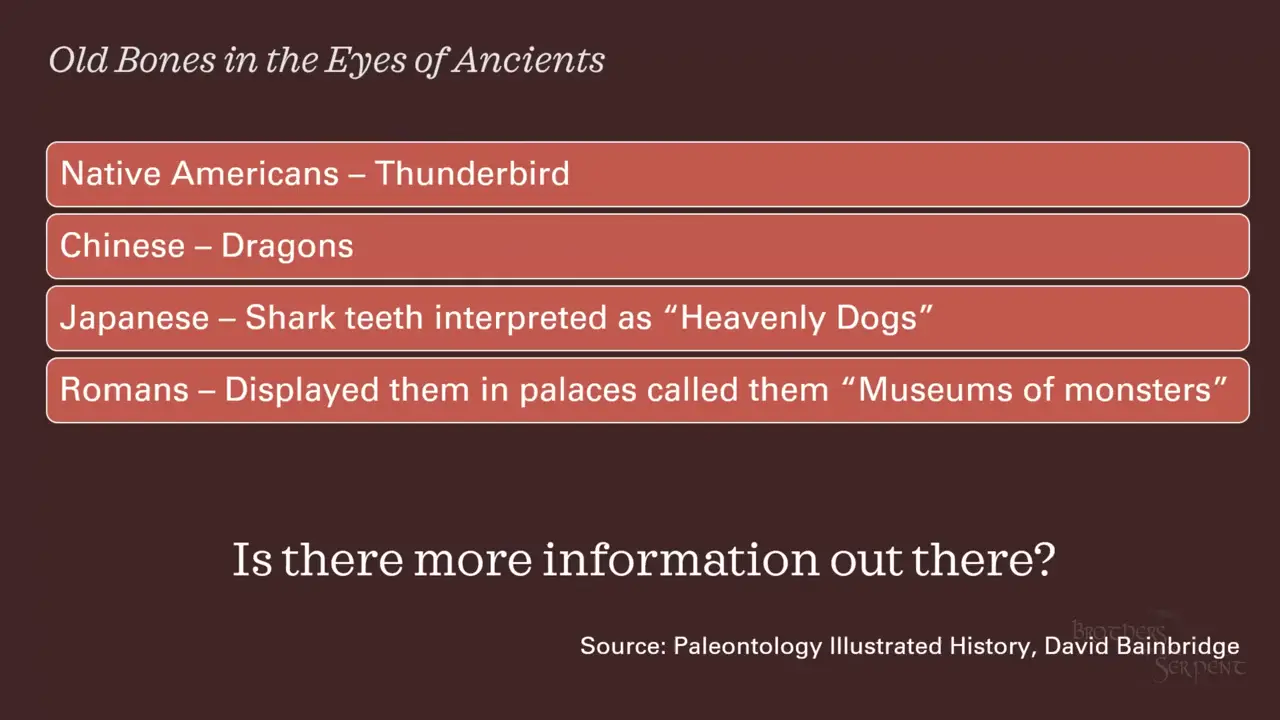
Fascinating how cultures worldwide made sense of huge fossil bones. Native Americans connected large remains to Thunderbirds, while the Chinese interpreted fossils as dragon bones. In Japan, mysterious shark teeth became teeth of heavenly dogs. Romans displayed massive bones in palaces, calling these collections "museums of monsters." Rainstorms frequently exposed bones on hillsides, which likely fueled the thunderbird associations in multiple Native American traditions. The human impulse to explain the unexplained through myth is truly universal!
Ancient peoples' interpretations of fossil bones across cultures
Key facts
- Native Americans interpreted large fossil bones as remains of Thunderbirds
- Chinese interpreted fossils as remains of dragons
- Japanese thought shark teeth were teeth of heavenly dogs
- Romans displayed large bones in palaces and called them 'museums of monsters'
- Thunderstorms exposed bones on hillsides, leading to associations with thunderbirds
Sources
markwitton-com.blogspot.com
Linked in video description
Was this story useful?
Keep exploring
Every site on this page sits on the globe, and the people who research them are on the Discord.
3D Globe · Sites by country · Story Archive · Research Library · Weekly Journal · Search
AI-generated text · images from the original sources · always verify with the sources.