

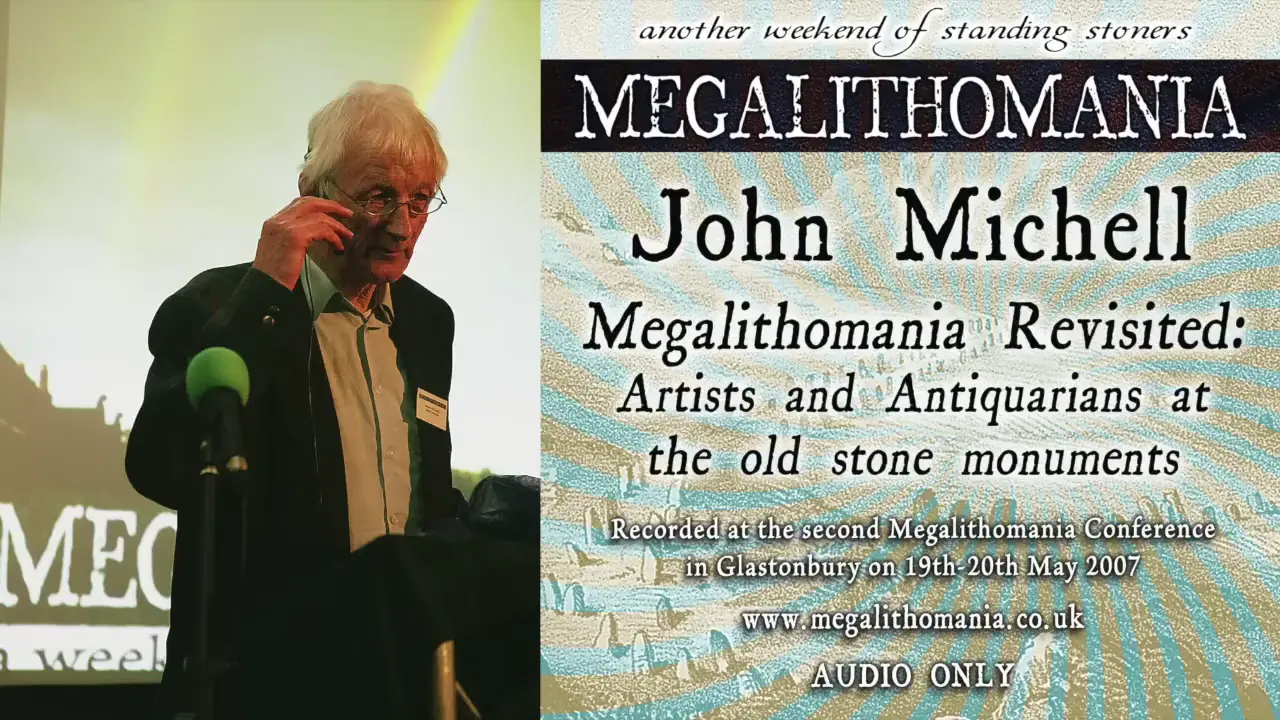
Alexander Thom's work on astronomical alignments got a boost when John Michell surveyed Land's End (the densest megalithic zone), finding extra fallen stones by spotting gaps. Simon Broadbent then presented statistical evidence to the Royal Society showing alignments far exceeded chance — unless you cherry-pick the data, that is 📊
Alexander Thom's megalithic yard validated by statistical testing
Key facts
- Alexander Thom's book (published same year as Michell's "Flying Saucers of Vision") provided evidence for astronomical alignments across Britain
- Michell conducted survey of all stones at Land's End, an area of highest megalithic density (~8x8 miles)
- Found additional fallen stones by identifying gaps in alignment chains
- Simon Broadbent presented statistical test to Royal Society of Statisticians showing alignment incidence considerably above chance
- Broadbent acknowledged removing one stone with eight alignments would reduce alignments to near-chance levels
Sources
Alexander Thom Star Dates - The Orkney Newstheorkneynews.scot
"The only epoch in which standing stones are meaningfully aligned with the bright stars is c.2000 BC, with a spread of at most 200 years ...
The megalithic story of Professor Alexander Thom - Sixsmith - Wileyrss.onlinelibrary.wiley.com
There are four major and four minor standstills; each is an astronomical alignment (a point on the horizon) where the moon rises or sets. They ...
Archaeoastronomy papers by Alexander Thom and familyamericanroads.us
Astronomical foresights used by megalithic man, Journal for the History of ... Megalithic lunar observatories: An assessment of 42 lunar alignments, in ...
Comments on the Astronomical Alignments at Callanish, Lewisadsabs.harvard.edu
Thom, who published their studies in three monographs Megalithic Sites of Britain (1967), Megalithic Lunar Observatories (1971) and Megalithic Remains in ...
Megalithic Lunar Observatories - Alexander Thom - Google Booksbooks.google.com
This unique text discusses the mathematical principles behind Megalithic stone circles, and how these were used for observing lunar cycles in prehistoric times.
Was this story useful?
Keep exploring
Every site on this page sits on the globe, and the people who research them are on the Discord.
3D Globe · Sites by country · Story Archive · Research Library · Weekly Journal · Search
AI-generated text · images from the original sources · always verify with the sources.