

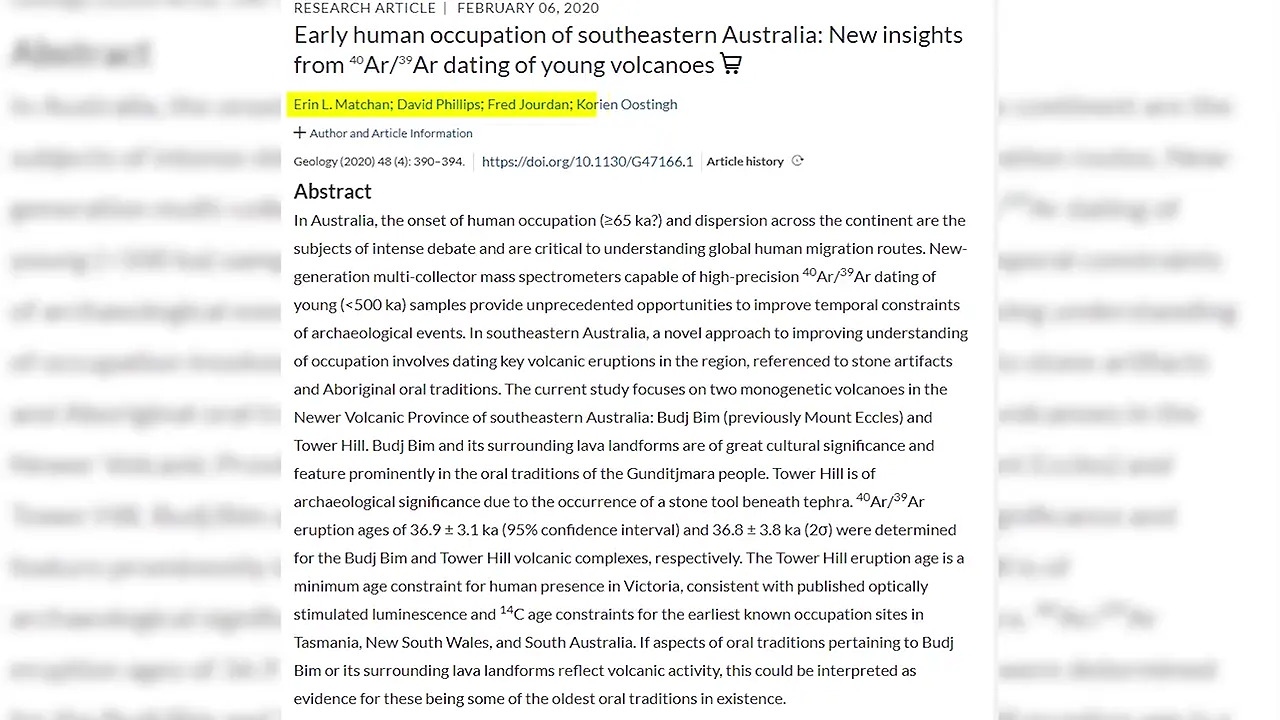
A 2020 study by Erin Matchan used argon dating on volcanic rocks at Budj Bim in Australia and found the Gunditjmara people's description of their volcano 'spitting lava teeth' perfectly matches the unique jagged fragments this eruption created. The event occurred around 37,000 years ago when Neanderthals were still alive. That's roughly 1,200 generations of continuous oral transmission - one of the longest cultural lineages on Earth. Indigenous knowledge literally preserved in human memory what the landscape itself couldn't hold.
37,000-year-old eruption preserved in Aboriginal oral tradition at Budj Bim
Site mentioned
📍 Budj Bim Cultural Landscape🌍 Show on the globe
Key facts
- Erin Matchan's 2020 study in journal Geology used argon dating on volcanic rocks
- The eruption occurred approximately 37,000 years ago
- Neanderthals were still walking the Earth at this time
- Gunditjmara description of volcano 'spitting lava teeth' matches unique jagged volcanic fragments created during the eruption
- Story represents over 1,200 generations of transmission
- Budj Bim is a dormant volcano in Australia
- Gunditjmara people are one of the longest continuous cultural lineages on Earth
Sources
arxiv.org
Linked in video description
sapiens.org
Linked in video description
pubs.usgs.gov
Linked in video description
craterlakeinstitute.com
Linked in video description
Was this story useful?
Keep exploring
Every site on this page sits on the globe, and the people who research them are on the Discord.
3D Globe · Sites by country · Story Archive · Research Library · Weekly Journal · Search
AI-generated text · images from the original sources · always verify with the sources.