

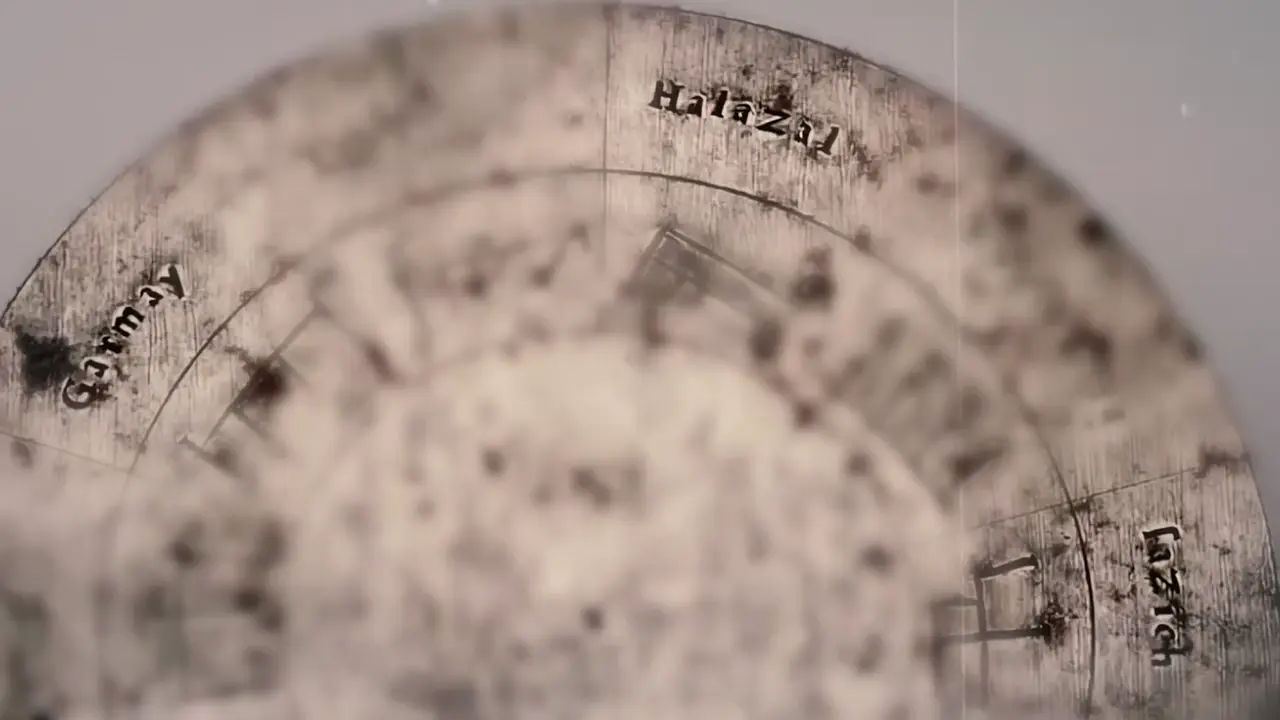
A 16th-century iron mirror sits in a Dresden museum with names carved into its surface. Names documented include Floron and possibly others at its center. Documented in a medieval necromancy manuscript, decoded by a historian, the ritual required offerings of milk, wine, honey, and rare incenses. A young boy held the steel disc against his chest while entering a trance, speaking deliberately distorted Arabic to summon an armored knight who could reveal the future.
16th-century necromancy mirror ritual in Dresden museum
Site mentioned
📍 Mathematisch-Physikalischer Salon
Key facts
- A small iron mirror from the 16th century sits in a museum in Dresden, Germany
- Names carved into its surface include Hutzai, Eric, Groman, and Floren at its center
- The mirror is documented in the Munich Handbook of Necromancy, hidden for centuries in the Bavarian State Library
- The manuscript was decoded by historian Richard Keffer
- The ritual required purification, offerings of milk, wine, honey, and scents including aloes, frankincense, myrrh, and ambergris
- A young boy was required to hold the steel disc against his chest while entering a waking trance
- The incantation was deliberately distorted Arabic, not an ancient language
- The ritual promised the summoning of an armored knight on horseback who could reveal the future
- The mirror exists today behind glass in the Mathematisch-Physikalischer Salon museum
Sources
16th Century Mirror Frame Print (Dresden, Germany)mediastorehouse.com
Reflecting on the beauty of the past, this exquisite 16th-century frame from a mirror by master craftsmen Meyer and Utermarc transports us to an era of elegance ...
[PDF] David Blamires Telling Tales - Open Book Publishersbooks.openbookpublishers.com
David Blamires (University of Manchester) is the author of around 100 arti- cles on a variety of German and English topics and of publications includ-.
Mirror of the World: Masterpieces from the Dresden Cabinet d'Artmuseemusings.com
Mirror of the World: Masterpieces from the Dresden Cabinet d'Art, at the Musée Luxembourg, is my kind of exhibition.
Dresden Mirror of Saxony - Ziereis Facsimilesfacsimiles.com
The most richly illuminated copy of the most important legal text of medieval feudal society, featuring 924 picture strips.
[PDF] MIRROR OF THE WORLD - Musée du Luxembourgmuseeduluxembourg.fr
The Dresden State Art Collections – Staatliche. Kunstsammlungen Dresden – reflect five centuries of the history of European museums.
Dresden Ii Mirrorluisfurniturestyle.com
Elegant yet lightheartedly playful, Dresden is donned in an amiable antique white finish with handapplied burnish over the many layers of stains and ...
Dresden Ii Mirrorfurniturekingny.com
Elegant yet lightheartedly playful, Dresden is donned in an amiable antique white finish with handapplied burnish over the many layers of stains and ...
Dresden Mirrorurfurnituresource.com
Dresden Mirror. $689.99; $689.99. Dimension: Dresden Mirror : Width 46.00 in" Depth 4.00 in" Height 46.00 in"; Weight 49.00 lbs. (22.05kgs.) SKU - 23164.
Was this story useful?
Keep exploring
Every site on this page sits on the globe, and the people who research them are on the Discord.
3D Globe · Sites by country · Story Archive · Research Library · Weekly Journal · Search
AI-generated text · images from the original sources · always verify with the sources.