

Wadi Hammeh 27 in Pella, Jordan is a Late Epipalaeolithic site dating to around 14,500 years ago — roughly 2,500–3,000 years older than Karahan Tepe. Identified as an early Natufian large settlement, Dr. Philip Edwards devoted a 400+ page book to it in 2013. Experts see it as a base camp and likely forerunner to later sedentary Pre-Pottery Neolithic communities, with stone features rebuilt across many occupation phases.
14,500-year-old Natufian settlement Wadi Hammeh 27 identified in Jordan
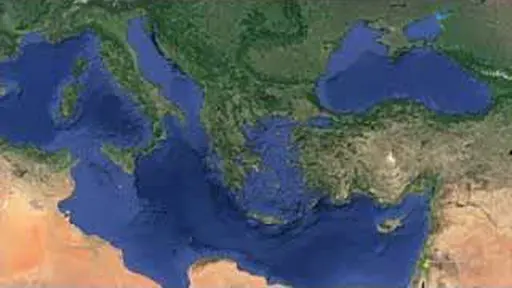
Site mentioned
📍 Wadi Hammeh 27
Key facts
- Wadi Hammeh 27 is a Late Epipalaeolithic archaeological site located in Pella, Jordan
- The site dates to approximately 14,500 years ago, making it 2,500-3,000 years older than Karahan Tepe
- It is identified as an early Natufian large settlement
- Dr. Philip Edwards published a 400+ page book on the site in 2013
- Experts believe it was a base camp and a forerunner to sedentary Pre-Pottery Neolithic settlements
- The site shows many phases of occupation with stone features rebuilt in the same locations
Sources
The Origins of a Natufian 'Anomalous Giant'publication.doa.gov.jo
Wādī Ḥammeh 27 is an Early Natufian site in northwestern Jordan, dating from. 12,000 to 12,500 cal BC (Edwards 2013a). It is representative of the first large, ...
Wadi Hammeh 27: An Early Natufian Settlement at Pella in ...whitelevy.fas.harvard.edu
Wadi Hammeh 27 is only the third example of the large Natufian base-camp to be in the Mediterranean zone of the southern Levant, and is the only one of its ...
Wadi Hammeh 27, an Early Natufian Settlement at Pella in ...researchgate.net
Wadi Hammeh 27 and Its Environs. Wadi Hammeh 27 in the Context of Previous Natufian Research . Early Reports and Surveys of Wadi al-Hammeh . The Pella Region: ...
The Natufian human skeletal remains from Wadi Hammeh ...persee.fr
by SG Webb · 2002 · Cited by 44 — The human skeletal remains from the Natufian site of Wadi Hammeh 27 represent a hunter-gatherer people who lived in the area around 1 2 000 BP.
Wadi Hammeh 27en.wikipedia.org
Wadi Hammeh 27 is a Late Epipalaeolithic archaeological site in Pella, Jordan. It consists of the remains of a large settlement dating to the Early Natufian ...
Was this story useful?
Keep exploring
Every site on this page sits on the globe, and the people who research them are on the Discord.
3D Globe · Sites by country · Story Archive · Research Library · Weekly Journal · Search
AI-generated text · images from the original sources · always verify with the sources.