
 Honduras
Copán is an archaeological site of the Maya civilization in the Copán Department of western Honduras, not far from the border with Guatemala [1]. Copán was a powerful city ruling a vast kingdom within the southern Maya area [1]. The city suffered a major political disaster in AD 738 when Uaxaclajuun Ub'aah K'awiil, one of the greatest kings in Copán's dynastic history, was captured and executed by his former vassal, the king of Quiriguá [1]. As one of the most important sites in Maya history, and because of its outstanding, well-preserved architecture, Copán was declared a UNESCO World Heritage Site in 1980 [1]. The Copán site is known for a series of portrait stelae, most of which were placed along processional ways in the central plaza of the city and the adjoining acropolis, a large complex of overlapping step-pyramids, plazas, and palaces [1]. Altar Q is the most famous monument at Copán [1]. It was dedicated by king Yax Pasaj Chan Yopaat in AD 776 and has each of the first 16 kings of the Copán dynasty carved around its side [1].
Text: Wikipedia – 'Copán' (revision of 2026-08-27), CC BY-SA 4.0 · sentences selected and shortened by an AI system · source →Copán Ruins
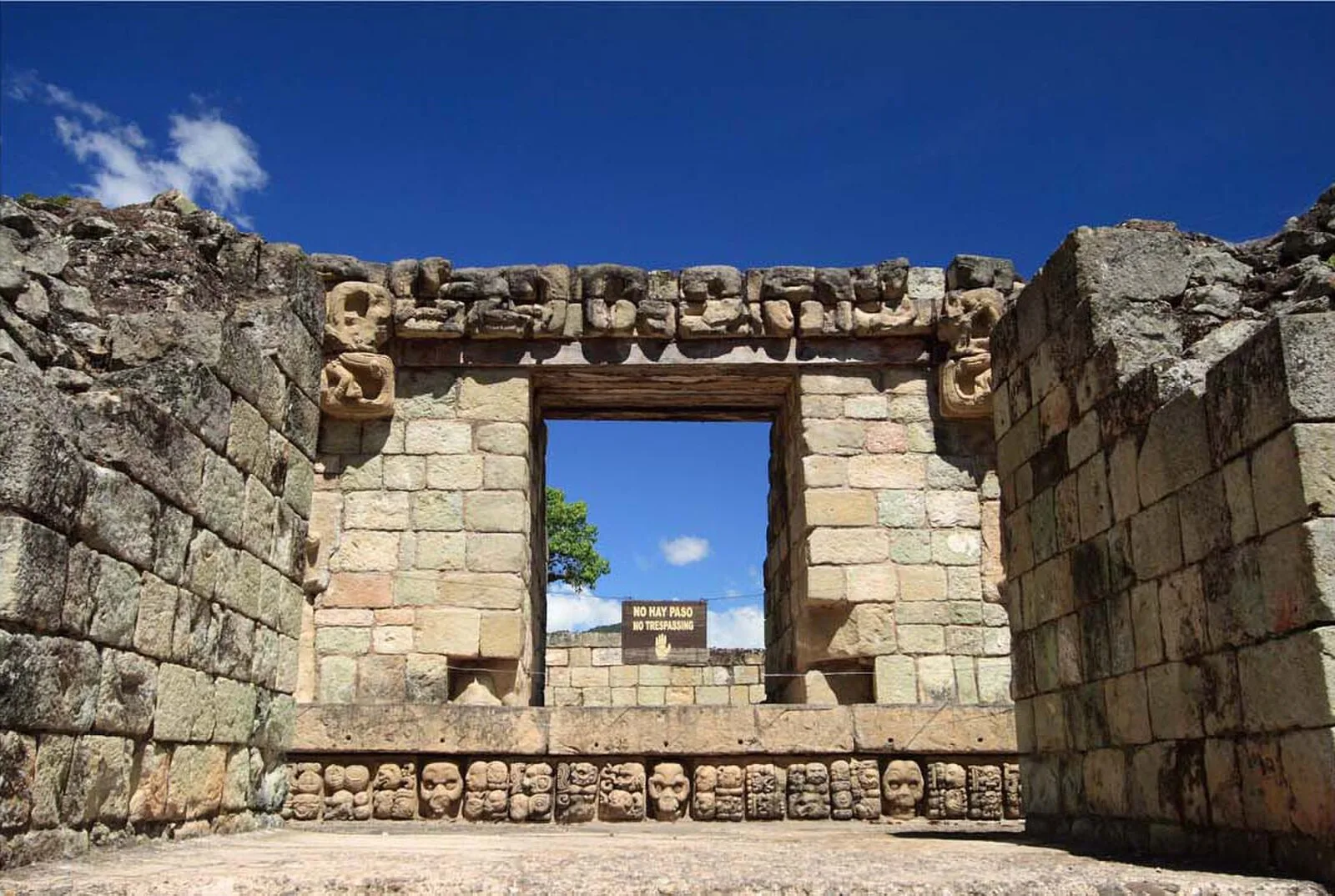
Also known as: Copan, Copán (arkeolohikal nga lugar), Copan (Mayastad), Copán (sitio arqueológico), Jaciment arqueològic de Copán, Kopana, Kopanas, Oxwitik, Sitio Arqueológico Rastrojón, Sítio Maia de Copán, Капан, Капан (горад мая)
| Type | City/town/settlement |
|---|---|
| Period | 1500 - 500 BC |
| Country | Honduras |
| Coordinates | 14.8374° N, 89.1404° W |