

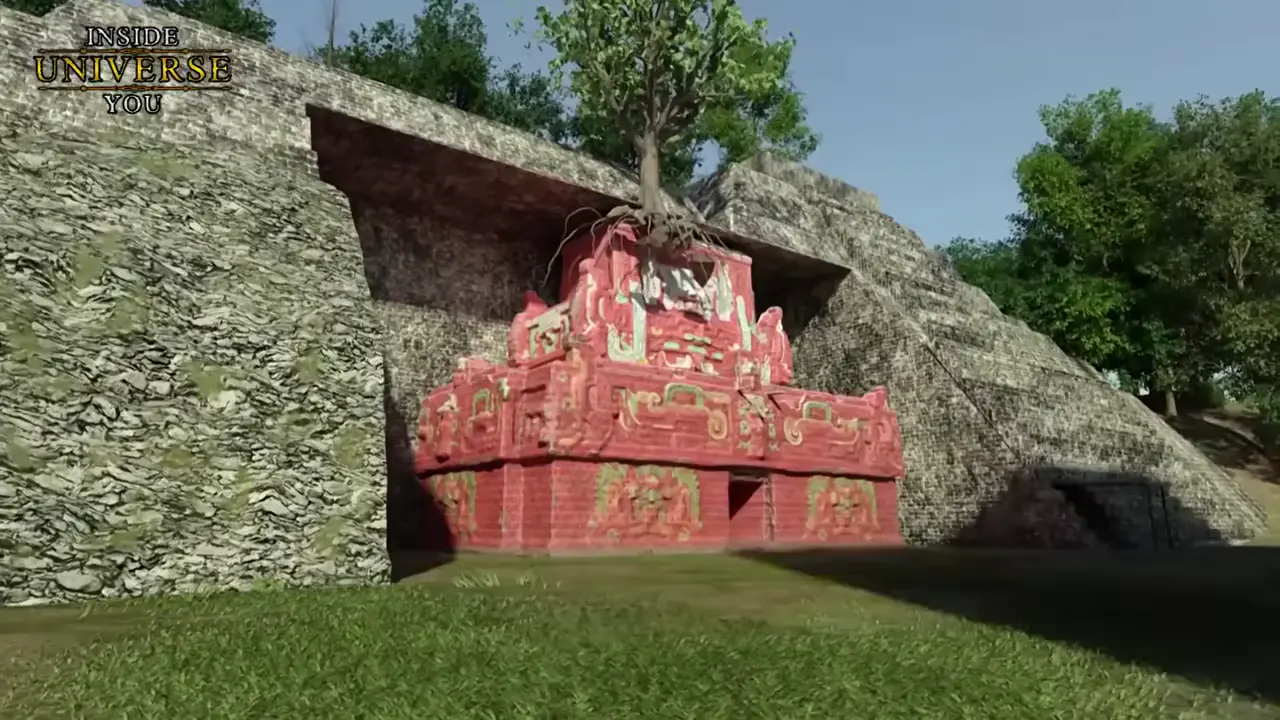
Maya monumental structures were originally coated in smooth limestone plaster and painted brilliant reds using iron-rich minerals like hematite. The Rosalila Temple at Copán Ruins, built in the 6th century AD, was buried inside a larger pyramid, preserving its original painted stucco. A full-scale replica stands in the Copán Ruins Sculpture Museum in Honduras.
Maya monumental architecture was originally painted brilliant red
 HondurasArchitecture
Key facts
- Maya monumental structures were originally covered in smooth limestone plaster and painted in brilliant colors, especially vivid red
- Red pigments were produced using iron-rich minerals such as hematite
- The Rosalila Temple at Copán Ruins was constructed during the 6th century AD and later buried inside a larger pyramid, preserving traces of its original painted stucco
- A full-scale reconstruction of the Rosalila Temple is displayed in the Copán Ruins Sculpture Museum in Honduras
Sources
The façade of the Rosalila temple - Maya Site of Copanartsandculture.google.com
Rosalila Temple in Copán Ruinas - Atlas Obscuraatlasobscura.com
Copán - Wikipediaen.wikipedia.org
Rosalila temple - Maya Ruinsmayaruins.com
"Three-dimensional Structural Analysis of Temple 16 and ...digitalcommons.unl.edu
Copán: Rosalila Temple (571 CE)flickr.com
Was this story useful?
Keep exploring
Every site on this page sits on the globe, and the people who research them are on the Discord.
3D Globe · Sites by country · Story Archive · Research Library · Weekly Journal · Search
AI-generated text · images from the original sources · always verify with the sources.