
 Brazil
The Parque Arqueológico do Solstício, referred to in academic sources as AP-CA-18, is an archaeological park located in Amapá state, Brazil, near the city of Calçoene [1]. It contains a megalithic stone circle, colloquially known as the Amazon Stonehenge, consisting of 127 blocks of granite, each up to 4 meters tall, standing upright in a circle measuring over 30 meters in diameter at the bank of the Rego Grande river on a hilltop [1]. The first reports of the Rego Grande site are from naturalist Emilio Goeldi in the late 19th century [1]. In 2005, archaeologists began excavation of the site after it was reported by a geologist during a socioeconomic study [1]. Though the stones have not been submitted to dating techniques, carbon-dating of pottery sherds has placed the site at 500 – 2000 years old [1].
Text: Wikipedia – 'Parque Arqueológico do Solstício' (revision of 2026-09-03), CC BY-SA 4.0 · sentences selected and shortened by an AI system · source →Parque Arqueológico do Solstício
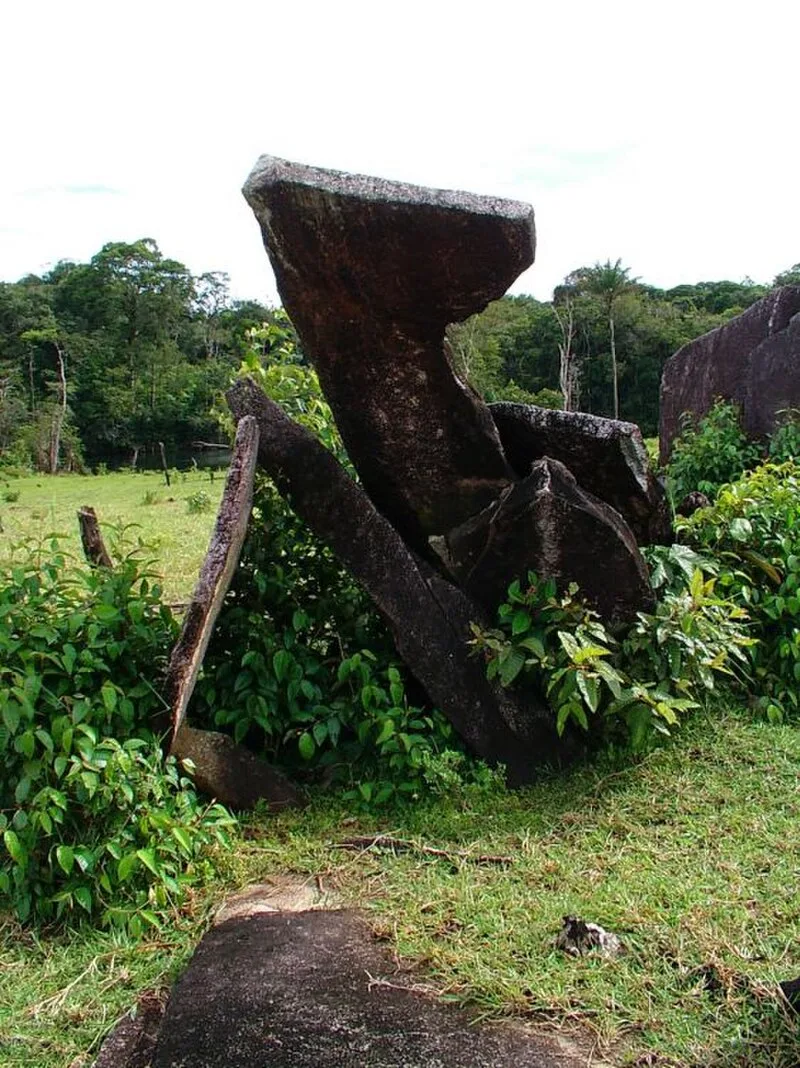
Also known as: Amazónsky Stonehenge, Calçoene, Calçoene (archeologische site), Calçoene (sito archeologico), Crómlech de Calçoene, Parc Arqueològic del Solstici, Parque Arqueolóxico do Solsticio, site archéologique de Calçoene, Сулстисиу, Сулстисиу (археологический парк)
| Type | Stone circle |
|---|---|
| Period | 4500 - 3000 BC |
| Country | Brazil |
| Coordinates | 2.6227° N, 51.0040° W |