

When terracotta warriors were first unearthed, their vibrant paint vanished within minutes of air exposure. That lesson keeps the main mound sealed, where silk, lacquer, written documents, and potentially toxic mercury vapor may await. China's guiding principle: protect first, excavate later, preserving treasures for future generations with better tools.
Why China refuses to excavate the tomb: preservation risks drive 'protect first, dig later' policy
 SpainGeneral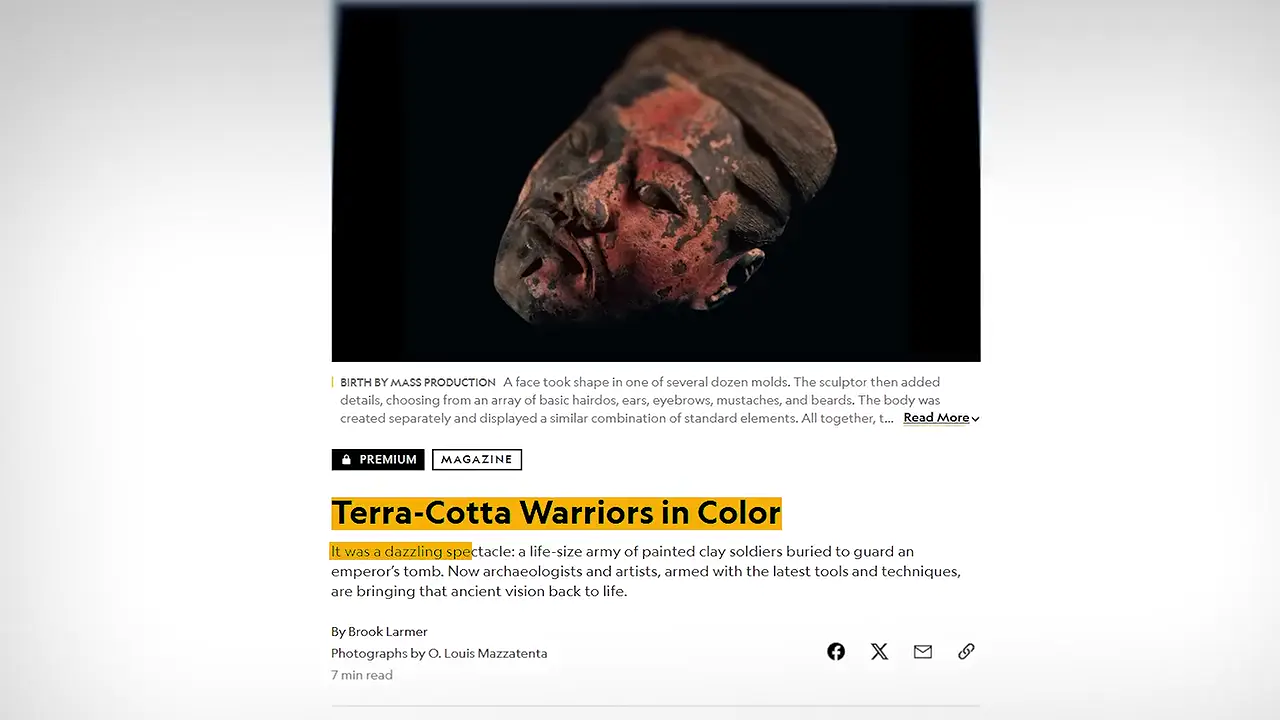
Key facts
- When terracotta warriors were first unearthed, they were originally painted in bright reds, greens, purples, and pink; exposure to air caused the paint to curl, flake, and vanish within minutes.
- Archaeologists fear similar deterioration would destroy fragile materials inside the main mound, including silk, lacquer, wood, written documents, and a possible painted map of China on the floor.
- Opening the burial chamber risks releasing a toxic cloud of mercury vapor that has been sealed under pressure for over 2,000 years.
- The internal structure may be structurally unstable, with sections potentially collapsing if disturbed.
- China's official policy is to protect first and excavate later, if at all; more than 50 years after the terracotta army's discovery, most of the soldiers remain buried while archaeologists work through them gradually.
- A leading archaeologist quoted in the video stated the guiding principle: leave something for future generations and avoid irreversible mistakes.
Site mentioned
Sources
worldhistory.org
Linked in video description
Was this story useful?
Keep exploring
Every site on this page sits on the globe, and the people who research them are on the Discord.
3D Globe · Sites by country · Story Archive · Research Library · Weekly Journal · Search
AI-generated text · images from the original sources · always verify with the sources.