

🏚️ The video argues that Hekla 3 may have degraded soils and helped drive Bronze Age settlement changes in Britain. But its Kildonan example is misstated: the cited academic gallery shows Iron Age roundhouses near Caen as they may have looked about 2,000 years ago—not 2,000 stone roundhouses abandoned around 1100 BC. Hekla 3's date and impact remain disputed.
Video's Hekla 3 theory remains debated; cited Kildonan roundhouses date to Iron Age
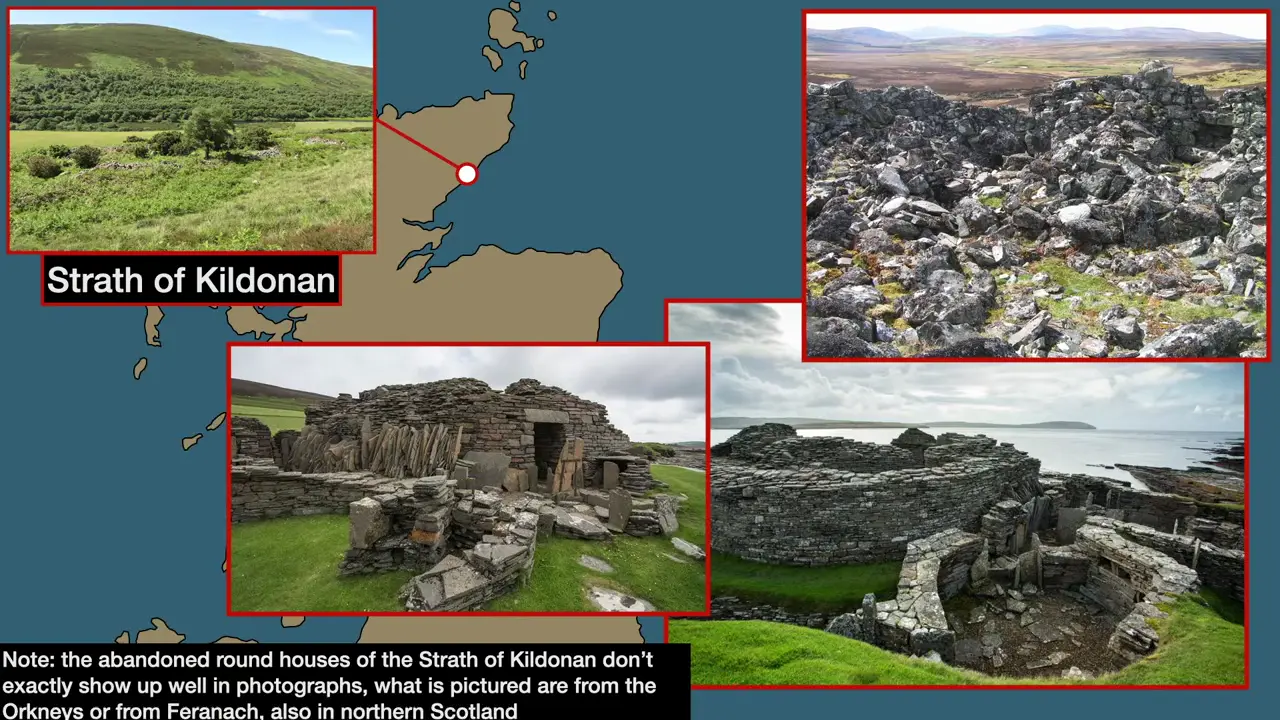
Key facts
- The St Andrews gallery by A.H.D. Miller depicts roundhouses near Caen in Strath of Kildonan as Iron Age structures from about 2,000 years ago.
- It does not document 2,000 Bronze Age stone roundhouses abandoned at Kildonan around 1150 or 1100 BC; the source's figure refers to age, not a house count.
- Hekla 3's date remains disputed: the ranges quoted in the post span roughly 1265-895 BC, so c. 1100 BC is not a settled eruption date.
- The video argues that volcanic acid rain may have changed soils and contributed to settlement reorganisation and hilltop feasting centres; the causal chain is not established.
Sources
The Strath of Kildonanvimeo.com
Strath Of Kildonan | Imagetrove.scot
Strath of Kildonanen.wikipedia.org
The Strath of Kildonanglendiscovery.com
Digital gallery: Iron Age Kildonanresearch-portal.st-andrews.ac.uk
Was this story useful?
Keep exploring
Every site on this page sits on the globe, and the people who research them are on the Discord.
3D Globe · Sites by country · Story Archive · Research Library · Weekly Journal · Search
AI-generated text · images from the original sources · always verify with the sources.