

🔥 Fascinating puzzle: dozens of Scotland’s Iron Age hillforts have vitrified stone walls. A 1980 replica-wall test with a 22-hour timber fire reached only ~800°C, below the ~1,100–1,200°C associated with vitrification. A recent analysis found vitrification beginning high in the wall and progressing downward, mainly on the inner face—consistent with heat arising inside the fort near internal structures. The video argues that an external fire might instead have been carried through timber-lacing channels, but that mechanism remains unproven. The burning itself is still unexplained.
Scottish vitrified forts point to intense heating from within
Key facts
- At least 60 confirmed Scottish Iron Age hillforts have vitrified walls.
- Vitrification is associated with temperatures of roughly 1,100–1,200°C, depending on the rock.
- The Royal Society of Edinburgh's 1780 investigation concluded that the fusion was caused by artificial heat.
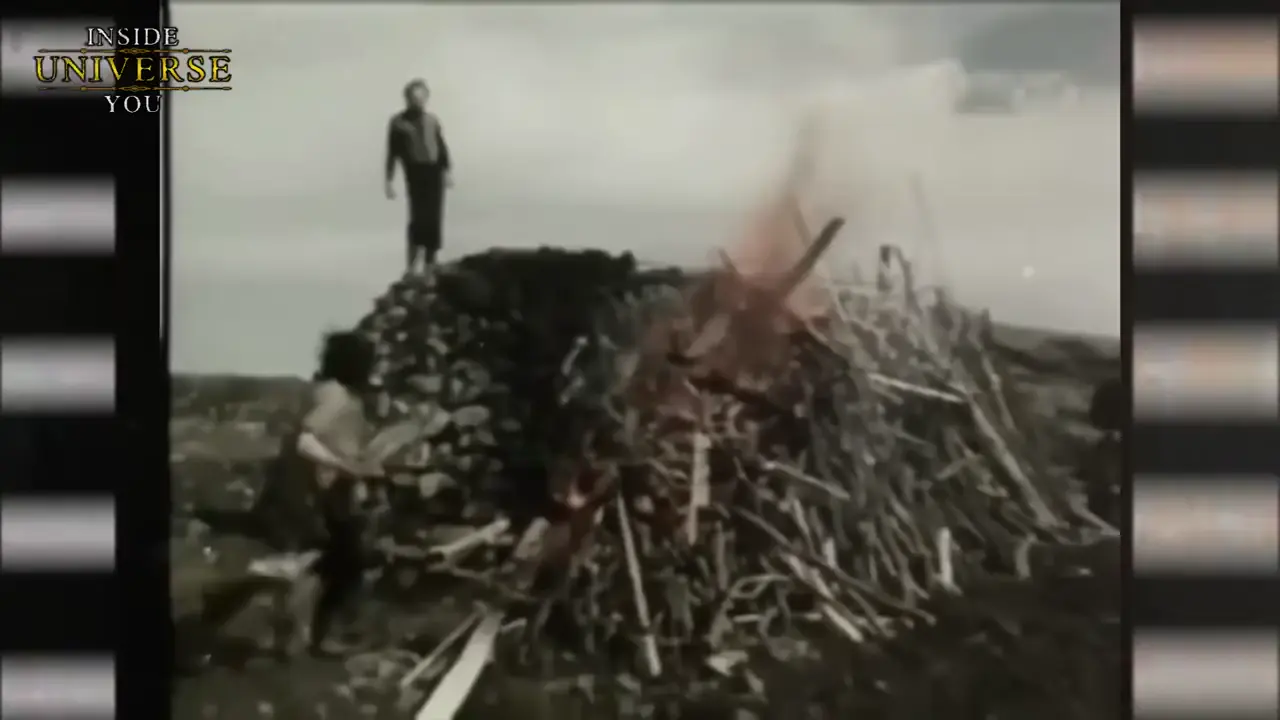
- Ian Rolston's 1980 replica-wall experiment, using a timber fire lasting 22 hours, reached about 800°C.
- The reported vitrification pattern begins high in the wall and progresses downward, mainly affecting the inner face; this was interpreted as heat arising inside the fort near internal structures.
- The video's proposal that an external fire was distributed through timber-lacing channels is not an established finding.
- The cause and circumstances of the vitrifying fires remain unresolved.
Sources
Mystery of Vitrified Forts - Brigantes Nationbrigantesnation.com
It was during a trip to Scotland, in the Summer of 1997, that I first heard of vitrified hillforts. It was near Urqhart Castle, south of Inverness. As ancient ...
Through a glass darkly…Vitrified Forts - Bill Lloyd Musicbilllloyd.co.uk
A new theory behind the vitrification of stone forts in order to accumulate static electricity. It is a speculative theory and needs to be proved or disproved ...
The vitrification experiment - the urban prehistoriantheurbanprehistorian.wordpress.com
This post tells the story of an urban prehistoric experiment that took place almost 40 years ago in a local authority waste disposal tip (aka a ...
Want to Build a Strong Fortress? Set It On Fire | National Geographicnationalgeographic.com
How did Iron Age people, who built these structures in the first millennium B.C., manage to heat entire stone walls to 2,000 degrees Fahrenheit ...
The Mystery of the Vitrified Forts - Skeptoid Podcastskeptoid.com
Some 60 ancient stone forts in Scotland have vitrified walls, with the stone melted into glass. Here's what we know.
The Vitrified Forts of the British Isles and Europebrigantesnation.com
The vitrified walls of the Scottish forts are invariably formed of small stones which could be easily acted upon by fire,whereas the outer ramparts where used,
Processes of Vitrification in Scottish Iron Age Hillforts - STORREdspace.stir.ac.uk
Iron Age Vitrified hillforts are a relatively common feature in the Scottish landscape. There are at least sixty confirmed examples spread ...
Vitrified forten.wikipedia.org
Vitrified forts are stone enclosures whose walls have been subjected to vitrification through heat. ce and is found during both Iron Age and early medieval ...
Was this story useful?
Keep exploring
Every site on this page sits on the globe, and the people who research them are on the Discord.
3D Globe · Sites by country · Story Archive · Research Library · Weekly Journal · Search
AI-generated text · images from the original sources · always verify with the sources.