

Machu Picchu is an Inca-built 15th-century site; its precision granite masonry does not establish the pre-Inca core proposed in the video. The video interprets a 2012 survey as showing a sealed chamber with possible gold or silver, argues that some elongated skulls are anomalous, and presents 60% underground as an estimate. The Intihuatana Stone is distinct from Cusco's Sun Stone; the Temple of the Sun is known for its curved wall and trapezoidal windows. Hiram Bingham reached the site in 1911 and excavated there through 1915. 🏛️💎
Video proposes a pre-Inca core at Machu Picchu; evidence has not confirmed it
 PeruGeneral
Site mentioned
Key facts
- Machu Picchu was built by the Inca in the 15th century, and granite for the site was quarried on the mountain.
- Quartz has a Mohs hardness of 7, but its presence in granite does not show that any construction at Machu Picchu predates the Inca.
- The dry-stone masonry is exceptionally precise, but the cited results do not substantiate the specific 50-ton maximum, 0.09 mm gauge test, or claim that bronze tools could not scratch the stone.
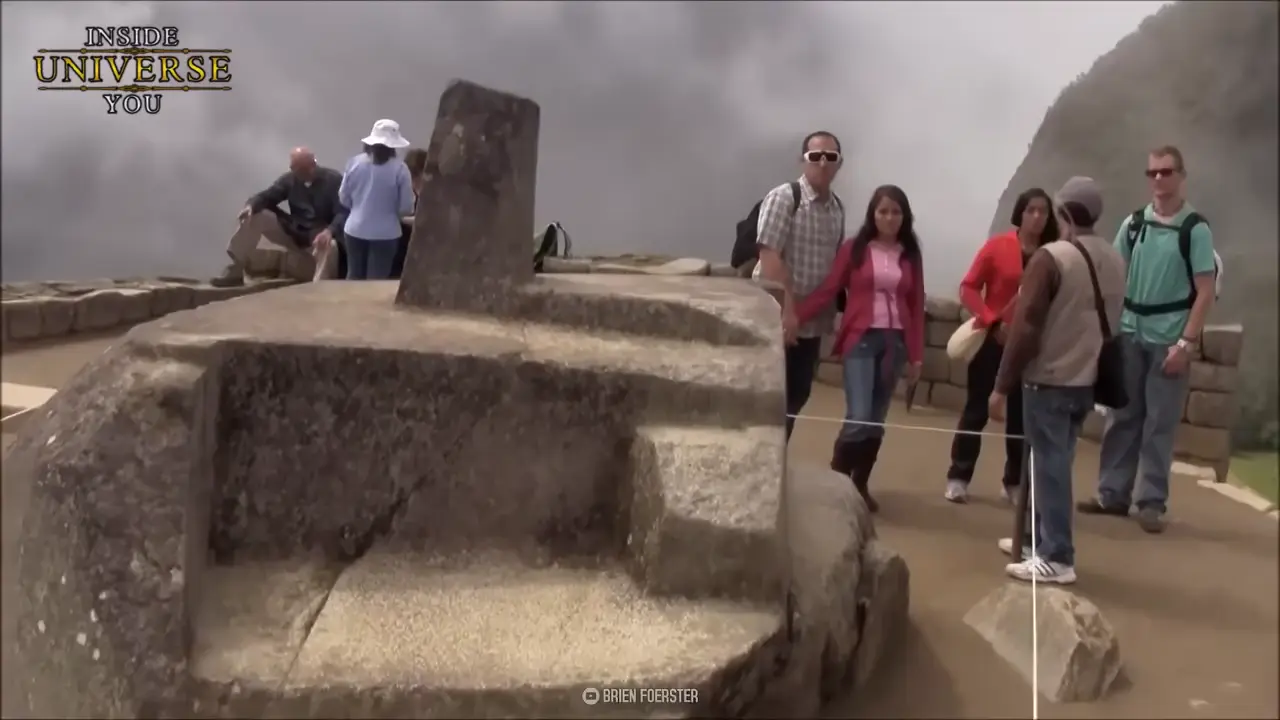
- The Machu Picchu Intihuatana Stone is distinct from Cusco's Sun Stone and is aligned with the cardinal directions; the cited results do not establish the finer claim that it points to true rather than magnetic north.
- The Temple of the Sun is known for its finely fitted curved wall and trapezoidal windows; astronomical intent is an interpretation.
- The video cites a 2012 geophysical survey and interprets possible underground space beneath the Temple of the Three Windows as a sealed chamber containing metal objects consistent with gold or silver.
- The video says Peru denied excavation; the cited results do not confirm that the chamber remains unexplored today.
- The elongated skulls recovered during early excavations are generally associated with intentional cranial deformation; larger brain volumes and deformation beyond normal practice are not established.
- The figure that 60% of Machu Picchu remains underground is presented by the video as an estimate, not a verified archaeological measurement.
- Hiram Bingham, a Yale explorer, reached Machu Picchu in 1911 and led later excavation campaigns through 1915; the precise dates of the skull recoveries are not given by the cited sources.
Sources
Top 10 Machu Picchu secrets | National Geographicnationalgeographic.com
It's inconveniently tucked at the end of a long dirt road near the base of Machu Picchu, about a 30-minute walk from the town of Aguas Calientes ...
The Mysterious Origins of Machu Picchu - Butterfield & Robinsonbutterfield.com
After his graduation from Yale University, Bingham, who had long been intrigued by stories of lost Incan cities, organized a seven-man expedition under the ...
Machu Picchu Engineering: Inca Construction Explainedmachutravelperu.com
Quarrying Process: The Incas sourced most of the granite used in Machu Picchu construction from nearby quarries. Instead of transporting stone ...
The Wonder of Machu Picchu's Construction Technologytourinperu.com
The lack of mortar has allowed the stones to move in the rhythm of the earth's motion, instead of breaking due to being rigid. This is probably ...
Int Machu Pichu | International Collectionsharifstone.com
This slab draws inspiration from the breathtaking heights of Machu Picchu, the ancient citadel nestled in the Andes of Peru. Featuring a pristine white base ...
Machu Picchuuofcts.org
Machu Picchu's granite quarry from which stone was cut to construct temples, palaces, homes, fountains and walls was located right on the site.
Granite Quarry in Machu Picchuabexpeditions.com
The stones found in this quarry were quarried and shaped by the skilled hands of Inca craftsmen centuries ago. These craftsmen would have meticulously chiseled ...
Machu Picchuen.wikipedia.org
Inca quarry at Machu Picchu, where large irregular granite blocks from a natural granitic chaos were used as building stone. The section of the mountain where ...
Was this story useful?
Keep exploring
Every site on this page sits on the globe, and the people who research them are on the Discord.
3D Globe · Sites by country · Story Archive · Research Library · Weekly Journal · Search
AI-generated text · images from the original sources · always verify with the sources.