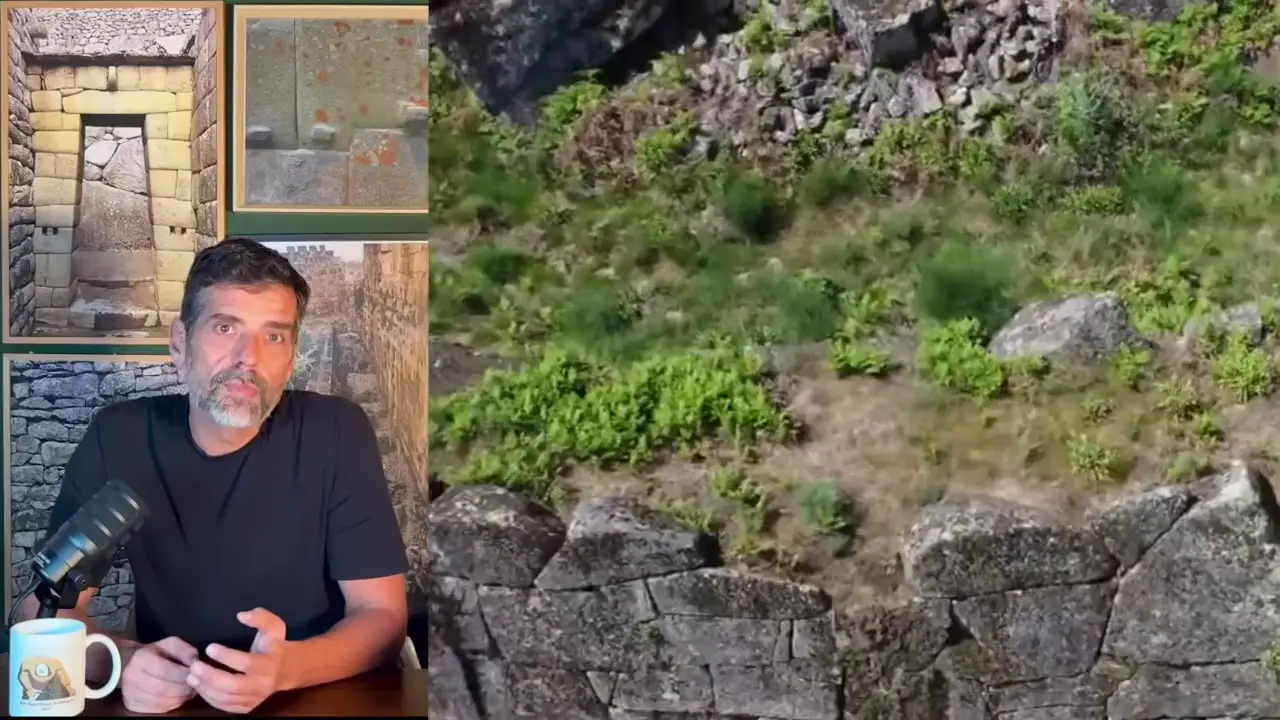
The Pnyx hill in Athens became the principal meeting place of Athenian democracy. Its name comes from Greek pyknos, meaning “close-packed” or “dense”—a reference to crowded assemblies. A massive stone retaining wall supports the auditorium, where citizens debated. 🏛️⛏️
The video argues that Cyclopean-style monuments from Atlantic Portugal to landlocked Armenia form a related family of cultures. That link is an interpretation, not an established archaeological conclusion. Sardinia has roughly 10,000 nuraghi, often dominating a settlement or hill; Corsican look-alikes are generally called torri. Collective burials do not prove democratic ideals or complete social equality.
Sources
Pnyx - Wikipediaen.wikipedia.orgThis new meeting place came to be called "Pnyx" (from the Greek word meaning "tightly packed together"). In the early history of the Pnyx, three phases can be ...
Pnyx | The Official Athens Guidethisisathens.orgPnyx comes from the Greek word pyknos, meaning dense. This open-air chamber could hold around 15,000 people—men to be more precise, members of the all-male ...
Pnyx Hill in Athens: the Cradle of Democracy | The Blog of Dimitheblogofdimi.comThe word Pnyx (ancient Greek: Πνύξ) is believed to be derived from the adjective πυκνός (pyknos), meaning dense. According to this etymological ...
The Pnyx - The University of Sydneysydney.edu.auAlthough the Pnyx may be seen as the site of the formation of democracy – the democracy of ancient Athens was highly exclusionary and women, as well as ...
The Pnyx, Athens - Birthplace of Democracy & Assembly Pla...questoapp.comThe Pnyx, from a Greek word meaning "tightly packed together," was the meeting place of the Athenian ekklesia, the assembly that made ...
Cyclopean Walls Research Papersacademia.eduCyclopean walls are massive stone structures built using large, irregularly shaped stones, often without the use of mortar.
Cyclopean masonryen.wikipedia.orgCyclopean masonry is a type of stonework found in Mycenaean architecture, built with massive limestone boulders, roughly fitted together with minimal ...
Cyclopean masonry | Ancient, Stone, Architecturebritannica.comCyclopean masonry, wall constructed without mortar, using enormous blocks of stone. This technique was employed in fortifications where use ...
AI-generated text · images from the original sources · always verify with the sources.