

The 4.2 ka event was a severe aridification phase around 2200 BCE. The video argues that cyclopean walls were an adaptive response to it. These walls broadly belong to Bronze Age massive-stone construction traditions. Sardinia’s nuraghi and sacred wells are Bronze Age, but the evidence does not support one uniform Cyclopean culture, first Balearic settlement by its builders, or a shared avoidance of pottery across the Mediterranean.
Video Argues Cyclopean Walls Responded to the 4.2 ka Drought
Key facts
- The 4.2 ka event was a severe Holocene aridification around 2200 BCE. The video argues that cyclopean construction was an adaptive response, but the search evidence does not establish that causal link.
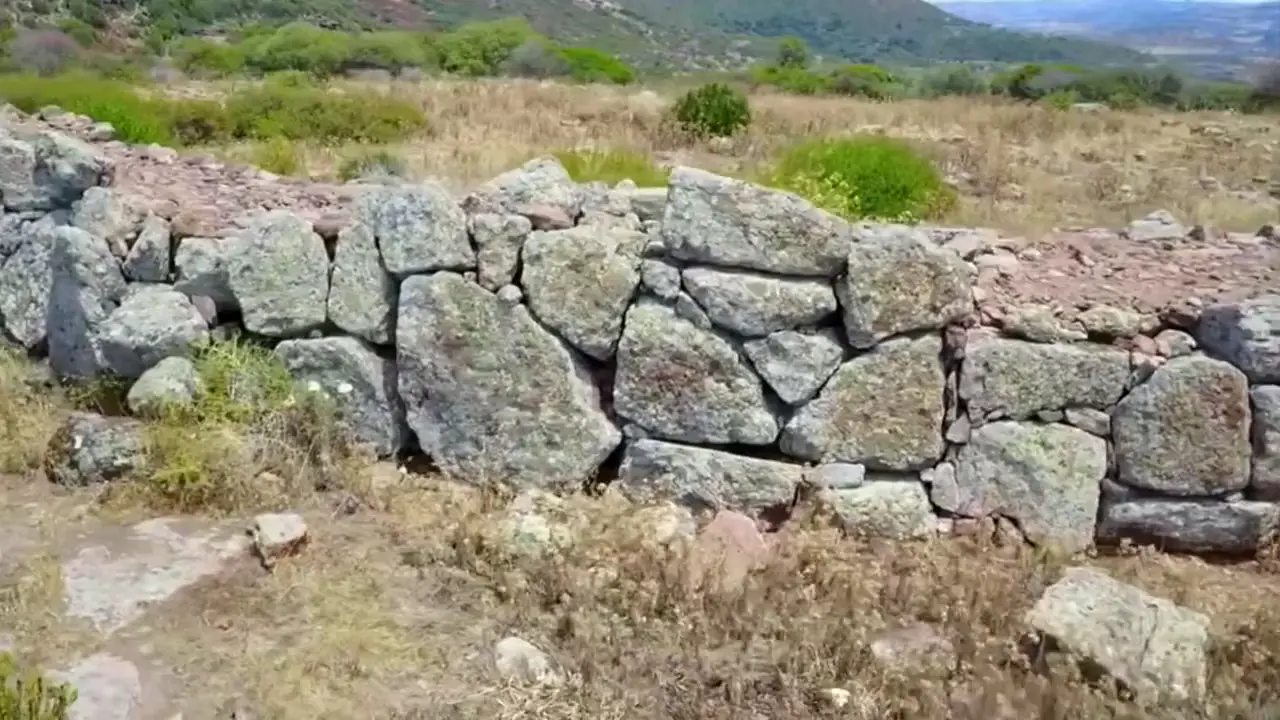
- Cyclopean masonry broadly describes Bronze Age walls built with massive stones, often without mortar. It was not one uniform archaeological culture across the Mediterranean.
- Sardinia has Bronze Age nuraghi and sacred wells associated with water rituals, but the search results do not support the broad claim that it developed Italy's oldest stone walls.
- The Balearic Islands were occupied during the Neolithic, long before the Talayotic building period. Later cyclopean-style works did not represent their first settlement.
- Nuragic Sardinia produced pottery, contradicting the claim that Cyclopean peoples avoided pottery. Burial practices and religious beliefs also varied regionally.
- Middle Bronze Age commonly covers roughly 2200–1600 BCE in parts of Europe, but “Cyclopean Age” is an informal and regionally variable label.
- Long-distance Bronze Age tin trade is documented, but it does not by itself establish the proposed network of independent trading posts or unprecedented wealth.
- Massive-stone and cyclopean-style walls occur from Iberia to the Caucasus, but the search evidence does not demonstrate a single rapid diffusion event.
Sources
1182 results for cyclopean wall in allstock.adobe.com
Search from thousands of royalty-free Cyclopean Wall stock images and video for your next project. Download royalty-free stock photos, vectors, ...
4.2-kiloyear eventen.wikipedia.org
The 4.2-kiloyear event was an aridification event (long-term drought), 4,200 years ago. It was one of the most severe climatic events of the Holocene epoch.
Stone Masonry - Cyclopeandimensions.com
Cyclopean masonry walls have common wall depths of 16”-36” (40.6-91.4 cm), typical wall heights between 5'-15' (1.5-4.6 m), and maximum heights ...
Cyclopean Walls - Mycenaee-mycenae.org
These are giant walls with which Mycenaeans fortify their citadels. Because the boulders used for their construction have huge dimensions the ancient Greek ...
Cyclopean Wallslivius.org
Cyclopean Walls: name for a kind of mortarless Bronze Age wall built with massive boulders. Greek author Pausanias. usually used for Mycenaean ...
Was this story useful?
Keep exploring
Every site on this page sits on the globe, and the people who research them are on the Discord.
3D Globe · Sites by country · Story Archive · Research Library · Weekly Journal · Search
AI-generated text · images from the original sources · always verify with the sources.