

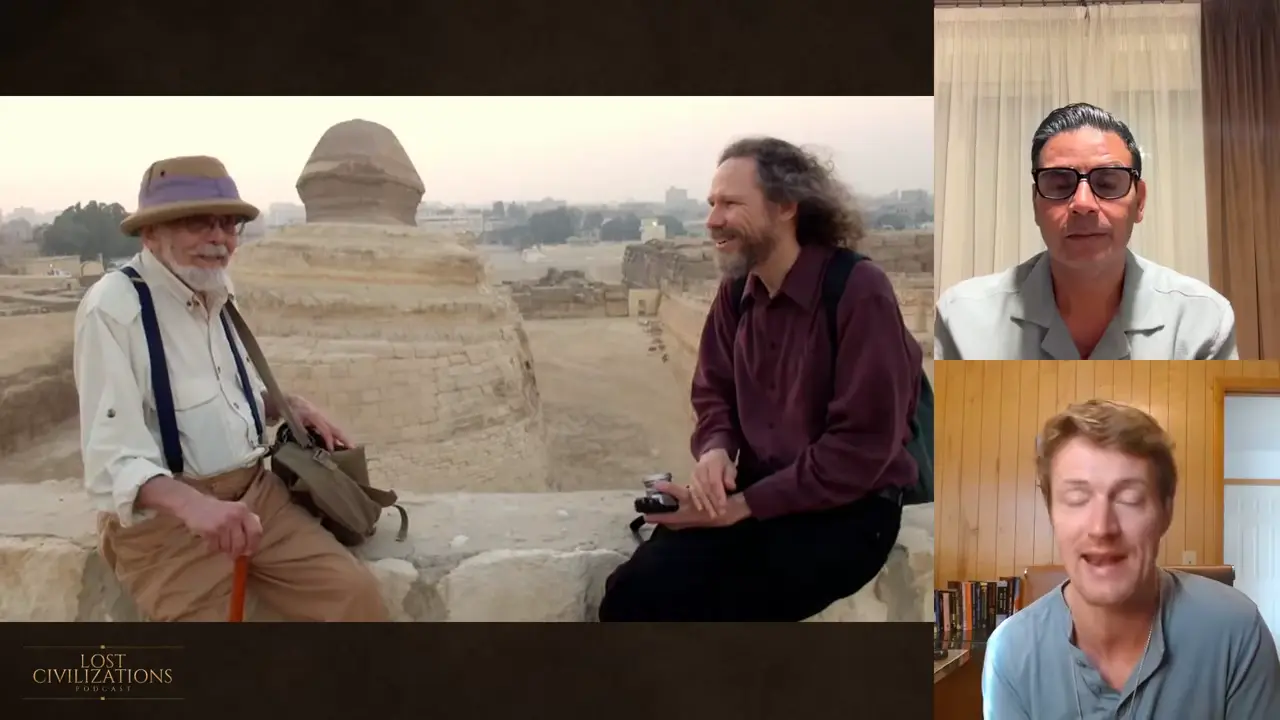
Robert Schoch, in work associated with John Anthony West, interpreted horizontal scour cuts and vertical fissures in the Great Sphinx's enclosure as water erosion rather than wind weathering. The video argues that these features mean the enclosure was carved far older than dynastic Egypt, citing a proposed climate chronology attributed to Mohamed Ibrahim. Mainstream archaeology rejects that conclusion and dates the Sphinx to the Fourth Dynasty, around 2500 BC. 🏜️💧
Video argues water, not wind, eroded the Sphinx enclosure walls
 EgyptTheory
Key facts
- Robert Schoch interpreted horizontal scour channels and vertical fissures in the Sphinx enclosure as water-erosion features; the hypothesis is also associated with John Anthony West.
- The video argues that these features indicate the enclosure was carved far older than dynastic Egypt. That age inference is part of the disputed hypothesis.
- The video attributes its proposed climate chronology to Mohamed Ibrahim, but the supplied results do not independently verify the stated 7,000–9,000 BC sequence.
- Mainstream archaeology rejects the much older date and dates the Great Sphinx to the Fourth Dynasty, around 2500 BC.
Sources
Sphinx water erosion hypothesisen.wikipedia.org
INSIDE THE SPHINX ENCLOSUREnefertum.com
Robert M. Schoch: Research Highlights The Great Sphinxrobertschoch.com
Was this story useful?
Keep exploring
Every site on this page sits on the globe, and the people who research them are on the Discord.
3D Globe · Sites by country · Story Archive · Research Library · Weekly Journal · Search
AI-generated text · images from the original sources · always verify with the sources.