


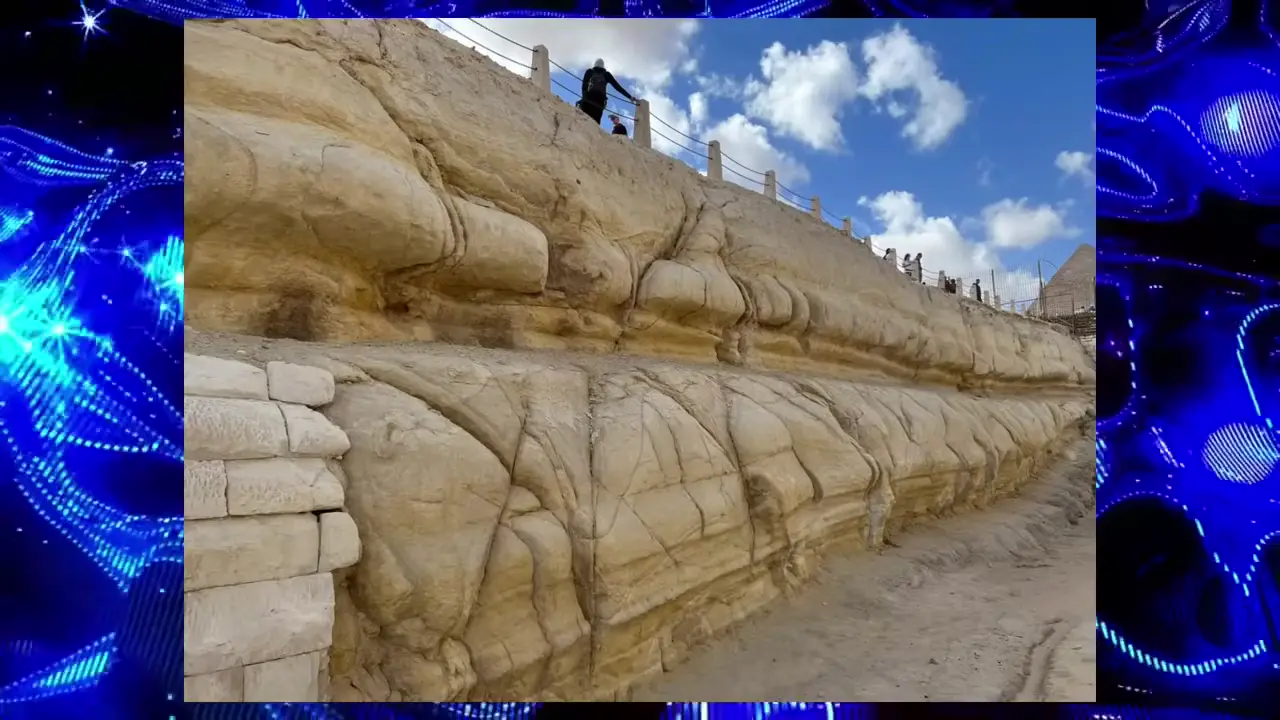
The video presents a disputed alternative age for the Great Sphinx, combining Robert Schoch's heavy-rainfall erosion hypothesis, Robert Bauval's Benben and Sun–Leo correlations, and Graham Hancock's broader pre-dynastic narrative. It argues that during the Green Sahara, part of the African Humid Period, the Nile reached the Giza outcrop and left the Sphinx enclosure as an island in shallow water.
The specific few-inches-deep island scenario and the claim that the enclosure pit was dug to preserve a symbolic mound as the Nile receded are not established by mainstream geological or archaeological research. The Sphinx does face due east and is associated with Akhet/Harmakhet, usually translated 'Horus in the Horizon.' Archaeologists generally date the Great Sphinx to Egypt's Fourth Dynasty, around 2550–2500 BCE.