


Neolithic population growth in the Near East accompanied the emergence of monumental architecture such as Göbekli Tepe around 9600 BCE. Researchers interpret its monumental enclosures as ritual gathering places used before large cities developed. The region supported abundant game and wild plant foods. Built in phases over more than a millennium, the site was repeatedly enlarged, with animal remains suggesting communal feasting.
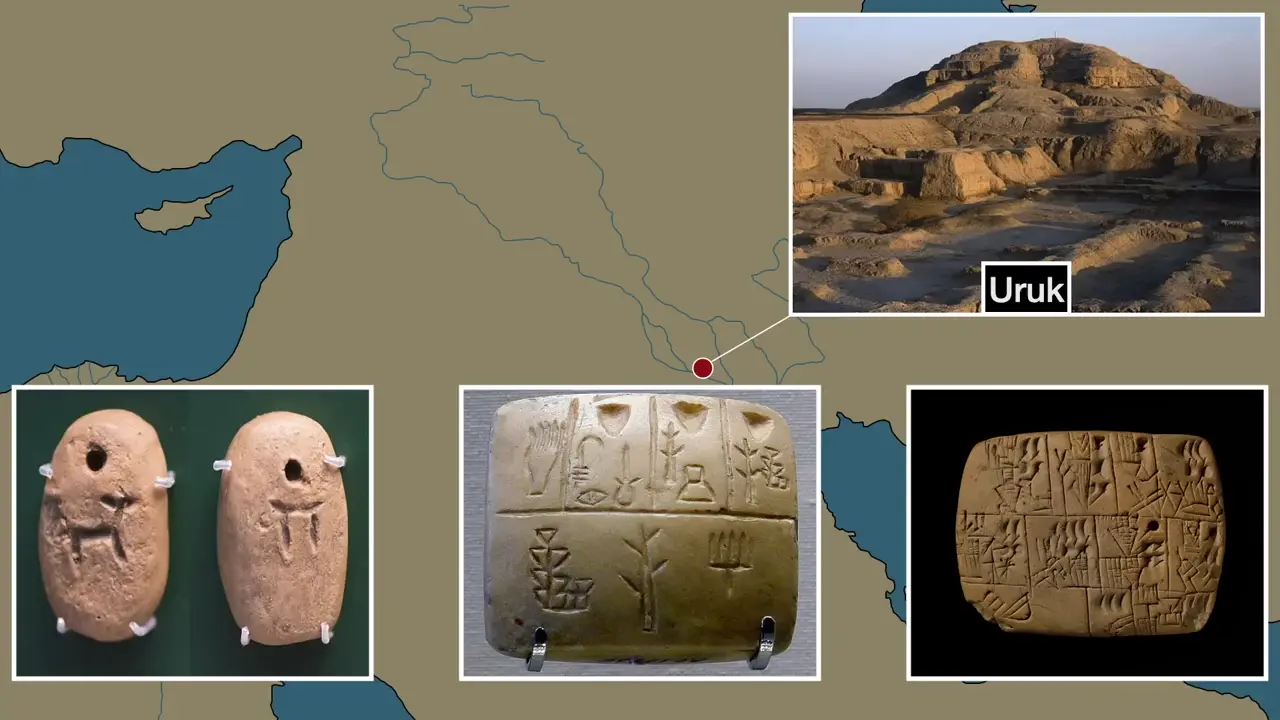
A small stone plaquette from Göbekli Tepe bears a series of carved signs. The video argues that they represent pictographic proto-writing, following British Museum curator and cuneiform expert Irving Finkel's interpretation. At least three other comparable marked plaquettes have been found. Finkel suggests the site may have used markings or another recordkeeping system to organize large groups. Excavations began in 1994 under Klaus Schmidt and continued after his death; by 2014, only about 5–10% of the site had been excavated.