

Why no pillars at Enclosure E? Four theories: 1) Robbed for reuse 2) Older than other enclosures 3) Never finished - large crack in bedrock or flooding risk 4) Test site for construction techniques. Author leans toward incomplete based on uneven workmanship and misaligned pedestals. 🏛️ 05:58-11:30
Four theories explaining Enclosure E's missing T-pillars
 TürkiyeTheory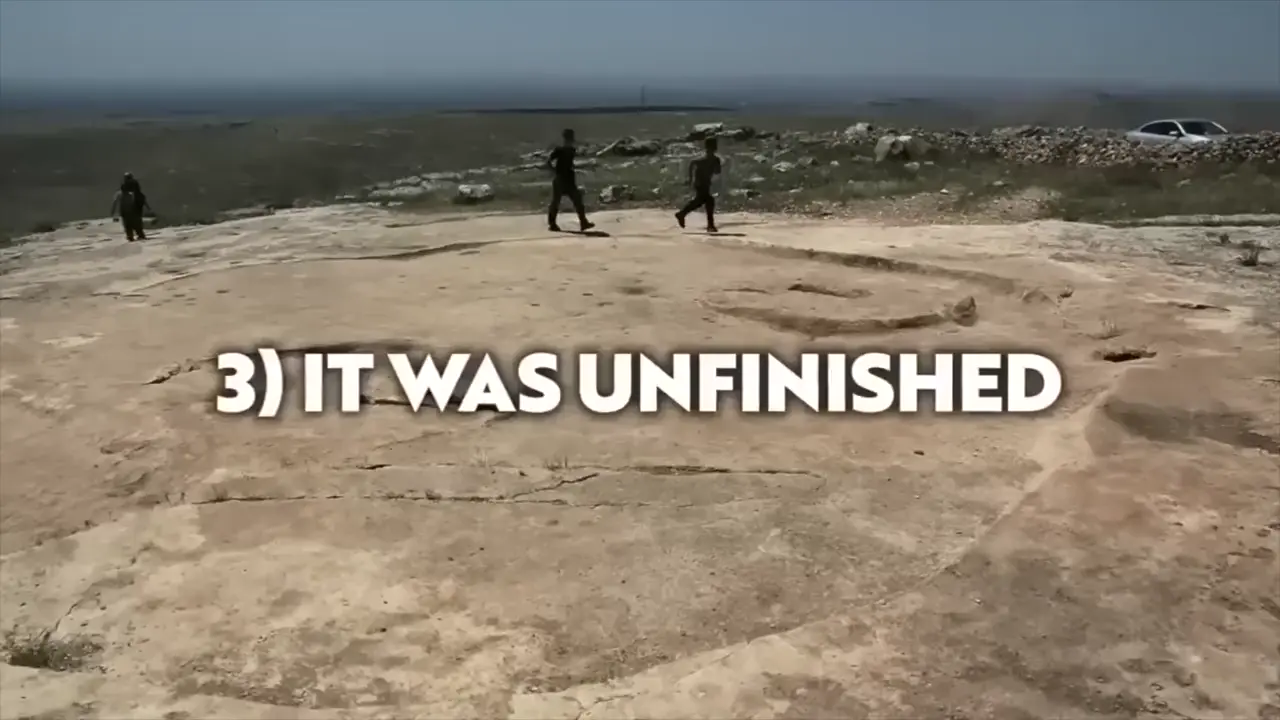
Site mentioned
Key facts
- First theory: Robbed of pillars and walls for reuse in other enclosures, dated to 9500-8800 BC
- Second theory: Older than other enclosures, possibly Epipaleolithic origin, pillars reused in later enclosures A, B, C, D
- Third theory: Never finished - abandoned during foundation preparation due to large crack in bedrock or exposed location risking flooding
- Fourth theory: Test site or trial run for construction techniques, located on ridge where exposed bedrock allowed testing methods
- Pedestals too close to wall and northern end, not centrally placed
- Section of wall shows uneven workmanship suggesting incompleteness
- Cut marks on floor suggest workers used boring technique similar to other Pre-Pottery Neolithic structures
- Rainwater collection pits may have been attempt to divert water from vulnerable location
- Video author's opinion: enclosure was never finished based on available evidence
Sources
archive.org
Linked in video description
Was this story useful?
Keep exploring
Every site on this page sits on the globe, and the people who research them are on the Discord.
3D Globe · Sites by country · Story Archive · Research Library · Weekly Journal · Search
AI-generated text · images from the original sources · always verify with the sources.