

Danish researcher Mikkel Christiansen proposed the unlockable block hypothesis 14-15 years ago on his blog. The system uses a granite plug, wooden roller, and a rope running through both King's Chamber channels. Pulling the southern end turns the roller and draws the plug inward. A major flaw: no clear way to close it again.
Unlockable block hypothesis proposes rope-and-roller mechanism through channels
 EgyptTheory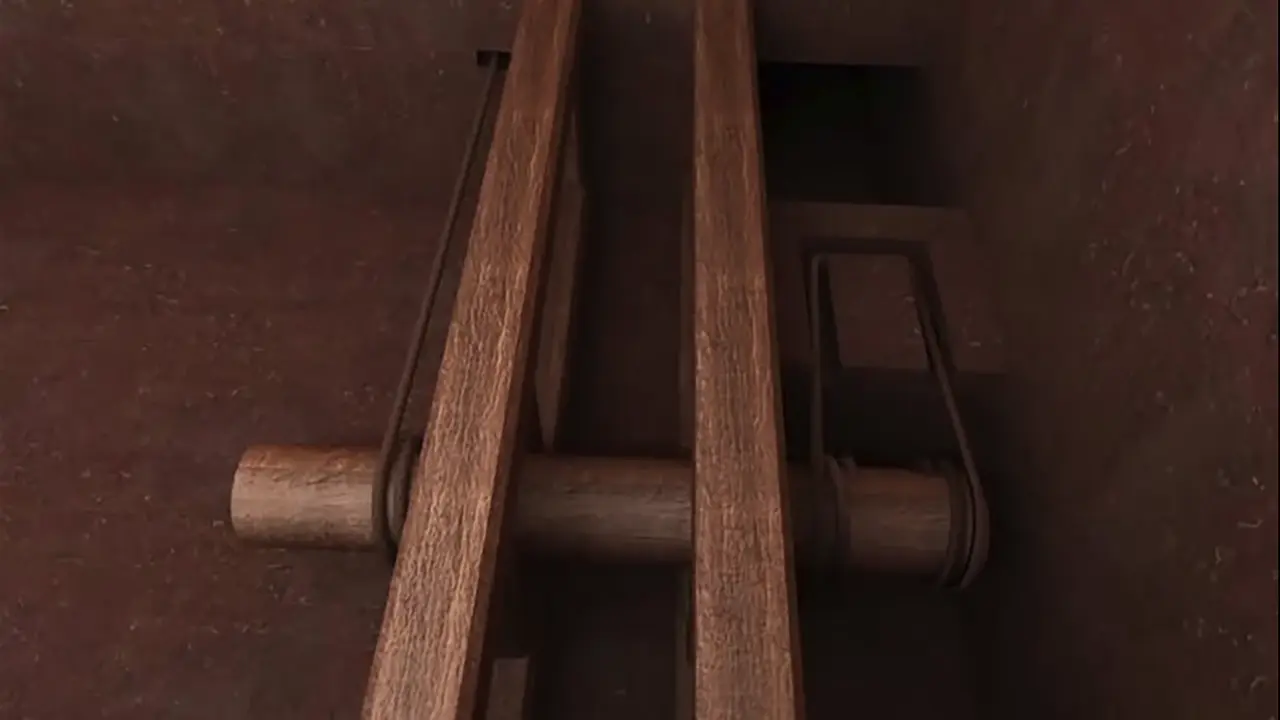
Site mentioned
Key facts
- Danish independent researcher Mikkel Christiansen first proposed the unlockable block hypothesis 14–15 years ago on a blog called "My Keops Pyramid Theory"
- The mechanism involves a granite plug block, a wooden roller, ropes, and the two King's Chamber channels
- A rope runs from the pyramid's northern face through the northern channel, wraps around a wooden log in the King's Chamber, and continues through the southern channel to the southern face
- Pulling the southern rope from outside turns the roller and draws the plug block into the chamber, opening access
- The horizontal channel exits reduce friction on the rope, and the rounded bottom corners of the northern channel support this
- A major flaw is that the mechanism can open the chamber but has no clear means of closing it
Sources
UC Santa Cruzescholarship.org
pyramid and results in chromatic pupil image shear. This ... Christiansen, Diana Dragomir, Jonathan J. Fortney, An- drew W. Howard ...
Doctoral Dissertation Abstracts (A - L) - UNC Computer Sciencecs.unc.edu
Christiansen, Mikkel (2002). “The Performance of HTTP Traffic Under Random Early Detection Queue Management” Under the direction of Kevin Jeffay and Don ...
Staged Training of Machine-Learning Potentials from Small to ...pubs.acs.org
Here, we present a global optimization scheme where energy and force information from d. functional theory (DFT) calcns. is transferred to a ...
The Myth of the Pyramid - CVF Open Accessopenaccess.thecvf.com
by R Izquierdo-Cordova · 2024 — To define the set of templates to investigate filter distribu- tion effects, we are inspired by findings of PyramidNet [22] that presents two variations to the ...
A preliminary analysis of the unexplored Great Chamber in ...academia.edu
Biondi and Malanga's research outlines a network of unexplored chambers in the Great Pyramid. Predicted internal dimensions include 104.72 × 40 × 15.2788 cubits ...
Was this story useful?
Keep exploring
Every site on this page sits on the globe, and the people who research them are on the Discord.
3D Globe · Sites by country · Story Archive · Research Library · Weekly Journal · Search
AI-generated text · images from the original sources · always verify with the sources.