

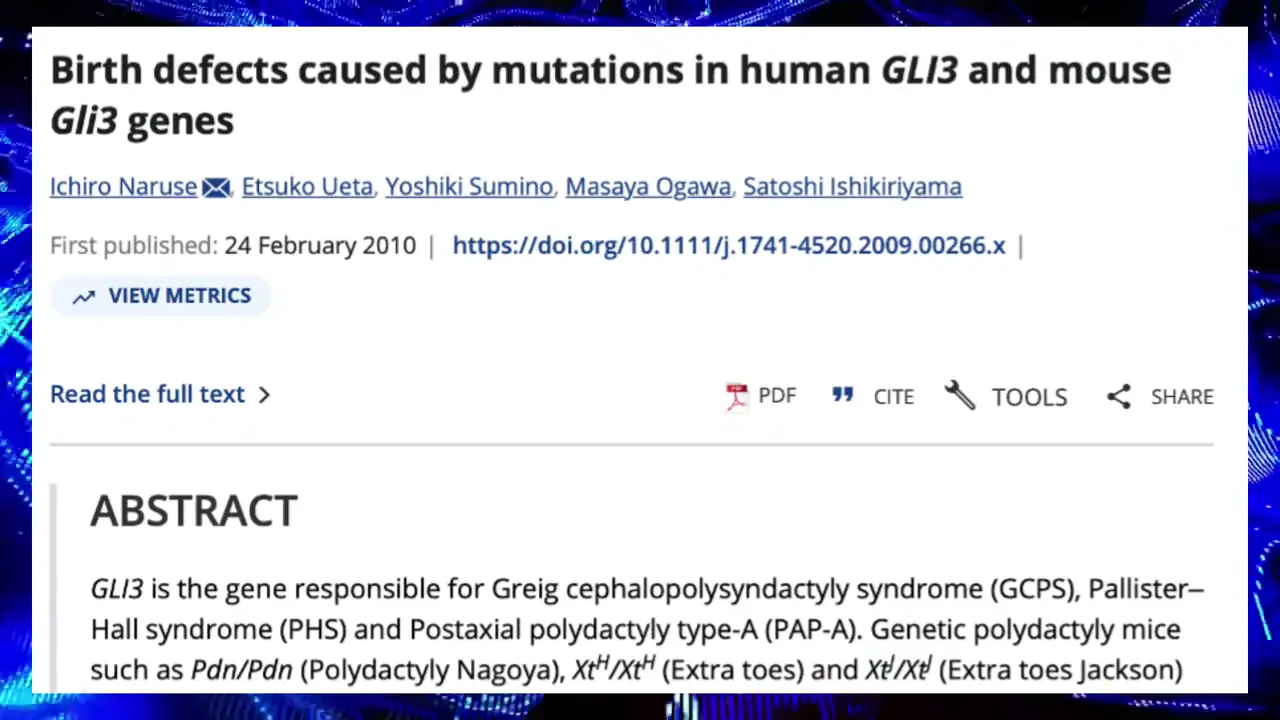
Three GLI3-linked disorders show fascinating diversity. GCPS causes non-functional extra digits, webbing, fusion, and cranial deformations—sometimes hernias or fluid on the brain. PHS brings extra digits, cleft palate, and hypothalamus issues affecting pituitary function. PAPA results in fully functional extra digits, like the Dilda family in Brazil! 🧬
Three genetic disorders linked to GLI3 mutations: GCPS, PHS, and PAPA
Key facts
- Greig Cephalopolysyndactyly Syndrome (GCPS) occurs equally in men and women with ~50% chance of being passed from parent to child; causes non-functional extra digits, webbing, fusion, and cranial deformations
- Pallister-Hall Syndrome (PHS) causes non-functional extra digits, deformed nails, cleft palate, and hypothalamus malformation affecting pituitary function
- Postaxial Polydactyly Type A (PAPA) results in fully functional extra digits next to the pinky, like the Dilda family in Brazil
- GCPS can result in hernias or water on the brain; PHS can cause early development into adulthood
Sources
Greig Cephalopolysyndactyly Syndrome (GCPS)link.springer.com
Greig cephalopolysyndactyly syndrome - Geneticsmedlineplus.gov
GLI3-Related Greig Cephalopolysyndactyly Syndromepubmed.ncbi.nlm.nih.gov
Molecular and Clinical Analyses of Greig ...sciencedirect.com
Point Mutations in Human GLI3 Cause Greig Syndromeacademic.oup.com
Was this story useful?
Keep exploring
Every site on this page sits on the globe, and the people who research them are on the Discord.
3D Globe · Sites by country · Story Archive · Research Library · Weekly Journal · Search
AI-generated text · images from the original sources · always verify with the sources.