

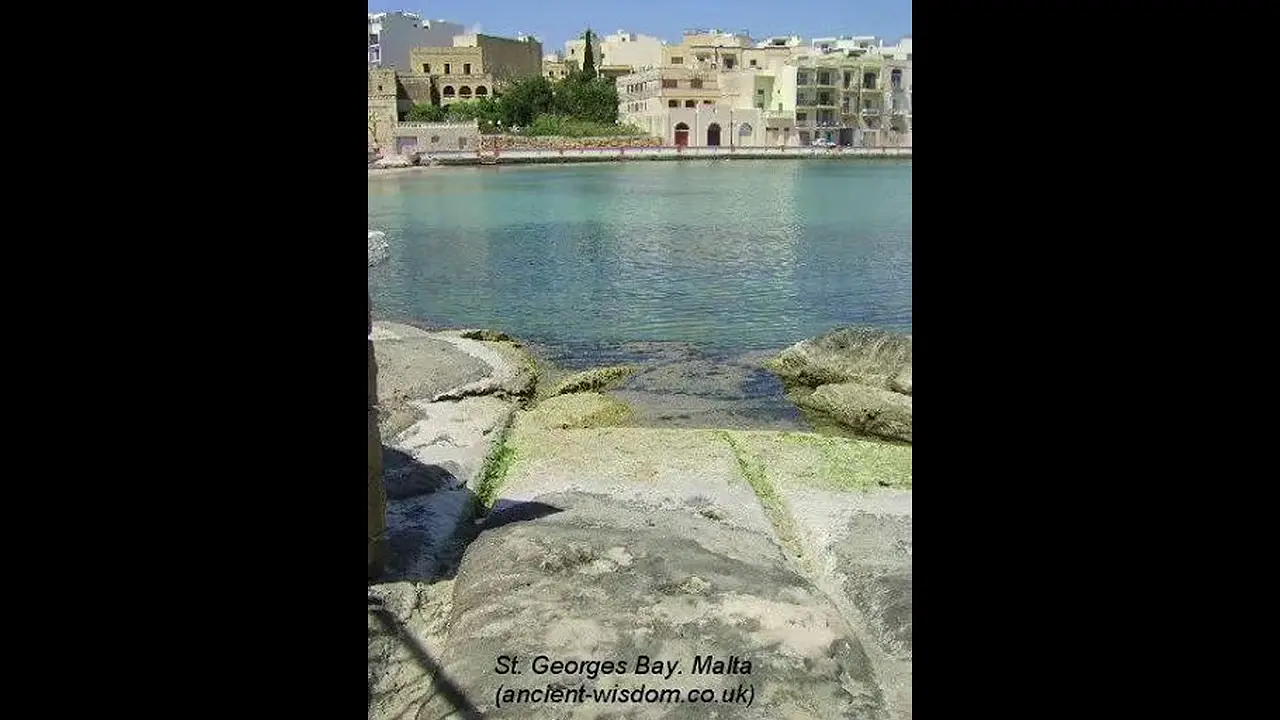
Cart ruts at St. George's Bay in Birżebbuġa run into the sea; the video places them 30–60 cm below the surface. Using a reconstruction putting Roman-period sea level 1.36 m lower, it argues the grooves were above the waterline then. The video also argues that Bronze Age rock-cut pits, traditionally read as silos, were cargo depots for Mediterranean merchant ships. At Valletta Harbour, it says submerged Roman tanks may have processed garum. It says maritime trade may have begun in the Bronze Age—after the Ice Age and before Rome. 🌊🏺
The video argues Birżebbuġa’s submerged ruts fit a Roman-era shoreline, not an Ice Age date
Site mentioned
📍 Saint George's Bay🌍 Show on the globe
Key facts
- At St. George's Bay in Birżebbuġa, cart ruts run into the sea and are described as submerged; the video places their underwater continuation at 30–60 cm.
- The geological reconstruction cited for Roman Malta puts relative sea level about 1.36 m below present, so grooves now 30–60 cm underwater could have lain above the waterline then.
- A Bronze Age rock-cut pit interrupts the ruts. The video argues that the submerged pits, traditionally interpreted as storage silos, may instead have served as cargo depots for Mediterranean merchant ships.
- At Valletta Harbour, the video identifies submerged Roman rectangular tanks about 0.86–1.30 m below present sea level and says they may have been used to process garum.
- Submerged features show that sea level later rose and the shoreline moved inland, drowning features built on dry land; submergence alone does not establish an Ice Age date.
- The video says maritime trade may have begun in the Bronze Age—later than the Ice Age but well before the Roman period.
Sources
Was this story useful?
Keep exploring
Every site on this page sits on the globe, and the people who research them are on the Discord.
3D Globe · Sites by country · Story Archive · Research Library · Weekly Journal · Search
AI-generated text · images from the original sources · always verify with the sources.