

Around 100 CE, with Teotihuacan at 20,000 people, builders constructed the Pyramids of the Sun and Moon. The Sun rose in one phase; the Moon grew across seven phases (100-350 CE). The Avenue of the Dead and Temple of Quetzalcoatl formed Mesoamerica's largest ceremonial center. A 2024 DNA study confirmed local builders (mtDNA A2, B2, D1).
Teotihuacan's monumental pyramid construction and 2024 DNA study on its builders
 MexicoGeneral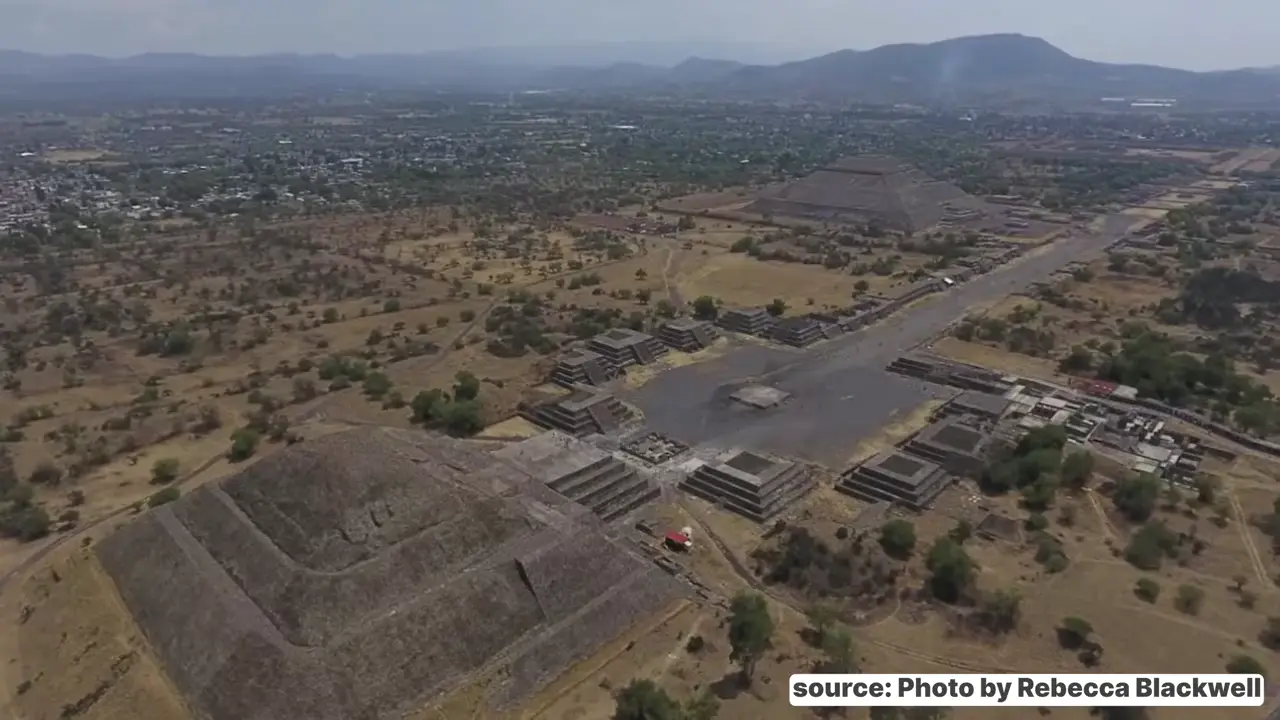
Key facts
- Around 100 CE, when Teotihuacan's population reached 20,000, the city built the Pyramids of the Sun and the Moon on a scale unseen in Mesoamerica.
- The Pyramid of the Sun was built in a single phase around 100 CE.
- The Pyramid of the Moon was expanded over seven construction phases from 100 to about 350 CE.
- The Avenue of the Dead and the Temple of Quetzalcoatl were also built during this period, forming the largest ceremonial center ever built in Mesoamerica.
- Dating is based on thousands of carbon-14 and archaeomagnetic dating samples collected over decades.
- A 2024 DNA study found burials at Teotihuacan belonged to people of Central Mexican genotypes, predominantly mtDNA haplogroups A2, B2, and D1, confirming homegrown Mesoamerican builders rather than a foreign population.
Site mentioned
Sources
Pyramid of the Sun in Teotihuacan: History, Height, and View from Globo ...wefly.com.mx
Date of construction: Between 1 and 250 AD (Tzacualli-Miccaotli phase); Civilization builder: Teotihuacan (Mesoamerican culture prior to the ...
Pyramid of the Sun | Description, Map, & Factsbritannica.com
Pyramid of the Sun, large pyramid in the ancient city of Teotihuacan, Mexico, that was built about 100 CE and is one of the largest structures of its type ...
when was the sun pyramid built?jstor.org
by R Sload · 2015 · Cited by 10 — construction of the Sun Pyramid at Teotihuacan commenced in the first century A.D. and lasted about 200 years. dating the Sun Pyramid,
The History of Teotihuacan, the pyramids outside of Mexico City.lunaticsproject.com
Historians believe these structures date back to somewhere around 100 CE, though construction probably lasted until 250 CE.
Pyramid of the Sunen.wikipedia.org
The Pyramid of the Sun is the largest building in Teotihuacan, It is believed to have been constructed about 200 AD. Built 200 AD [1] Abandoned 750 AD … ...
Was this story useful?
Keep exploring
Every site on this page sits on the globe, and the people who research them are on the Discord.
3D Globe · Sites by country · Story Archive · Research Library · Weekly Journal · Search
AI-generated text · images from the original sources · always verify with the sources.