

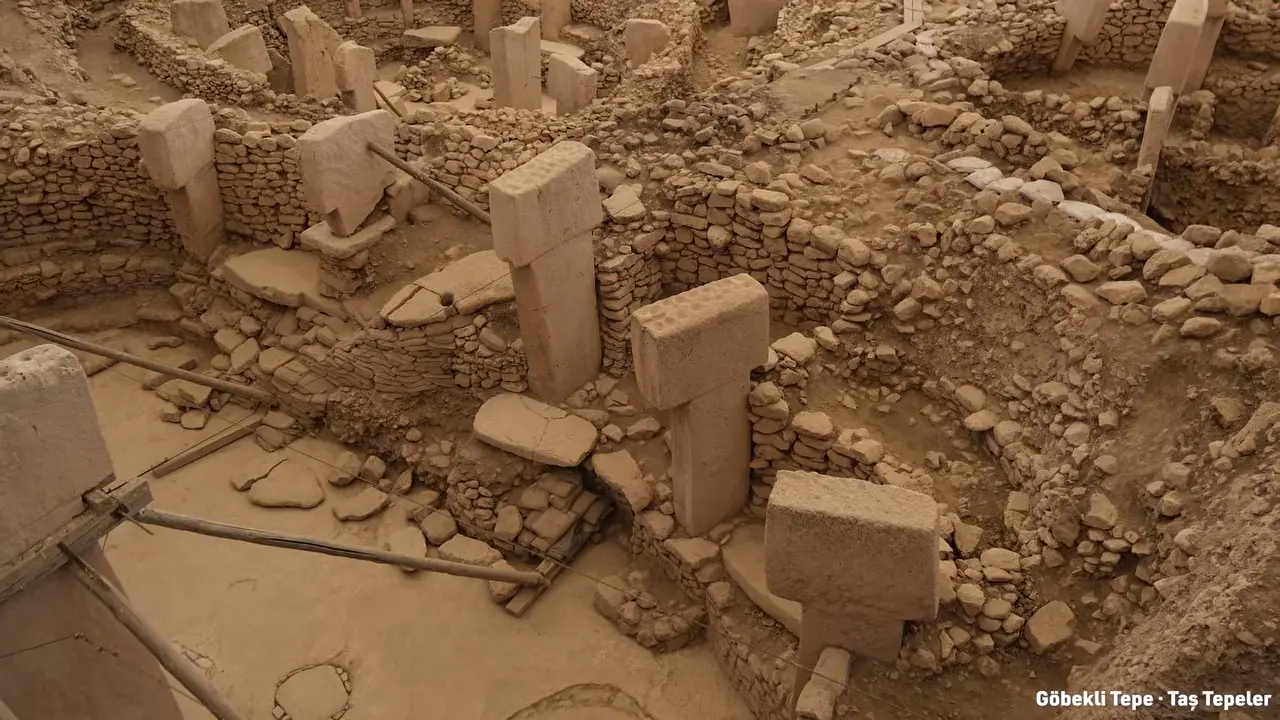
Southeastern Turkey's early Neolithic Taş Tepeler ('stone hills') sites — Göbekli Tepe, Karantepe and Çayönü — share a regional style: communal buildings and homes, quarried limestone, erected pillars, and carved human and animal figures. The video argues that farming wasn't required for monumental work, because food collection and storage could support a construction workforce. 🗿
Taş Tepeler communities in southeastern Turkey built stone enclosures and carved pillars
 TürkiyeGeneral
Key facts
- The video refers to early Neolithic sites in southeastern Turkey collectively as the Taş Tepeler ('stone hills') tradition, including Göbekli Tepe, Karantepe and Çayönü.
- Inhabitants of these sites built communal spaces and homes, quarried limestone, erected pillars, and carved human and animal figures.
- Similar architectural features at several settlements indicate that large stone construction was part of a wider regional tradition.
- The video argues that farming was not a prerequisite for monumental construction, since adequate food collection and storage could support a construction workforce.
Sources
Taş Tepelertastepeler.org
Taş Tepeleren.wikipedia.org
Taş Tepeler Projectgoogle.com
10 Questions About Taş Tepelergoogle.com
Was this story useful?
Keep exploring
Every site on this page sits on the globe, and the people who research them are on the Discord.
3D Globe · Sites by country · Story Archive · Research Library · Weekly Journal · Search
AI-generated text · images from the original sources · always verify with the sources.